
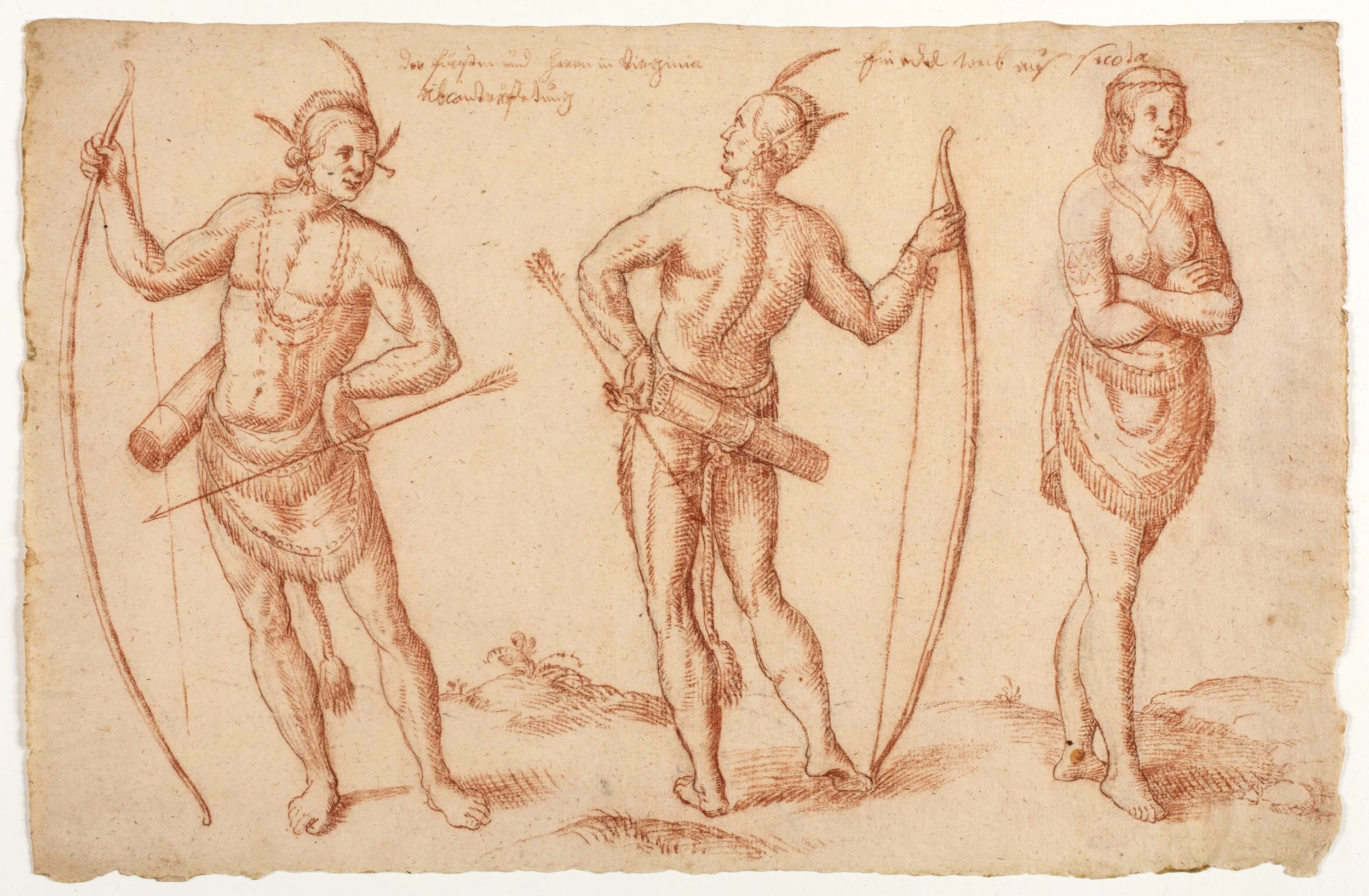
GERMAN SCHOOL, ca. 1600, after THEODOR DEBRY
An Algongquin Werowance (Chief), Viewed from the Front and Back, and the Wife of a Werowance from Secotan
Inscribed, upper center: “Der fürsten und herrn in Virginia / abcontrafentung” and “Ein edel Weib auß Secota”
Red chalk on laid paper
8 ⅛ x 12 ½ inches (206 x 318 mm)
Provenance:
Private Collection, West Virginia, ca. 1990–2025.
The establishment and disappearance of the Roanoke colony is the stuff of legend and mystery. In the 1580s Sir Walter Raleigh made two attempts to establish the first English settlement in America at Roanoke Island along the outer banks of present-day North Carolina. The first (in 1585) was little more than a military outpost and was abandoned the following year. On that journey were the scientist Thomas Harriot (or Hariot) and John White, a cartographer and artist. A second and more ambitious attempt was made in 1587, this time under the command of White.
About 115 people were part of this effort, among them John White’s pregnant daughter Eleanor and her husband Ananias Dare. After about a month John White set sail on a return trip to England, seeking to secure additional supplies. Just before his departure Eleanor gave birth to a daughter, christened Virginia Dare after the colony of Virginia. She became the first child of European descent to be born in North America.
The events surrounding the Spanish Armada of 1588 prevented White’s return until 1590. He then found the colony abandoned, with only an enigmatic inscription “Croatoan” suggesting their destiny. Whether through internal conflict, integration, disease, or battle—the disappearance of what came to be known as the “Lost Colony” has puzzled historians for centuries.
Thomas Harriot recorded what he saw and experienced in America in a book published in 1588, The Briefe and True Report of the New Found Land of Virginia. This treated the people, settlements, fauna, flora, and habits of “Virginia,” though without any illustrations. The following year the enterprising artist and publisher Theodore de Bry traveled to England and was able to obtain copies of the watercolors that John White had made during his visit of 1587. These he took back to Frankfurt, where he published an illustrated edition of Harriot’s book, the first of a series of publications known as the Grandes Voyages.
DeBry’s illustrated Virginia volume was published to great success in 1590. It was issued in four languages—Latin, German, English and French—and is considered a seminal source of cultural history of native Americans. What are thought to be the original set of watercolors by John White were acquired by the British Museum in the 19th century and have been studied and extensively published since.[1]
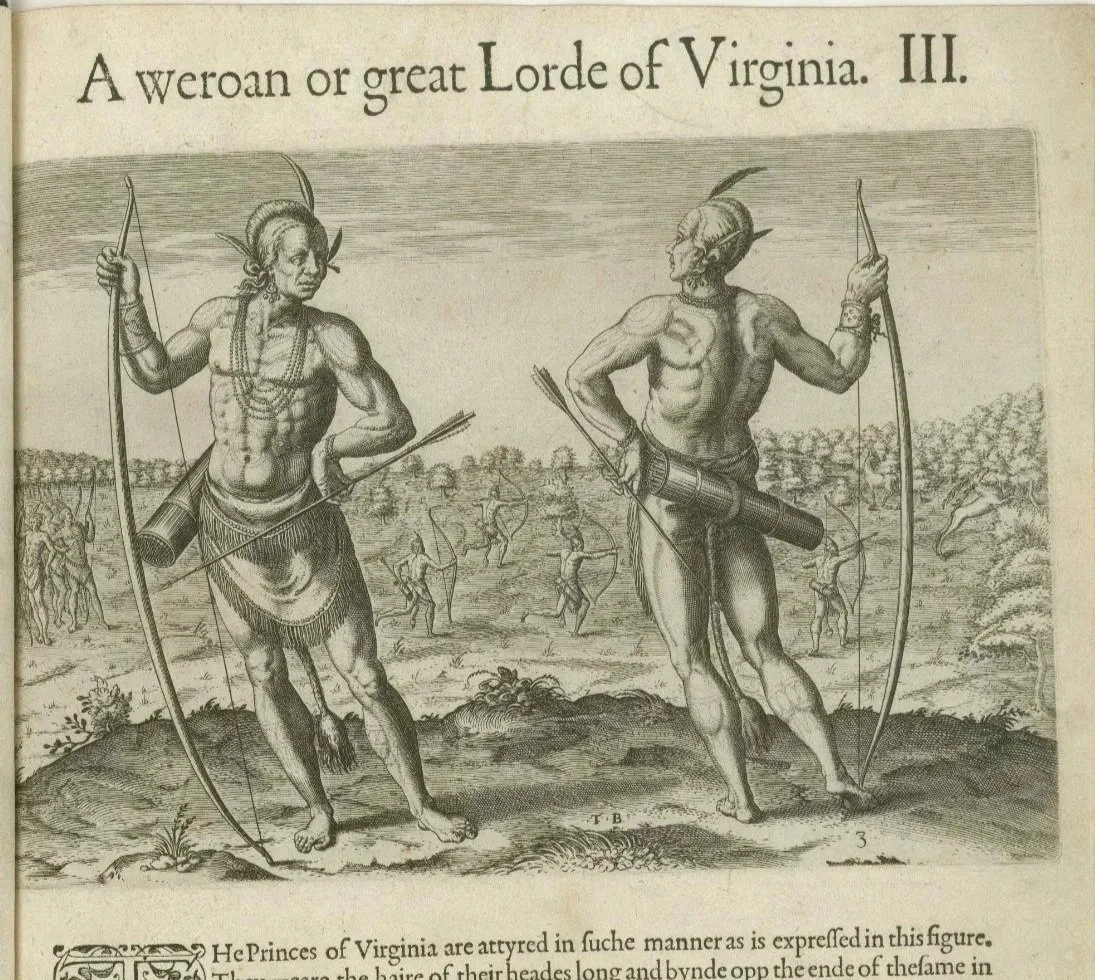
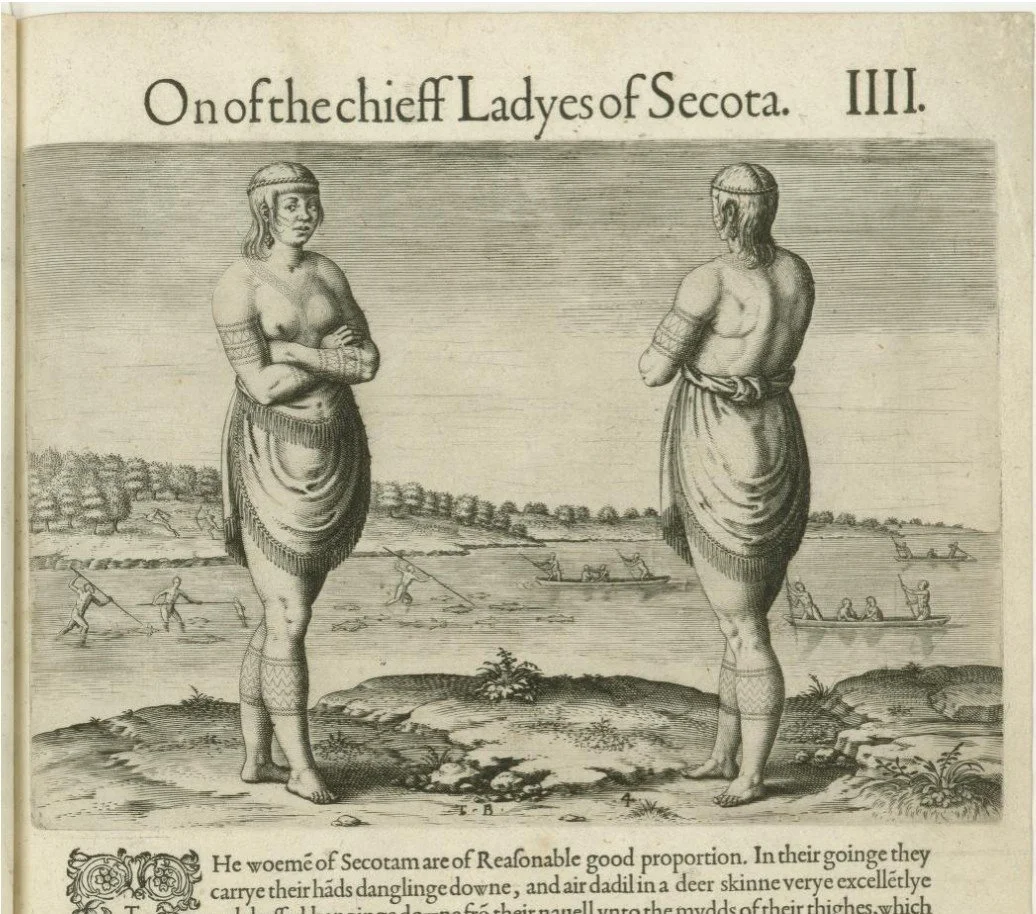
Figs. 1-2. Illustrations III and IIII from the 1590 illustrated English edition of Harriot’s Briefe and True Report of the New Found Land of Virginia.
The present drawing is an unpublished red chalk drawing that is contemporary with and directly derived from the 1590 edition of Debry’s illustrated edition of Harriot’s Virginia.[2] The left and center figures correspond to the illustration of an Algonquin chief viewed from both front and back in the illustration titled in English “A Weroan or Great Lorde of Virginia” (Fig. 1). The female figure at right repeats the frontal view of the woman depicted in the illustration “On[e] of the Chief Ladyes of Secota” (Fig. 2). The two inscriptions at the top of the drawing repeat the titles given in the German edition of the book (Figs. 3-4).[3] Summary indications of the landscape setting are repeated from the illustrations, but the extensive landscape backgrounds have been eliminated.
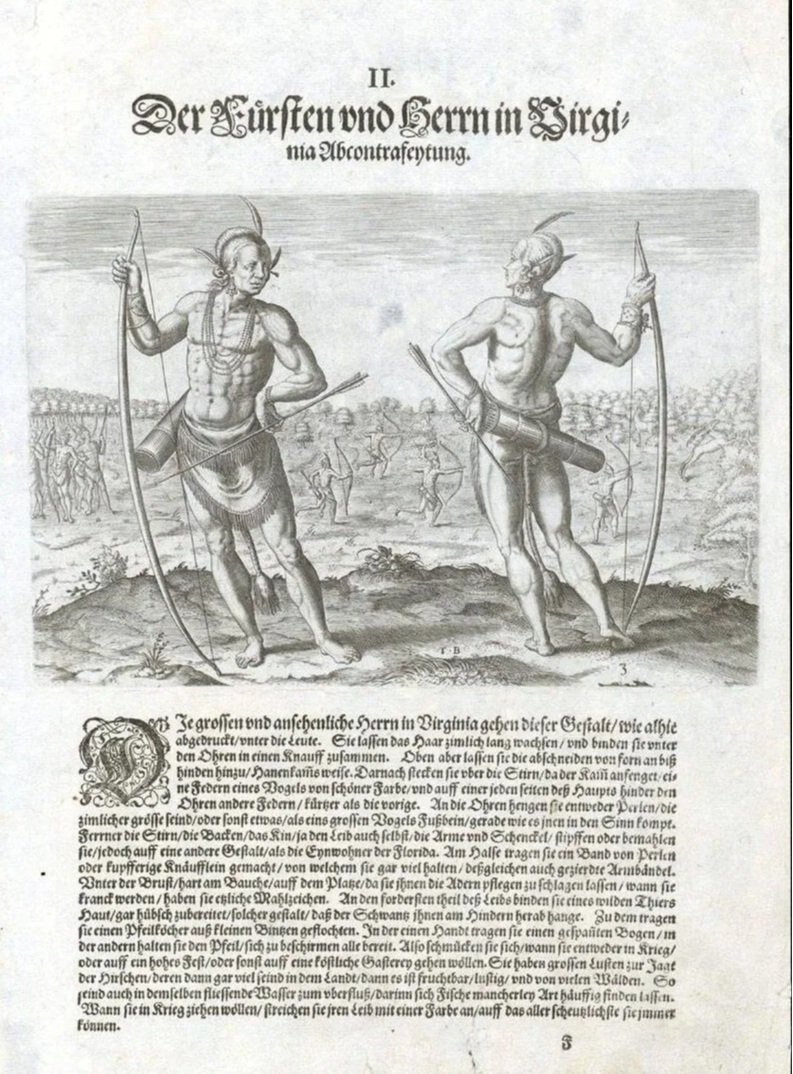
Fig. 3. Plate II from the 1590 illustrated German edition of Harriot’s Wunderbarliche, Doch Warhafftige Erklärung, von Der Gelegenheit Vnd Sitten Der Wilden in Virginia.
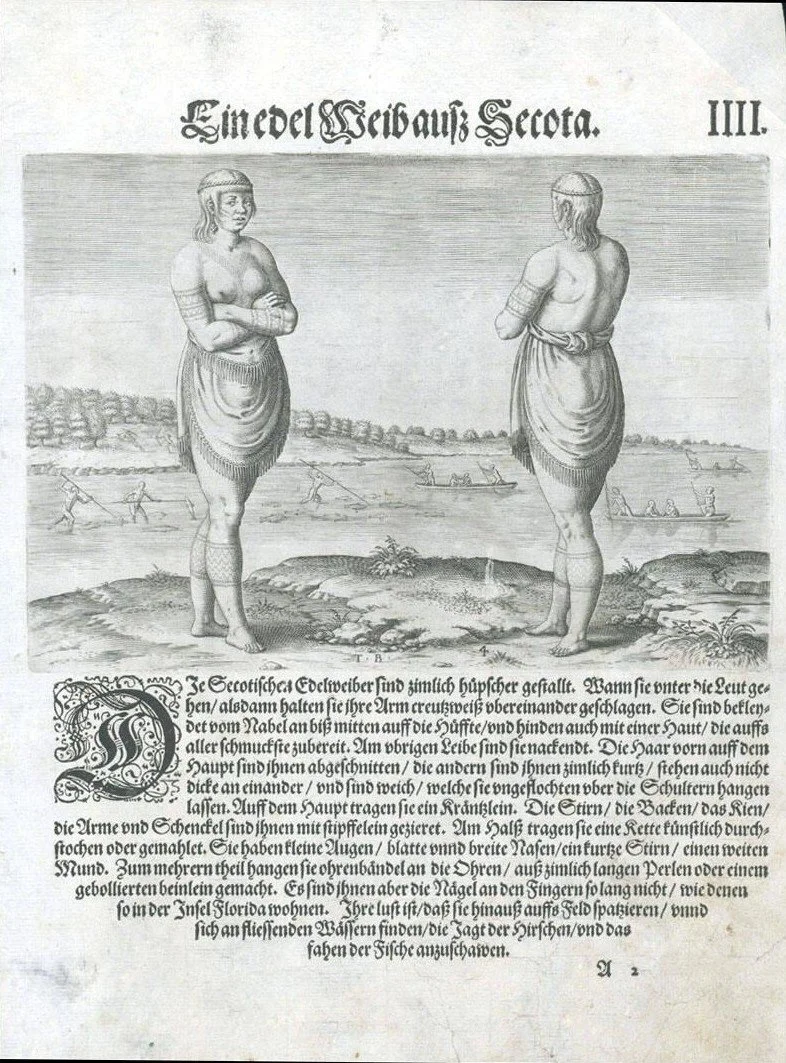
Fig. 4. Plate IIII from the 1590 illustrated German edition of Harriot’s Wunderbarliche, Doch Warhafftige Erklärung, von Der Gelegenheit Vnd Sitten Der Wilden in Virginia.
The set of John White illustrations that formed the basis of DeBry’s engravings have not survived, but what must have been a near identical set in the British Museum by John White show the figures in the opposite sense from the drawing and print, more extensively detailed, but without the landscape setting (Figs. 5-6). Notably the view of the male figure from behind does not survive. Our drawing, while not drawn directly from the subjects, is nonetheless a precious record of the first European contact with the indigenous people of the Carolinas. It is generally believed that the woman depicted was the wife of the man at center and left, a chief of the resident Algonquin population. Secotan village was located along the Pamlico estuary in current Beaufort County, North Carolina.
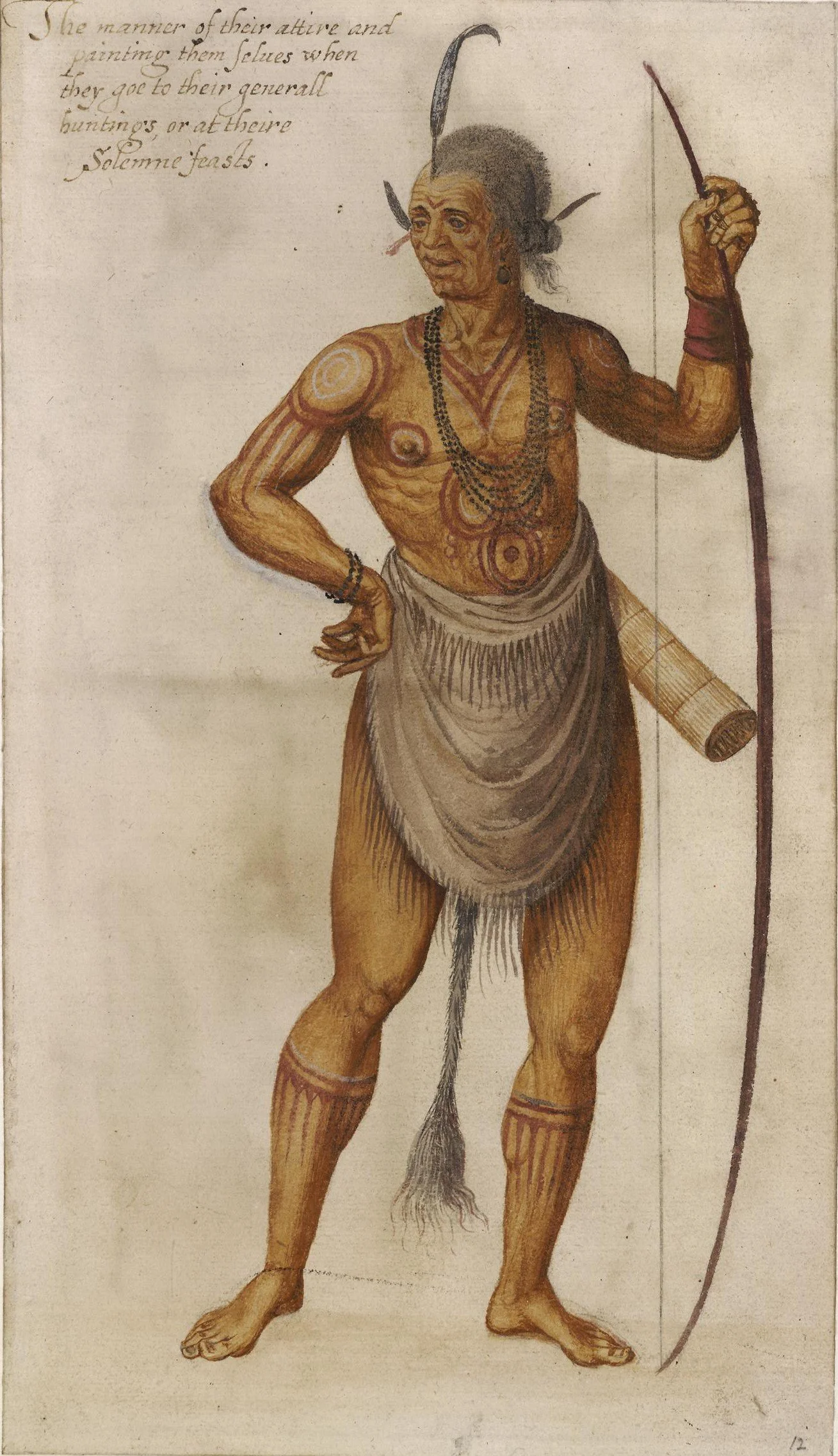
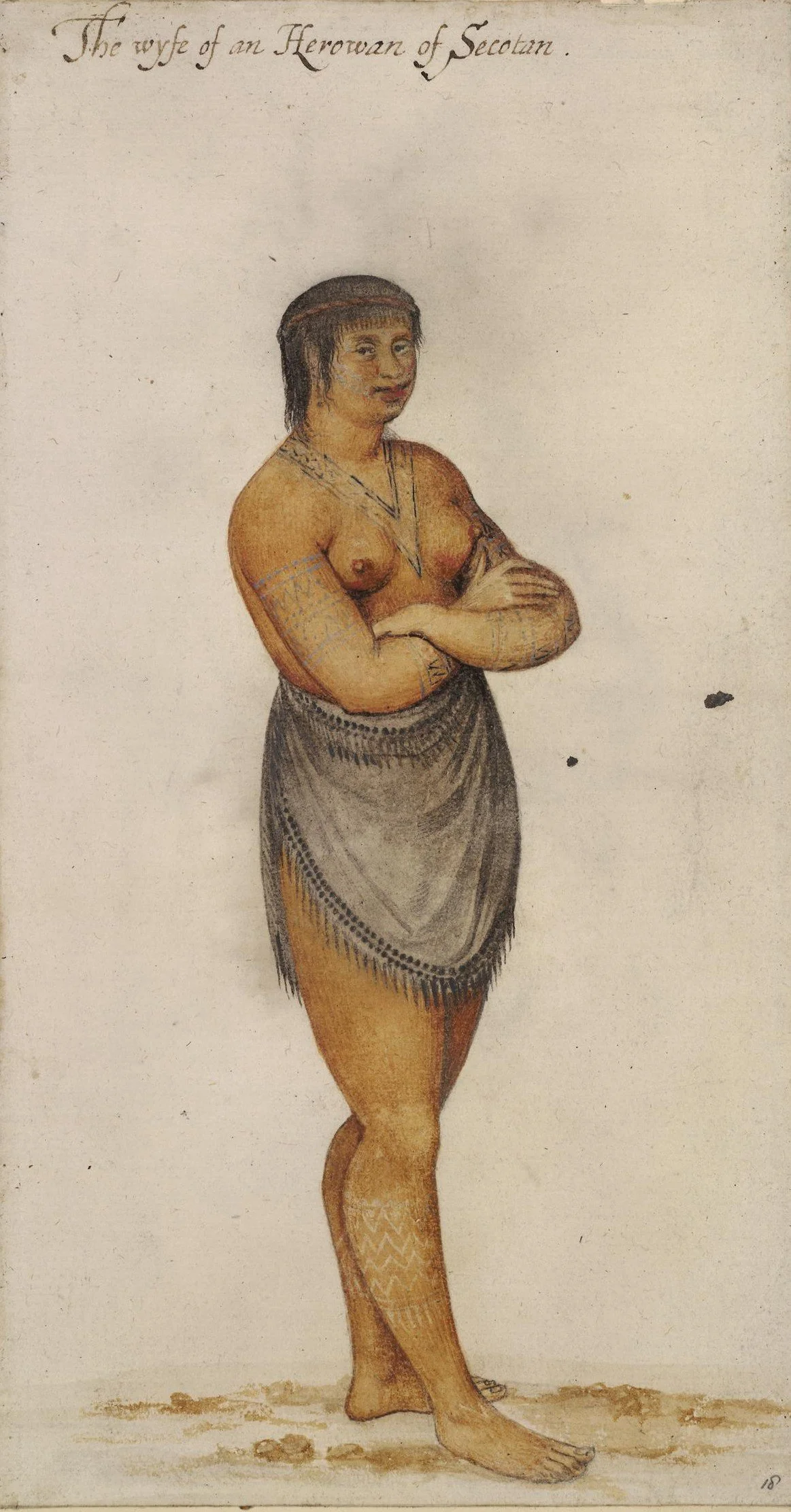
Figs. 5-6. John White, An Indian Werowance and The wife of a Werowance, watercolors, British Museum, London.
The reverse of the drawing includes a depiction of a nude female figure—clearly unrelated to the Algonquin group but of a style typical of the date of this work, around 1600 (Fig. 7).
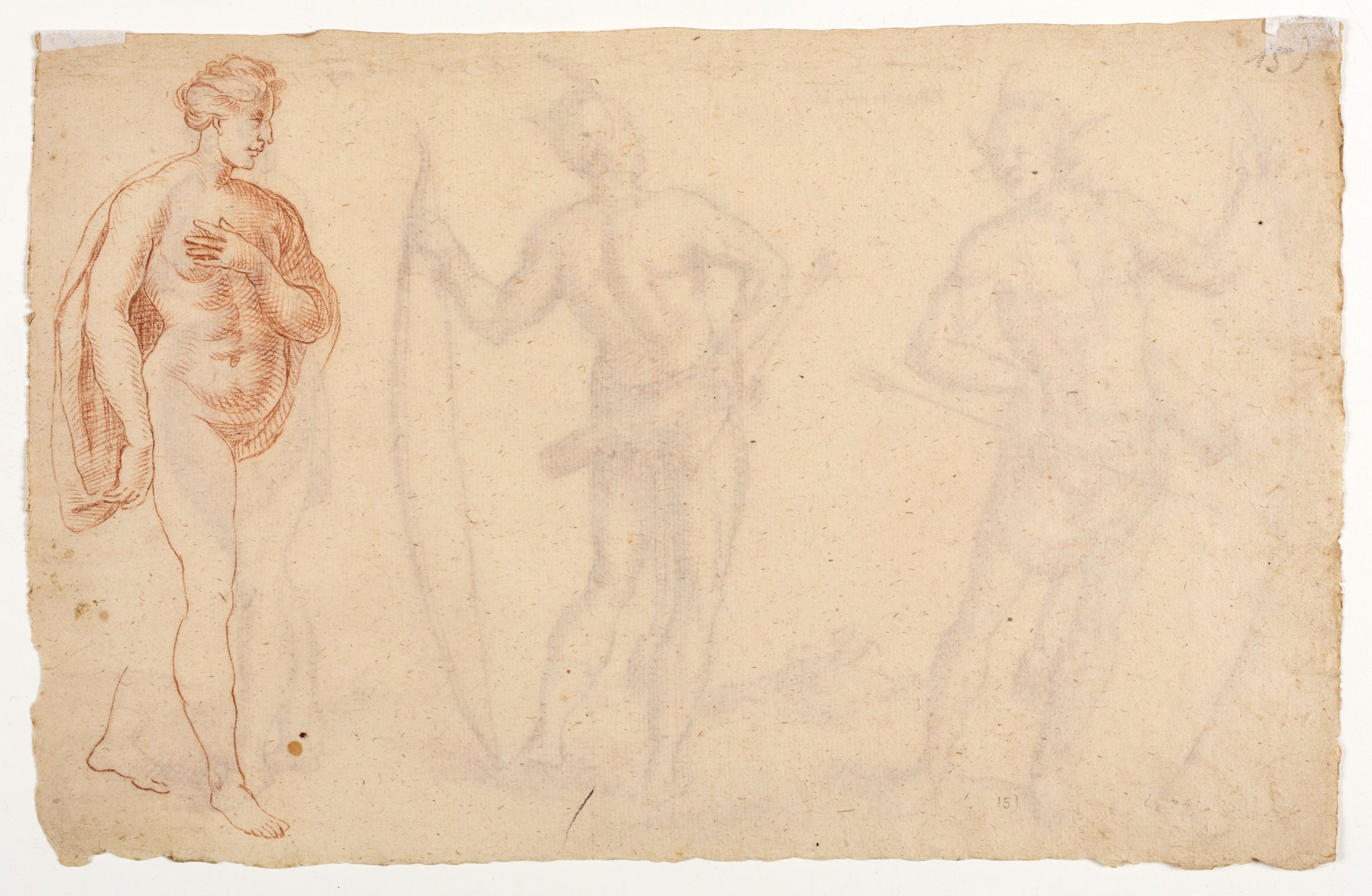
Fig. 7. The reverse of the present work.

[1] Most notably with Paul Hulton, America 1585: The Complete Drawings of John White, Chapel Hill, 1984 and Kim Sloan, A New World: England’s First View of America, Chapel Hill, 2007.
[2] John White and Thomas Harriot, A Briefe and True Report of the New Found Land of Virginia ... In the Yeere 1585 ... At the Speciall Charge and Direction of ... Sir Walter Raleigh ... This Fore Booke Is Made in English. Edited by Theodor de Bry, Translated by Richard Hakluyt, Typis I. Wecheli, svmtibvs T. de Bry, venales reperivntvr in officina S. Feirabendii, 1590.
[3] Thomas Harriot et al. Wunderbarliche, Doch Warhafftige Erklärung, von Der Gelegenheit Vnd Sitten Der Wilden in Virginia, Welche Newlich von Den Engelländern, so Im Jar 1585. : Vom Herrn Reichard Greinuile, Einem von Der Ritterschafft, in Gemeldte Landschafft Die Zu Bewohnen Geführt Waren, Ist Erfunden Worden, in Verlegung H. Walter Raleigh, Ritter Vnd Obersten Dess Zinbergwercks, Auss Vergünstigung Der Durchleuchtigsten Vnnd Vnvberwindlichsten, Elizabeth, Königin in Engelland, &c. [First edition], Bey Johann Wechel, in Verlegung Dieterich Bry., 1590.