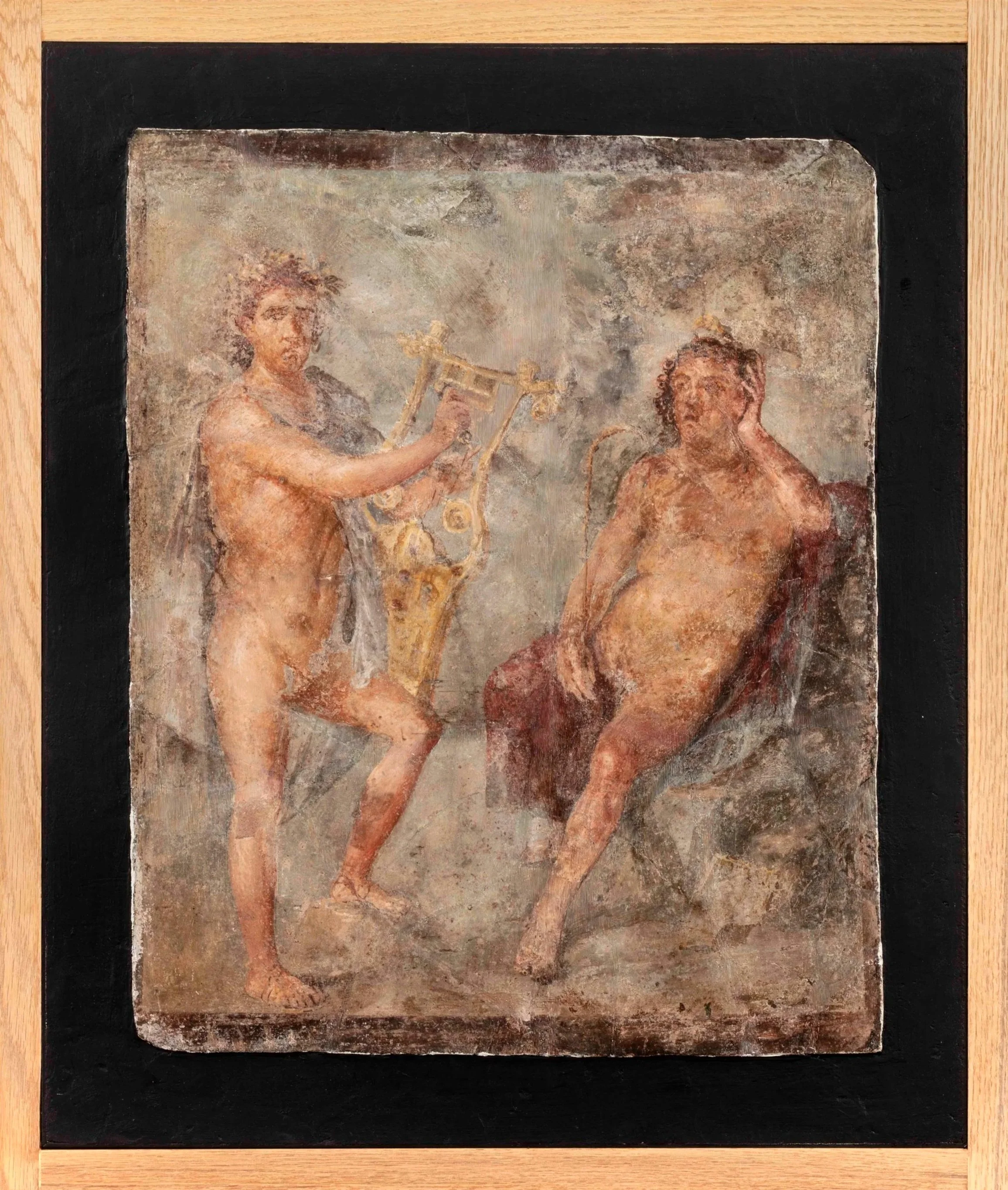
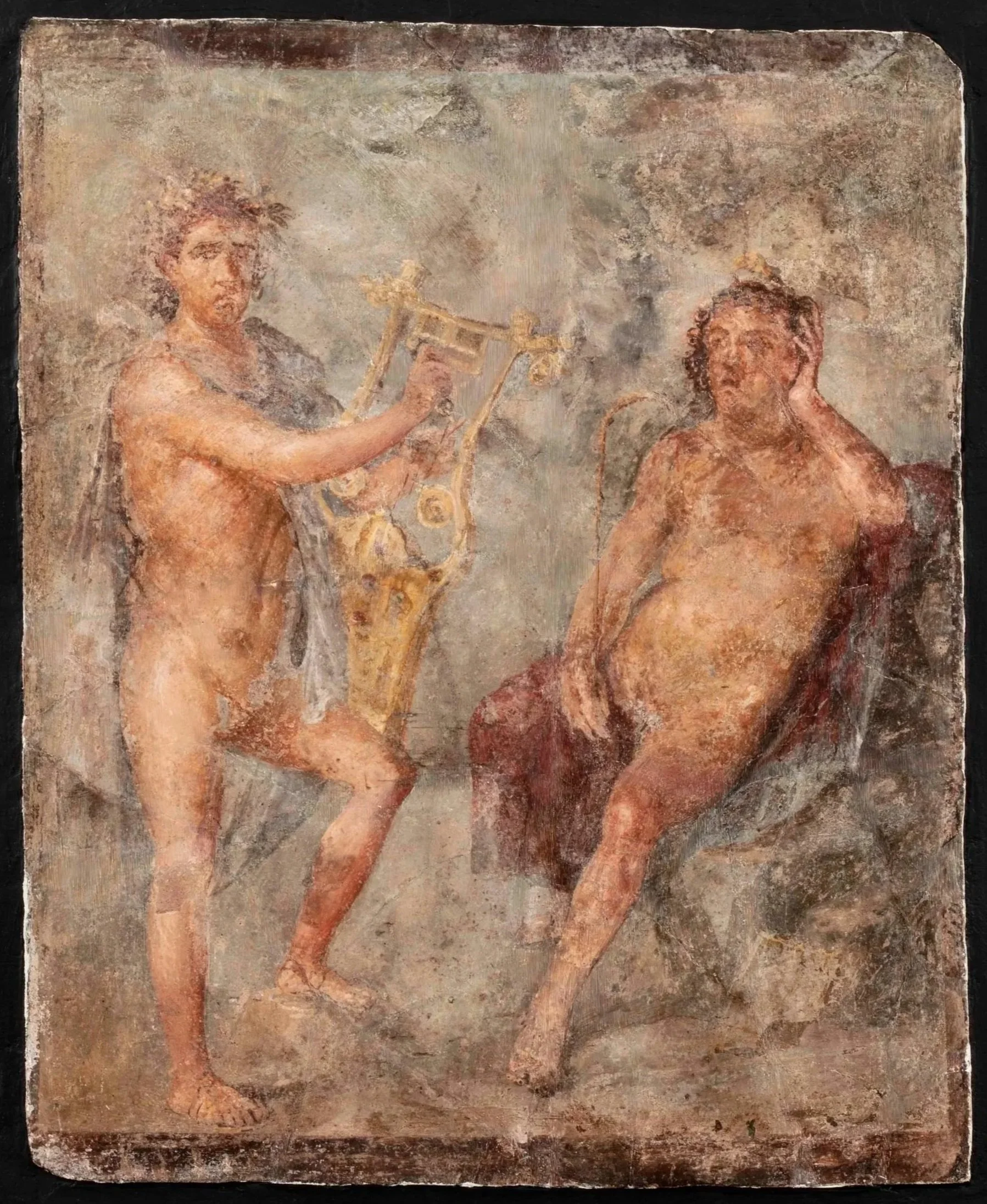
ROMAN WALL PAINTING PANEL
Third Pompeian Style
Circa Late 1st Century B.C. to Early 1st Century A.D.
Apollo Performing for a Drunken Silenus
Fresco
25 ¼ x 20 ½ inches (63.5 x 50.8 cm
Provenance:
Peter Falk (1927 – 2011), Beverly Hills, CA; and by descent.
This striking Roman fresco is a fragment of a wall painting likely from Pompeii or the surrounding coastline. It depicts the mythological subject of Apollo performing on his lyre for Silenus, god of winemaking and drunken revelry. Our fresco is a typical example of Roman domestic imagery and likely would have been painted in the public area of an illustrious private villa. It can be dated based on style and technique to the Third Style of Roman wall painting, from approximately 20 B.C.–20 A.D. This period coincided with the reign of the Emperor Augustus, and is marked by a preference for monochrome, uniform background (in this case an attractive blue) and for a focus on individual scenes or small groups of figures.
Roman frescoes are exceedingly rare. The majority were found in the region of Campania around the Bay of Naples. After the eruption of Mount Vesuvius in 79 A.D., much of the surrounding zone—including the cities of Pompeii and Herculaneum—were buried in ash and essentially frozen in time. Most frescoes that are known on the private market today emerged from early excavations of these sites. Today collectors can appreciate the beauty of these images in their homes much like the ancient Roman inhabitants of Italy did.