
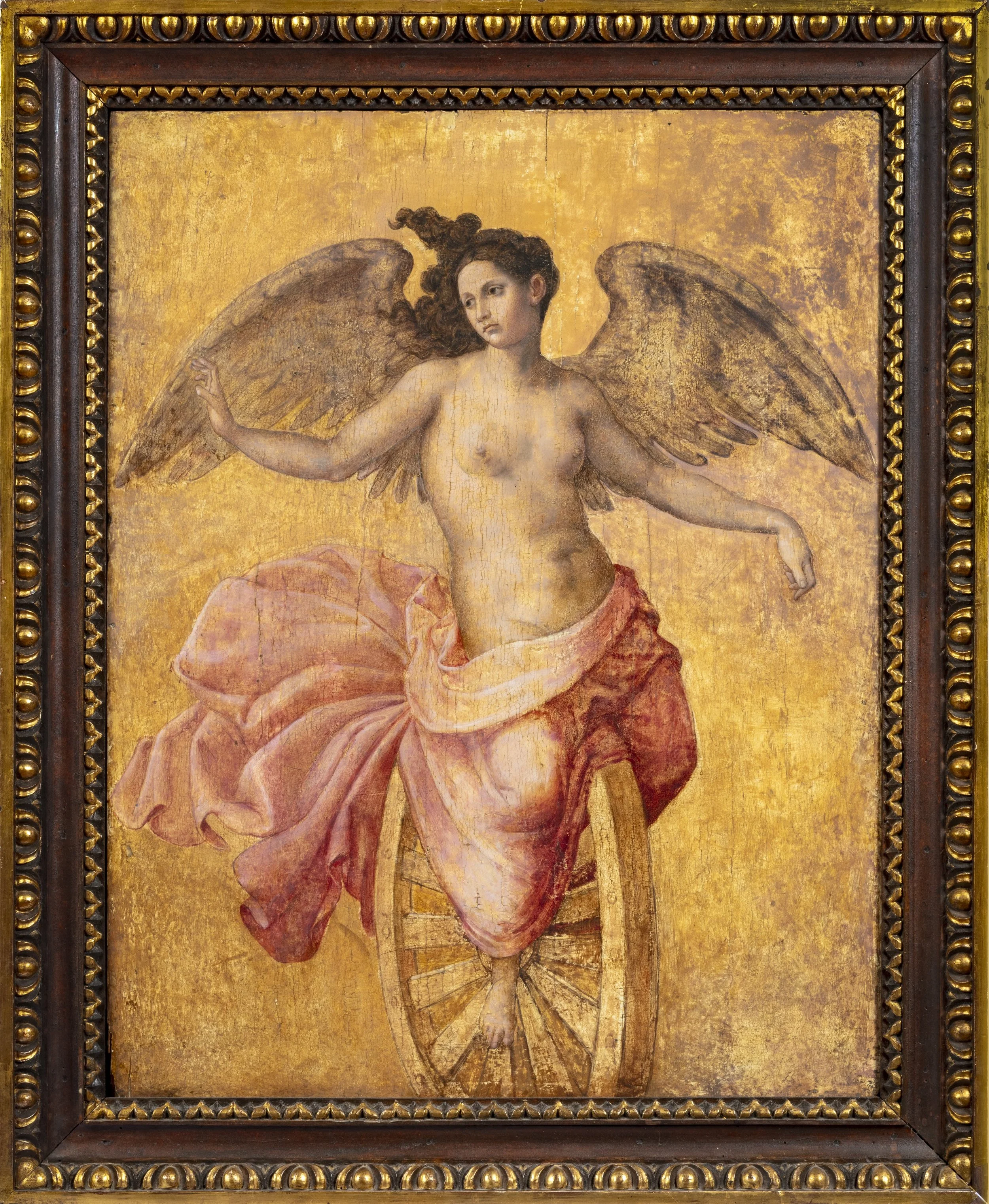
ANDREA DEL MINGA
(Florence, 1535 – 1596)
Allegory of Fortune
Oil on wood panel
30 ⅞ x 24 ¼ inches (78.7 x 61.7 cm)
Provenance:
C. Brinsley Marlay Collection, UK.
Private Collection, Florence, Italy.
Exhibited:
“National Exhibition of Works of Art,” Leeds, 1868, no. 155, as Andrea del Minga.
Literature:
National Exhibition of Works of Art. Official Catalogue., Leeds, 1868, pp. 21, cat. no. 155.
Algernon Graves, A Century of Loan Exhibitions 1813–1912, London, 1913, vol. 2, p. 796.
Adolfo Venturi, Storia dell’Arte ltaliana, vol. 9, no. 6 (1933), p. 416.
Paul C. Hamilton, “Andrea del Minga’s Assunta in Santa Felicita,” in Mitteilungen des Kunsthistorischen Institutes in Florenz, vol. 14, no. 4 (1970), pp. 466-467.
Alessandro Nesi, Andrea del Minga (1535–1596), Un Pittore dello Studiolo Tra “Calunnia” e Fortuna, Florence, 2014, pp. 62-65.
Alessandro Nesi, “Andrea del Minga: Medici Allegory of Fortune,” in Italian Paintings: With an Unpublished Judith Beheading Holofernes by Giuseppe Vermiglio, ed. Marco Grassi and Matteo Grassi, Maastricht, 2015, pp. 61-65, cat. no. 8.
This painting of an allegorical figure of Fortune is an especially distinctive iconography that emerged in 16th-century Florence. Here she is represented in as a half-nude female figure balanced on a wheel (sometimes called the Rota Fortunae), her billowing drapery indicating that she is as changeable as the wind. The present work (and the origins of this iconography) are credited to Andrea del Minga, who trained in the workshops of Ridolfo del Ghirlandaio and Michele Tosini. At a young age, Minga was engaged by Baccio Bandinelli in an important project for the Palazzo Pitti as gifts for Duchess Eleonora of Toledo. This commission established the basis for a fruitful and long-lasting relationship between Minga and the Medici court, and indeed his name often recurs in the administrative records of Florence’s ruling family. It is from the Medici context that this composition emerges.
The Medici associated themselves with the figure of Fortune, who is presented similarly in the Portrait of Giovanni dalle Bande Nere attributed to Carlo Portelli (Figs. 1-2). A detail of the portrait shows the young woman seated on a wheel, holding a crown and scepter, while an armed man grabs her long forelock. This imagery was also conceived as a celebration of Cosimo I de’ Medici, the son of Giovanni dalle Bande Nere, thus acquiring a dynastic significance. The personification of Fortune closely follows a medieval symbolism codified in Boethius’s The Consolation of Philosophy (ca. 524), in which Fortune declares that she “turn[s] the wheel that spins.” In many medieval representations of the Wheel of Fortune, she is depicted turning the wheel, sometimes blindfolded (Fig. 3). In our painting, Fortune appears as a half-nude female figure balanced upon a wheel, an eloquent symbol of instability. She is winged because she must be captured “in flight,” and her hair is gathered into a forelock derived from the classical representation of Kairòs, according to which Fortune should be firmly grasped and “held tight” when she presents herself—like in the representation in Portelli’s portrait. In other versions of this composition, the young woman uses her left hand to sow thorns or caltrops (metal spikes), symbolizing life’s pains and misadventures, while her right hand offers glory, honor, and power, represented by a gold crown, a laurel wreath, and a scepter.
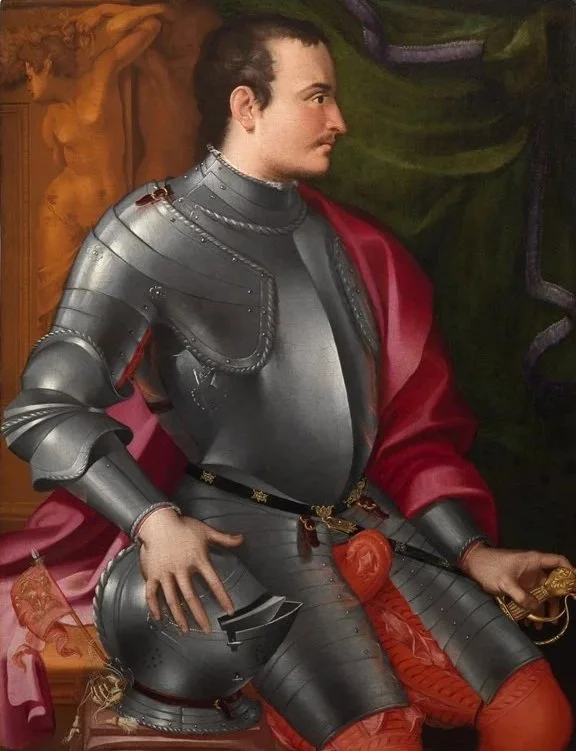
Fig. 1. Attributed to Carlo Portelli, Portrait of Giovanni de’ Medici, Called Giovanni dalle Bande Nere, Minneapolis Institute of Art, Minneapolis.
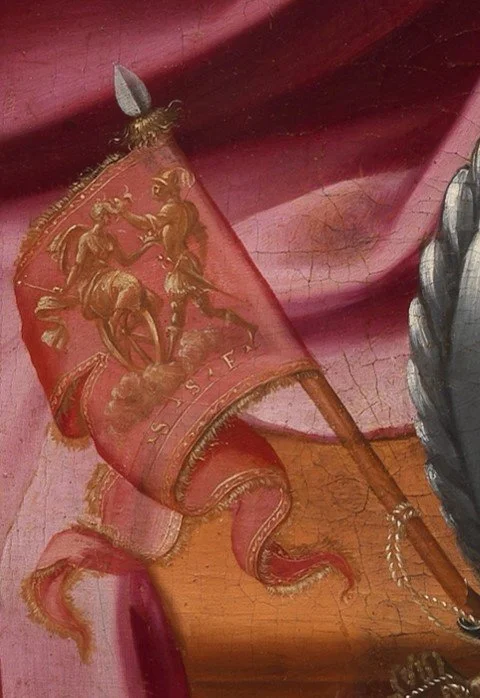
Fig. 2. Detail of Portrait of Giovanni de’ Medici.
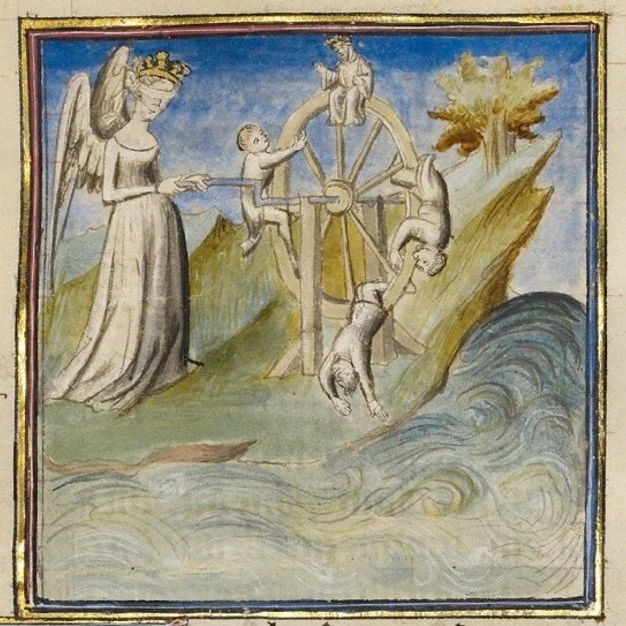
Fig. 3. Unknown Artist, The Wheel of Fortune, fol. 191, from the Lancelot du Lac, Getty Museum, Los Angeles.
As Alessandro Nesi has argued, Andrea del Minga likely created this painting as the prototype for a series of replicas of the Allegory of Fortune, whose circulation may be linked to pro-Medici propaganda and to ownership by members of the faction supporting Florence’s ruling family. A drawing housed in the Gabinetto Disegni e Stampe degli Uffizi (inv. 609 E), formerly attributed to Bronzino, Alessandro Allori, and Michelangelo, has more recently been given to Andrea del Minga on the basis of style (Fig. 4).
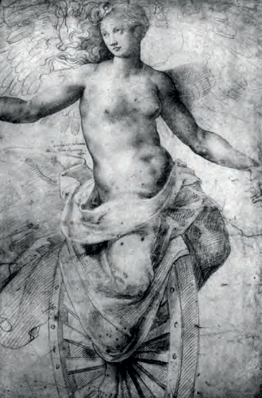
Fig. 4. Andrea del Minga, Allegory of Fortune, Gabinetto Disegni e Stampe degli Uffizi, Florence.
In the present work, the unfinished quality of the paint surface, together with the presence of pentimenti, may indicate that the painting was intended to serve as a model retained in the artist’s workshop. It is therefore possibly a rare example of a preparatory painting, executed to a more advanced stage than a simple drawing or cartoon and conceived by a master so that his workshop could meet the demand for multiple versions of the same imagery.
Within Michele Tosini’s workshop, Michelangelo’s art was highly esteemed, and he and his pupils frequently produced paintings based on Michelangelo’s designs. The various versions of the Wheel of Fortune have been associated with Michelangelo solely because of their forms, since the pose of the young woman on the wheel recalls some of the Ignudi on the Sistine Chapel ceiling. This painting was likely produced during the early period of Andrea del Minga’s career, while he was still following a Michelangelesque artistic language inherited from Tosini’s workshop. Whereas Tosini maintained a plastic solidity and anatomical correctness derived directly from Michelangelo, Minga tended to expand and soften forms, enveloping them in delicate, atmospheric brushwork—a quality evident in this work, where the body is rendered with a soft, voluminous modeling and the drapery with a fluid malleability.