
EDUARD JULIUS BENDEMANN
(Berlin 1811 – 1889 Düsseldorf)
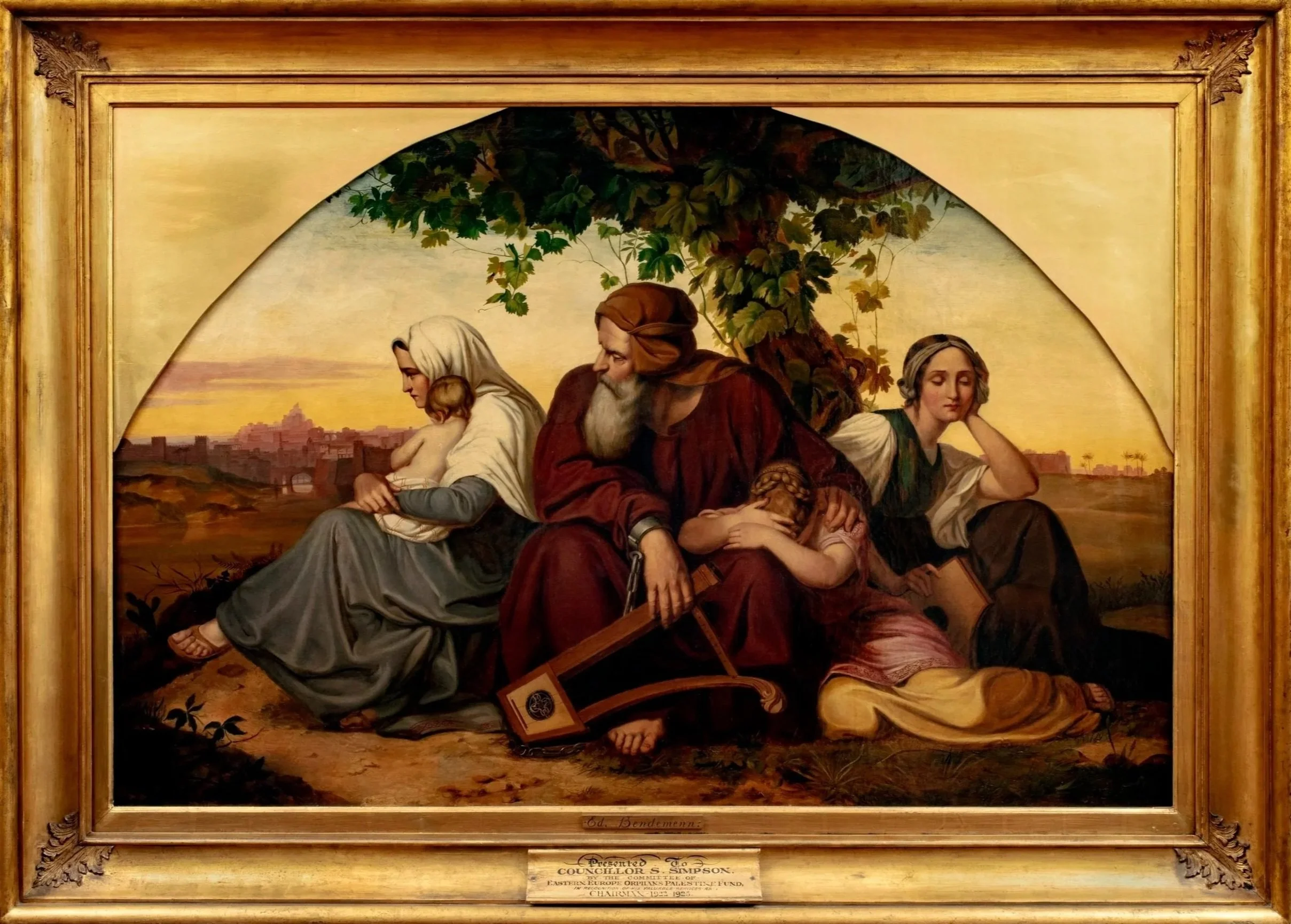
By the Rivers of Babylon
(The Mourning Jews in Exile)
Oil on canvas
40 ⅛ x 60 inches (101.8 x 152.5 cm)
Provenance:
Simeon Simpson, Councillor of Southampton Synagogue, London; Presented to him by the Committee of East European Orphans Palestine Fund, in recognition of his valuable services as Chairman, 1922–1925 (according to the label on the frame).
Private Collection, UK.
Edouard Bendemann was the son of a Jewish banker in Berlin. His early talent led him to study with William von Schadow in Düsseldorf, after which he spent a year in Italy. His career began as a portrait artist, but his fame depends on grand historical paintings, the most prominent and important being By the Rivers of Babylon (The Mourning Jews in Exile), a work that would secure his fame and reputation.
The first version of the work was painted in 1832 and was shown at the Biennial exhibition of the Berlin Academy that year. That painting, now in the Wallraf-Richartz Museum, in Cologne, caused an immediate sensation and toured throughout Germany, the composition later disseminated by through prints (Figs. 1-2). The artist created several subsequent versions of the composition, of which the present painting is one. A drawing is in the collection of the Minneapolis Institute of Arts (Fig. 3).
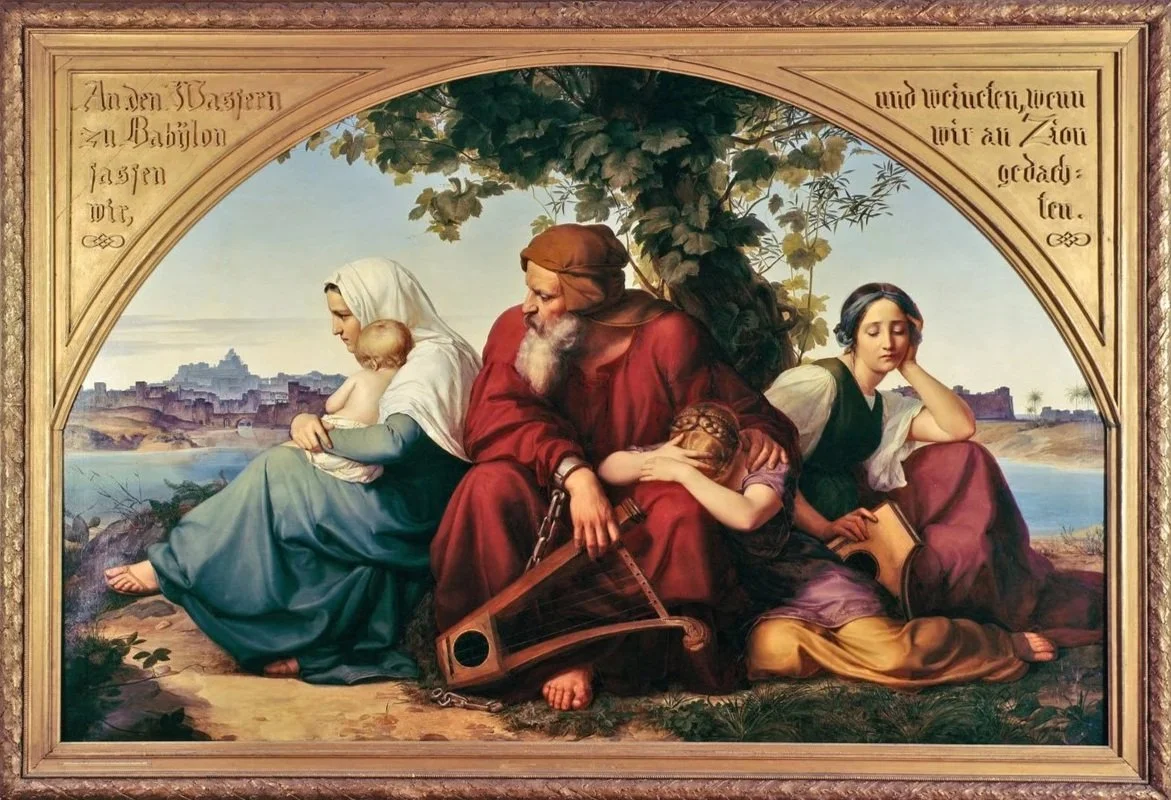
Fig. 1. Bendemann, By the Rivers of Babylon, Wallraf-Richartz Museum, Cologne.
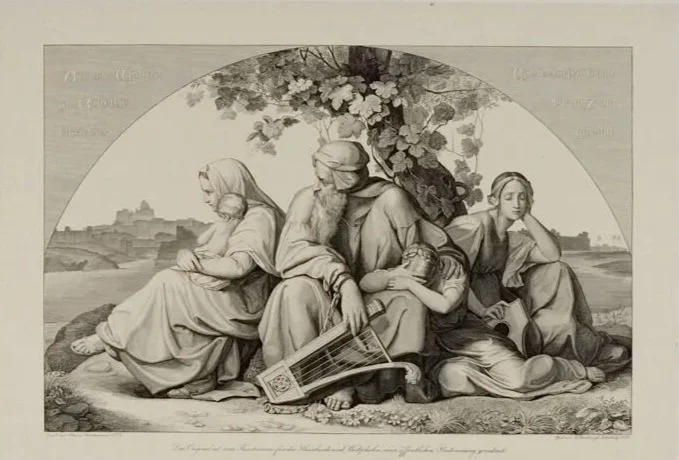
Fig. 2. Ferdinand Ruscheweyh, after Eduard Bendemann, By the Rivers of Babylon, engraving, Philadelphia Museum of Art.
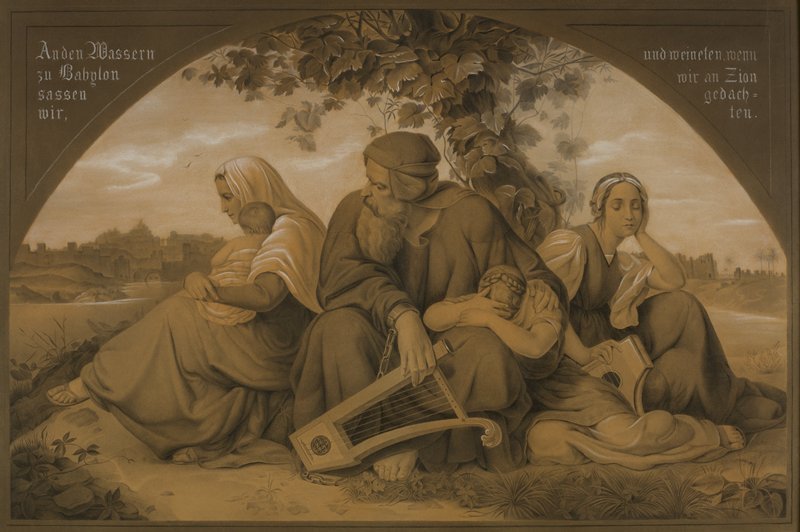
Fig. 3. Bendemann, By the Rivers of Babylon, black and white chalk, Minneapolis Institute of Arts.
Bendemann has taken as his subject Psalm 137, which opens with the powerful lament, “By the rivers of Babylon, there we sat down, yea, we wept, when we remembered Zion.” Before Bendemann’s painting, no one had treated the theme of the Babylonian captivity and the fate of those exiled by King Nebuchadnezzar II after the siege of Jerusalem on such a monumental scale. In his painting the mourning Jews have settled under a large willow at the banks of the Euphrates. The massive tree provides shade and shelter for an old harp-player in chains whose heroic figure forms the rock for a group of young women in need of comfort. The youngest has slumped into his lap hiding her face, overwhelmed by grief and longing. To the right a dark-haired beauty has let her zither slide to the ground as she pauses in deep thought, her eyes cast down, like a powerful allegory of melancholy. Only the last of the four, a mother with an infant on her arm, seems hopeful. Letting her gaze wander into the far distance, she heralds an unwavering trust in God, a belief in the divine promise of a bright future for herself and her offspring. Among the Jews at the river of Babylon, she is the figure seeing salvation.
Bendemann has brilliantly captured in visual form the melancholic spirit of the psalm:
“By the rivers of Babylon, there we sat down, yea, we wept, when we remembered Zion.
We hanged our harps upon the willows in the midst thereof.
For there they that carried us away captive required of us a song; and they that wasted us required of us mirth, saying, Sing us one of the songs of Zion.
How shall we sing the Lord's song in a strange land?
If I forget thee, O Jerusalem, let my right hand forget her cunning.
If I do not remember thee, let my tongue cleave to the roof of my mouth; if I prefer not Jerusalem above my chief joy.
Remember, O Lord, the children of Edom in the day of Jerusalem; who said, Rase it, rase it, even to the foundation thereof.
O daughter of Babylon, who art to be destroyed; happy shall he be, that rewardeth thee as thou hast served us.
Happy shall he be, that taketh and dasheth thy little ones against the stones.”
The psalm and the evocation of exile and displacement is one that has continued to resonate until today, as both the painting and its biblical source have come to symbolize the diaspora of the Jewish people.