

GASPAR MIGUEL DE BERRÍO
(Potosí, Bolivia, ca. 1706 – ca. 1762)
Virgin of Mercy with Saint Peter Nolasco and Saint Raymond Nonnatus
Oil on canvas
31 x 24 ½ inches (78.7 x 62.2 cm)
Provenance:
Private Collection, Uruguay, for at least the last 80 years.
This Virgin of Mercy is a spectacular example of Spanish Viceregal painting in Bolivia by Gaspar Miguel de Berrío—an artist with a significant corpus of works, but about whom few biographical details are known.[1] The painting depicts the Virgin and Child in heavenly glory, surrounded by archangels, angels, and saints in adoration. The iconography is strongly associated with the Mercedarian Friars, a religious order of significant influence in Vicregal Peru and Alto Peru (present-day Bolivia). The Order of the Blessed Virgin Mary of Mercy—Orden de la Merced, or the Mercedarians—was established in 1218 following the miraculous appearance of the Virgin to Saint Peter Nolasco, its eventual founder. From its origins in Barcelona, the Order, dedicated to the liberation of Christian slaves from their African captors (hence its alternate name, the Order of Our Lady of Ransom) grew throughout Europe. Following the recapture of Spain and the discovery of the Americas, both in 1492, the Mercedarians devoted their efforts towards freeing the “captive” souls of the indigenous peoples. A Mercedarian friar accompanied Columbus on his second voyage and three missionaries from the Order traveled with the conquistador Francisco Pizarro to Peru. By the 1530s and 1540s the Order had established convents in the Peruvian towns of Lima, Cuzco, Trujillo, Huamanga, Arequipa, and Chachapoyas, as well as in Chuquisaca, La Paz, and Potosí in present-day Bolivia.
Here the Virgin sits on a cloud and holds the blessing Christ Child in her arms. She is dressed in the white robes of the Mercedarian Order, edged with gold embroidery, with a cloak covering her shoulders. An open gold crown rests on her head, and she leans to hand a scapular with the Mercedarian coat-of-arms to a guardian angel, who offers a flaming heart of charity in exchange. Flying angels hold the Virgin’s robes aloft, separating the figures below from the province of heaven above with God the Father, the Holy Spirit, the archangels Raphael and Gabriel, as well as a host of putti. The two main saints associated with the Mercedarian Order are shown looking up at this heavenly apparition. Saint Peter Nolasco crosses his hands over his chest, while Saint Raymond Nonnatus, who was killed in North Africa while working to free Christians from Muslim prisons, carries a martyr’s palm with three crowns, symbolizing chastity, eloquence, and martyrdom. The saints are joined by the Archangel Michael, the weigher of souls, as well as a diminutive, nude female figure—a representation of Eve in a South American landscape presented as a kind of Garden of Eden.
Gaspar Miguel de Berrío’s authorship of this painting has been confirmed by Dr. Luis Eduardo Wuffarden on the basis of a photograph.[2] He has written of this work:
“This finely executed piece belongs to the genre of “patrocinios” (protective representations), whose style points to a master active in Potosí (Alto Peru) in the mid-18th century. This author of this work is Manuel Gaspar de Berrío, an artistic personality that is fairly well-defined, although little is still known about his biographical trajectory. While several scholars consider him a disciple of Melchor Pérez de Holguín, there is no documentary evidence to support that connection. What is certain is that Berrío stands as the most notable painter in the Alto Peru region of the generation following Holguín.
Unlike Holguín, Berrío’s work is characterized by the intensive use of gilding on the painted surface with highly intricate decorative patterns, perhaps influenced by the prominence of this technique in contemporary Cuzco painting. Likewise, Berrío is distinguished by a distinctive use of chiaroscuro and by the modeling of faces with delicate features and a porcelain-like appearance, as well as by the majestic character of his religious compositions. In these, figures often differ in size and proportion, emphasizing their respective hierarchies within sacred history. Particularly noteworthy are some of his “patrocinio” paintings, such as the Our Lady of Mount Carmel formerly in the Huber Collection and now in the Philadelphia Museum of Art (Fig. 1), and the monumental Patrocinio of Saint Joseph in the Museo Nacional de Santiago de Chile (Fig. 2).
Ultimately, every aspect of the design and coloration of this painting relates directly to Berrío’s personal style and his period of artistic maturity, as seen in the comparative works mentioned above. Consider, for instance, the human types depicted in his figures, as well as the slender, petite silhouettes of the putti surrounding the Virgin. Much the same could be said of his rather light palette—notably the two-toned rendering of the halos—as well as his distinctive treatment of the landscape, where the painter lingers over certain secondary details, such as the colorful flowers seen in the foreground of the present work.”
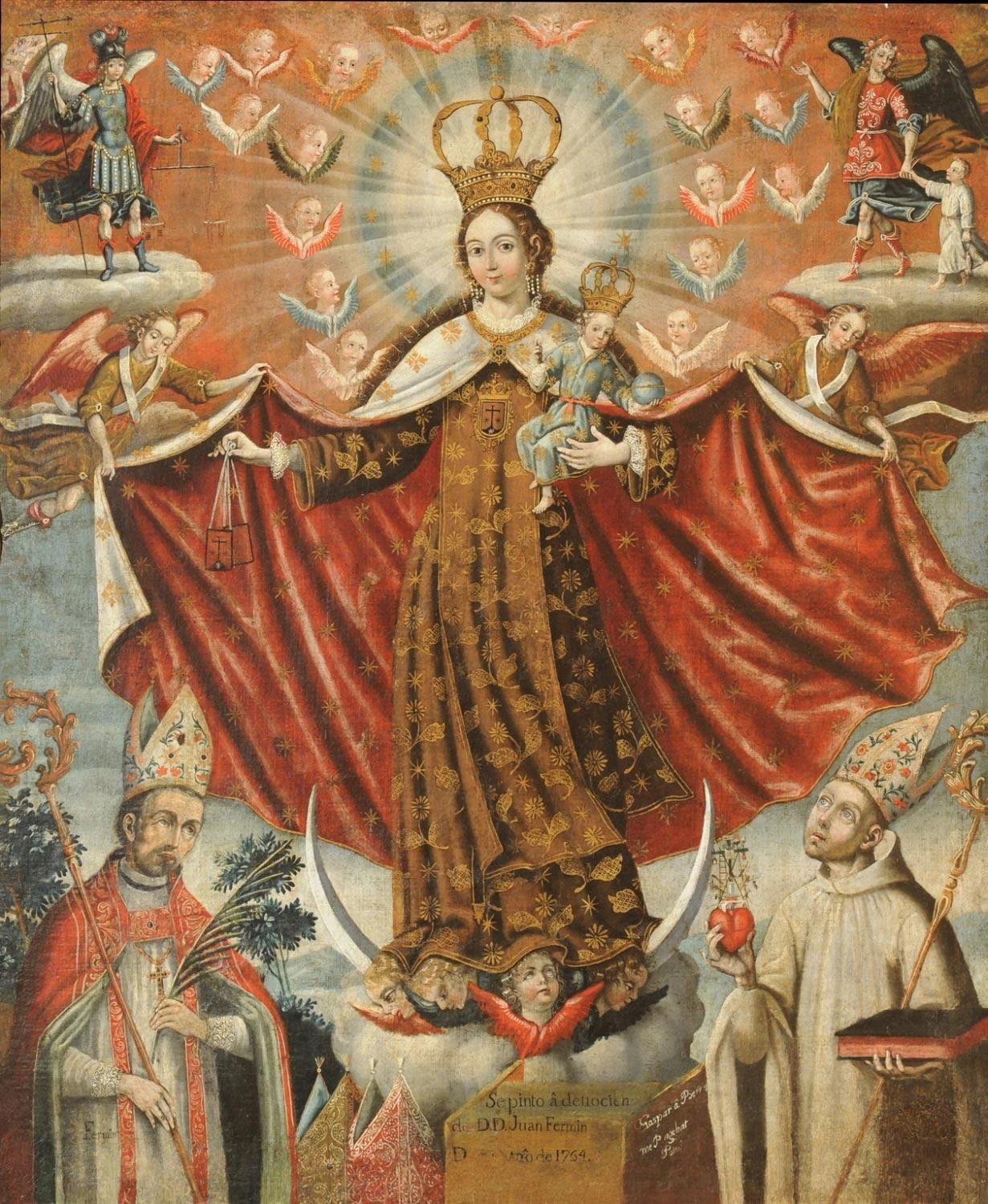
Fig. 1. Gaspar Miguel de Berrío, Our Lady of Mount Carmel with Bishop Saints, Philadelphia Museum of Art.
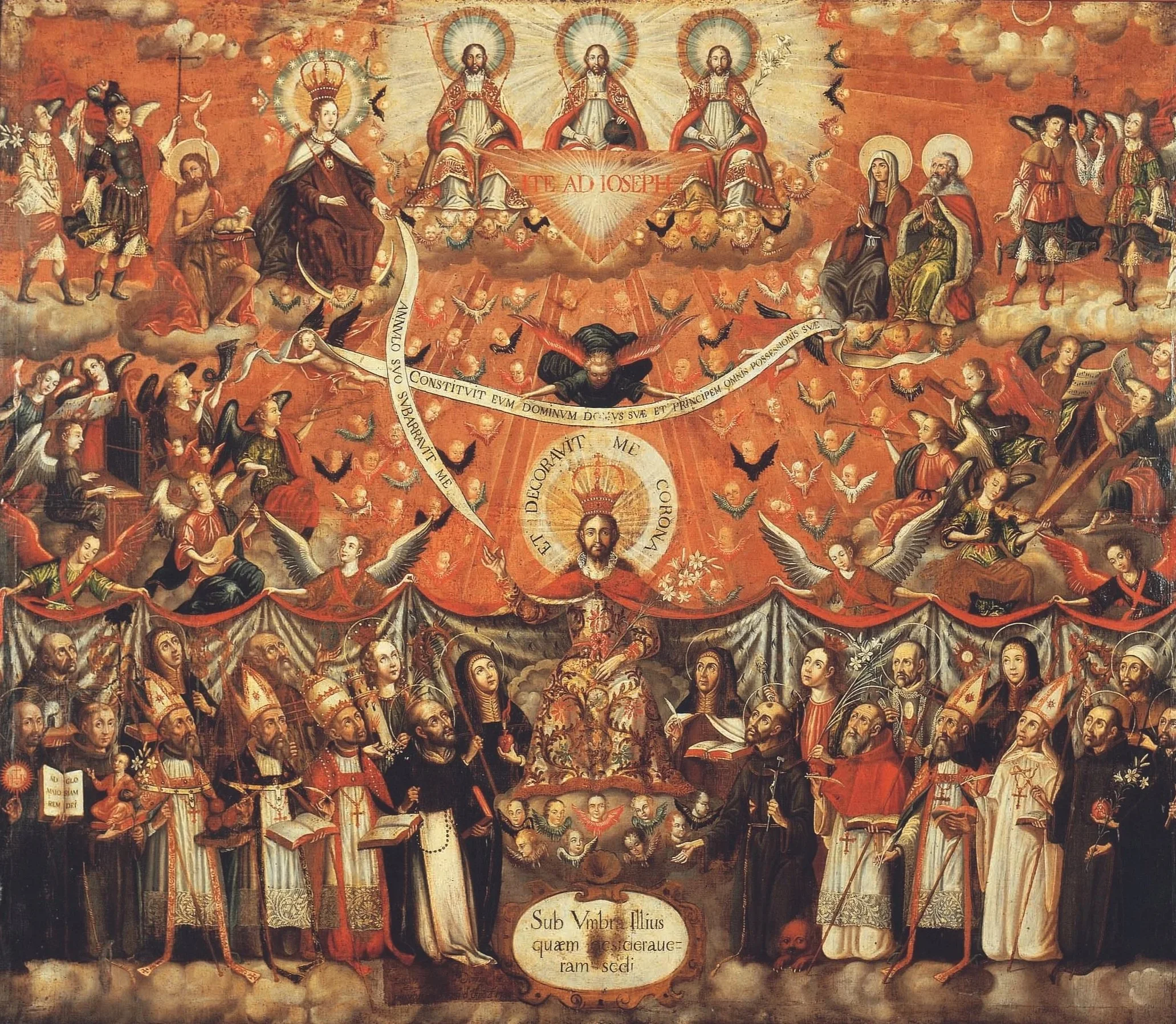
Fig. 2. Gaspar Miguel de Berrío, Patrocinio of Saint Joseph, Museo Nacional de Santiago de Chile.
[1] For comparative literature on the artist, see: Suzanne L. Stratton-Pruitt with Mark A. Castro, Journeys to New Worlds: Spanish and Portuguese Colonial Art in the Roberta and Richard Huber Collection, exh. cat., Philadelphia, 2013, pp. 55-57.
[2] Dr. Wuffarden’s catalogue entry on the painting, dated 13 April 2026, is available upon request.