
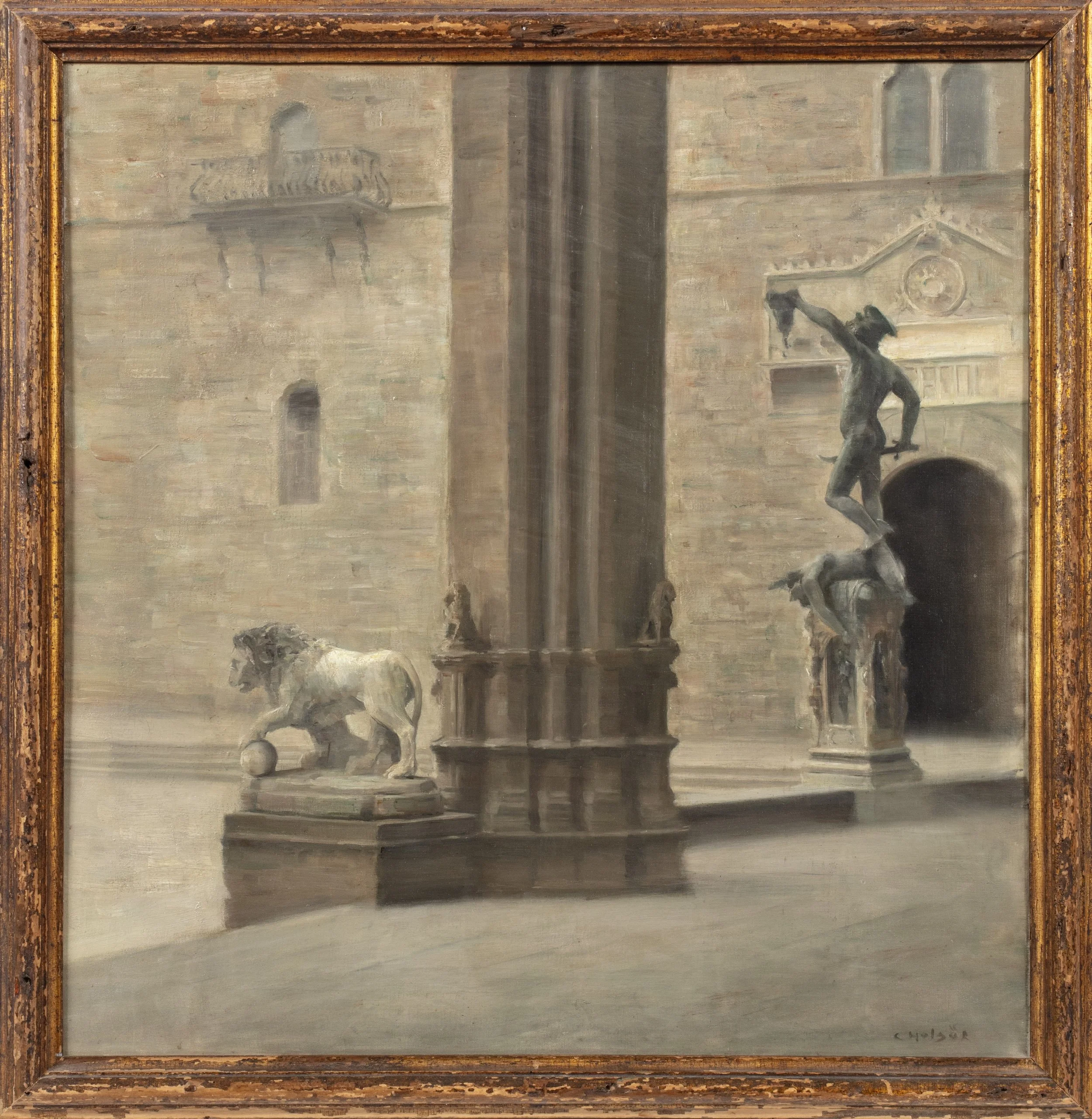
CARL HOLSØE
(Århus 1863 – 1935 Asserbo)
Loggia dei Lanzi
Oil on canvas
27 ½ x 25 ¾ inches (69.9 x 65.5 cm)
Provenance:
Christie’s, London, 18 December 1997, lot 48; where acquired by:
Private Collection, Florence, Italy, until 2026.
On the heels of the stylistic revolution of the Danish Golden Age, painters in Denmark in the late 19th and early 20th centuries focused increasingly on the depiction of domestic interior scenes. The greatest proponents of this genre were Carl Holsøe and his friend Vilhelm Hammershøi. While Hammershøi gained international acclaim for the sober settings of his modernist paintings, Holsøe’s domestic works were comparably direct and even naturalistic. Tranquil Danish interiors were the dominant subject of Carl Holsøe’s artistic output, but he applied the same artistic sensibility to his outdoor scenes, which are distinguished by his precise handling of light and his harmonious use of color.
The present work is a rarity in Holsøe’s oeuvre as a depiction of one of the most famous sites in Florence: the Loggia dei Lanzi in the Piazza della Signoria (Fig. 1). Holsøe likely completed it during his stay in Italy in 1897, when he received an academic scholarship to study there. Painting from inside the Loggia dei Lanzi and facing the Palazzo Vecchio, Holsøe captures one of the most iconic sculptures of the site, Benvenuto Cellini’s Perseus with the Head of Medusa, alongside one of the Medici lions. The absence of Michelangelo’s David is explained by the fact that the original sculpture was removed from the piazza and installed in the Galleria dell’Accademia only a few years earlier in 1873. The replica still in its place was not installed until 1910. Baccio Bandinelli’s Hercules and Cacus, which remained in situ, is just out of view to the right of the main entrance of the palazzo.
While the Florentine subject may be unusual for the artist, the painting retains the same balanced composition and moody, atmospheric quality that defined his interiors. The central column of the loggia stands prominently in the center of the canvas, dividing and defining the space. Each of the sculptures is framed to the left and to the right of it. To the left, the marble lion paces with its paw resting on a sphere—a reference to the Medici palle, the six balls from their family crest. On the right, the bronze statue of Perseus stands prominently on a raised pedestal holding aloft the head of Medusa. The differing heights of the sculptures and the lines of the architecture generate a dynamic visual rhythm that cuts diagonally across the composition from the lower left to the upper right. In the background, Holsøe’s visible brushwork captures the coarse texture of the Palazzo Vecchio’s stone façade bathed in an autumnal light. To heighten his vision of serenity and compositional balance Holsøe has eliminated some of the windows and doors of the palazzo, as well as the base of the statue of Ajax Bearing the Corpse of Achilles in the loggia (Fig. 2).
Holsøe treated the Loggia dei Lanzi on one other occasion (Fig. 3), a smaller canvas of broader horizontal format. That view was taken from a lower vantage point, slightly to the left of that in our painting. While both evoke the eerie silence of the abandoned, habitually vibrant square (more common in the artist’s domestic interiors) the present painting achieves an almost poetic equilibrium of tension and tranquility through its tight cropping, formal structure, and muted tonality. How different is Antonietta Brandeis’s near contemporary depiction of the same scene (Fig. 4), populated by elegant tourists taking in the sights on a bright day!
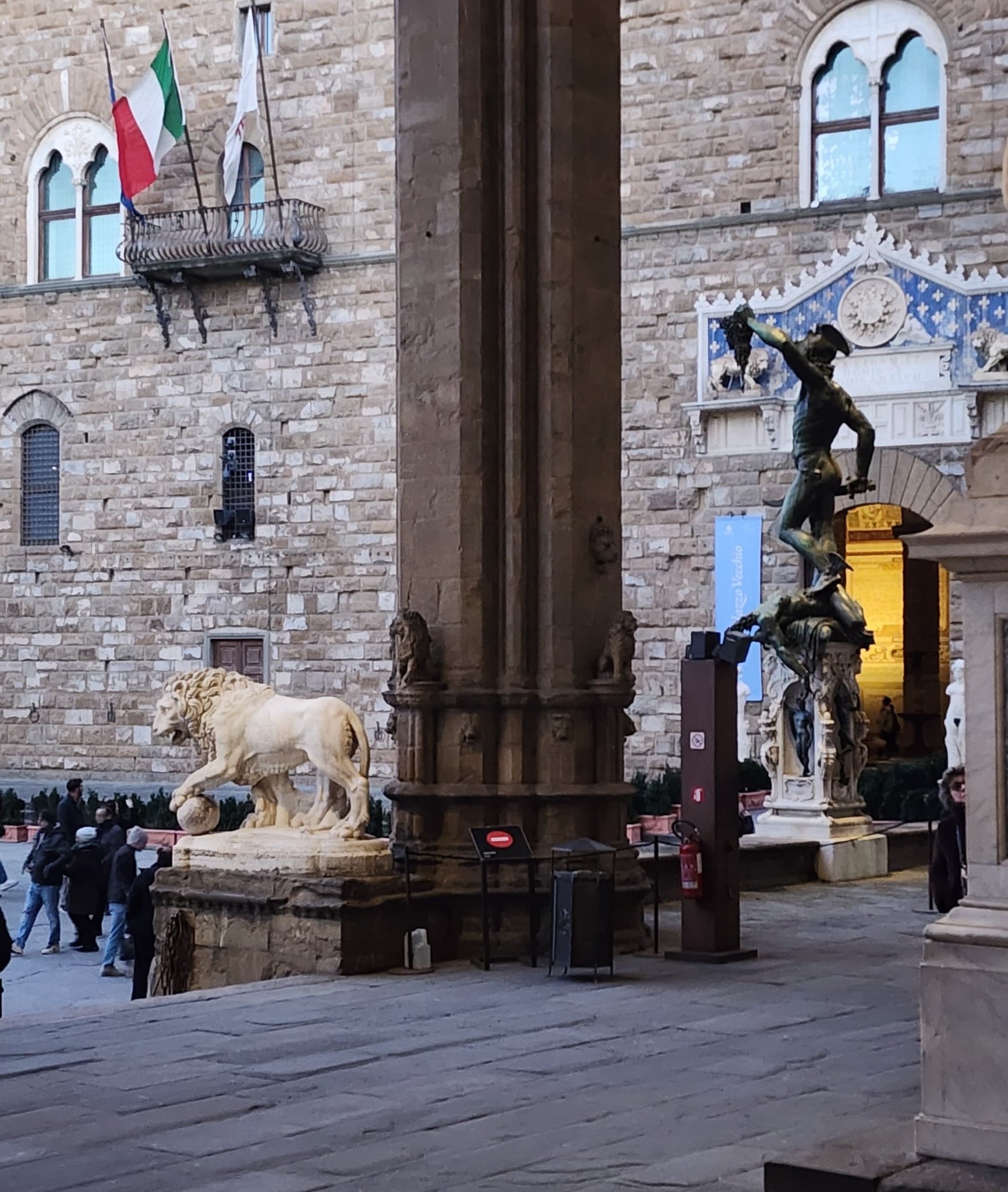
Fig. 1. The Loggia dei Lanzi in the present day.
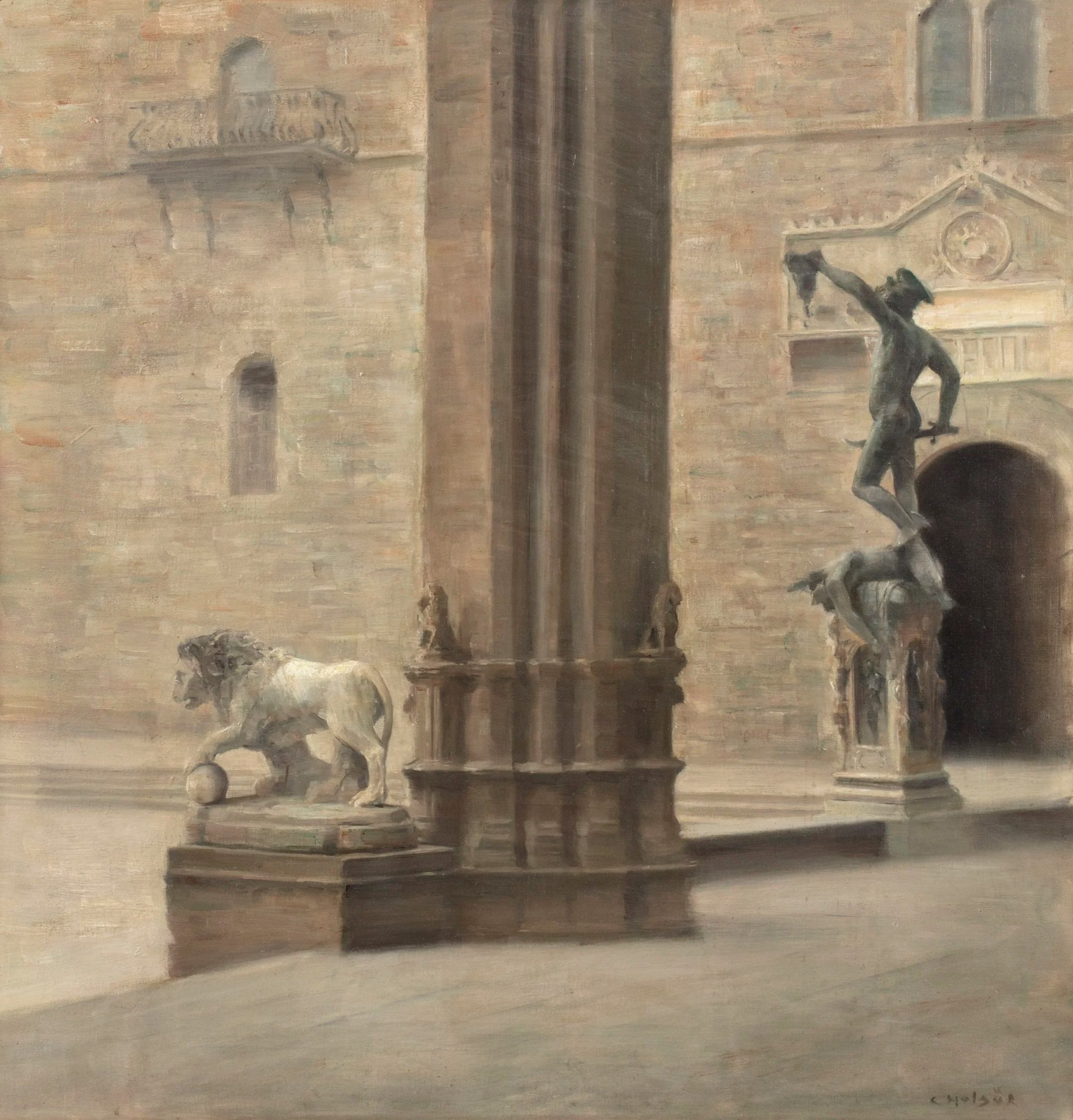
Fig. 2. The present work.
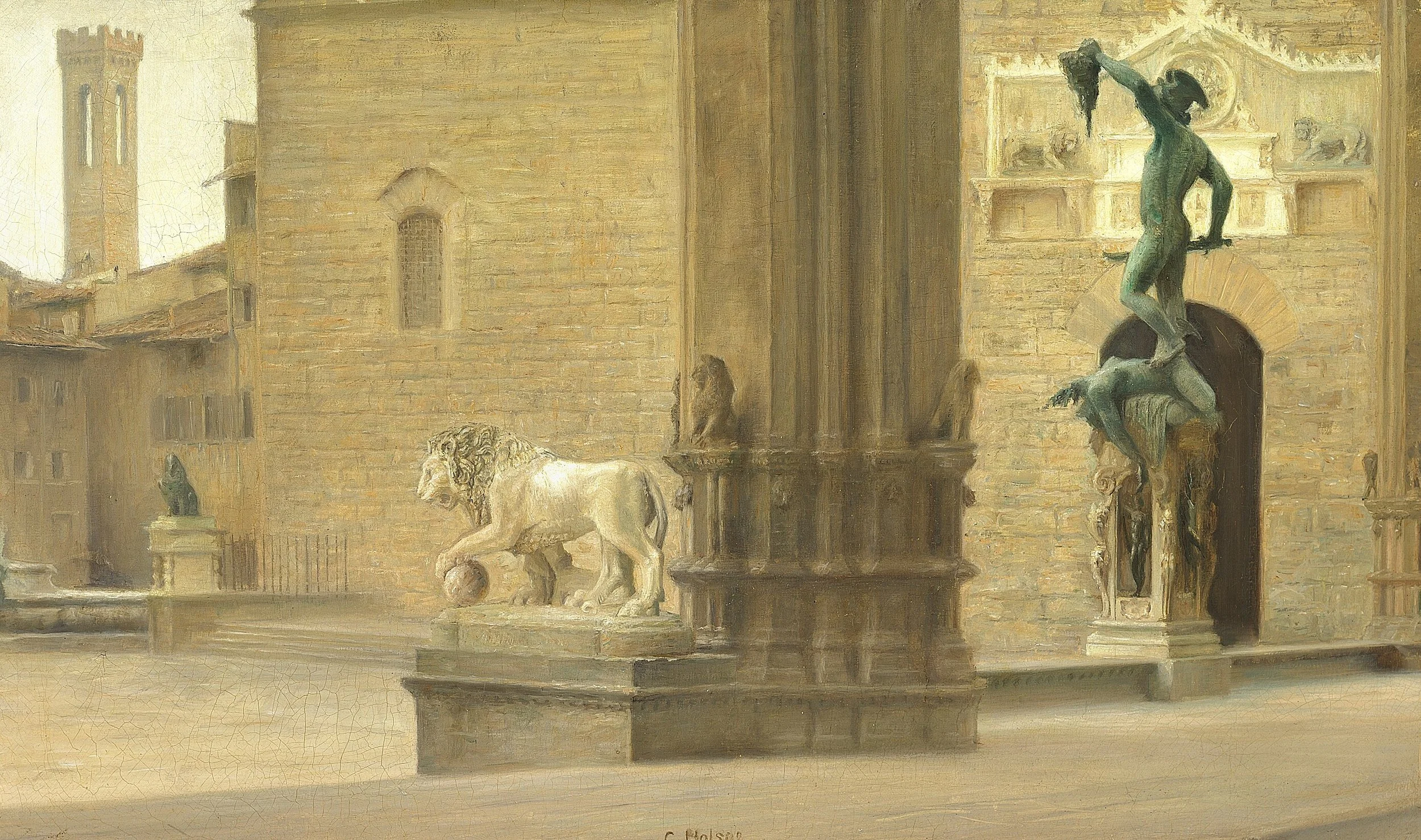
Fig. 3. Carl Holsøe, Loggia dei Lanzi and the Piazza della Signoria, 14.1 x 23.6 inches, formerly art market.
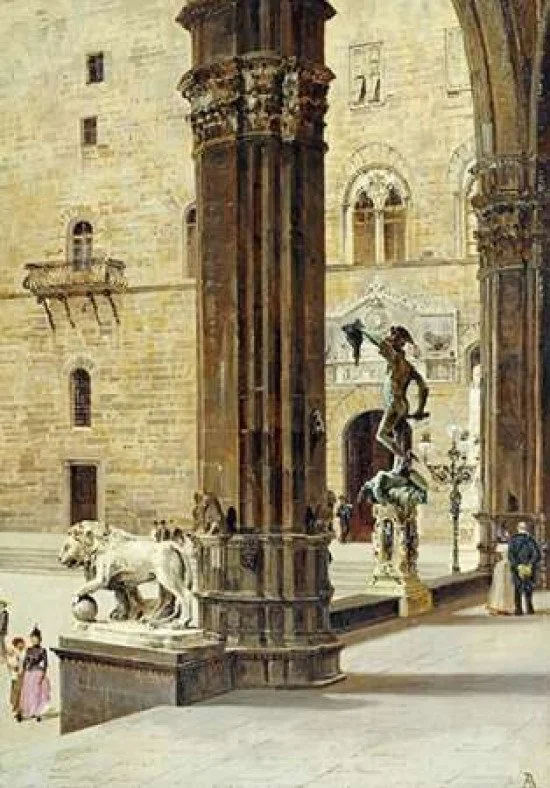
Fig. 4. Antonietta Brandeis, Loggia dei Lanzi, Florence, oil on panel, 13 ⅜ x 9 ⅜ inches, formerly art market.