
Studio of
JEAN-ANTOINE HOUDON
(Versailles 1741 – 1828 Paris)
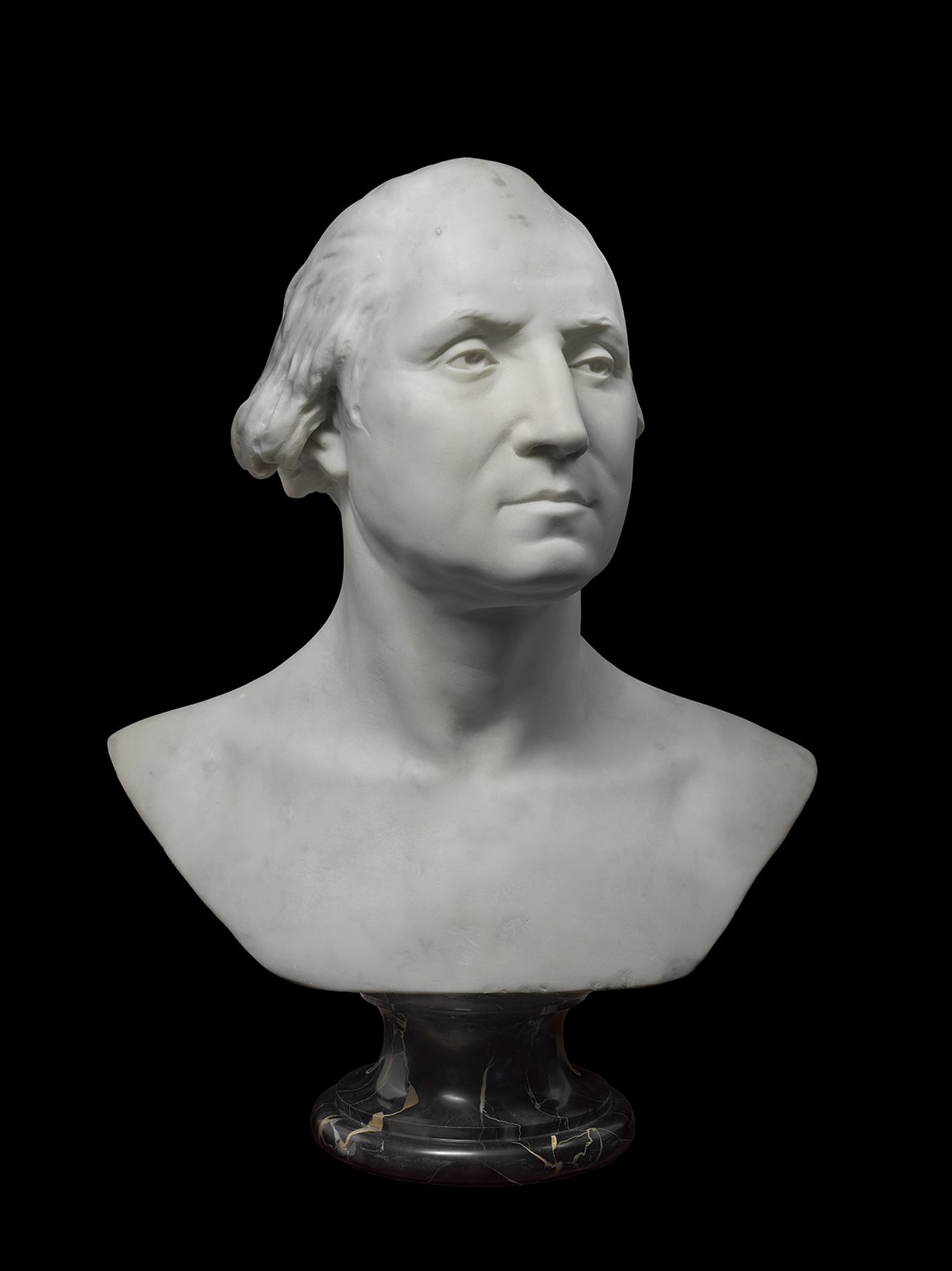
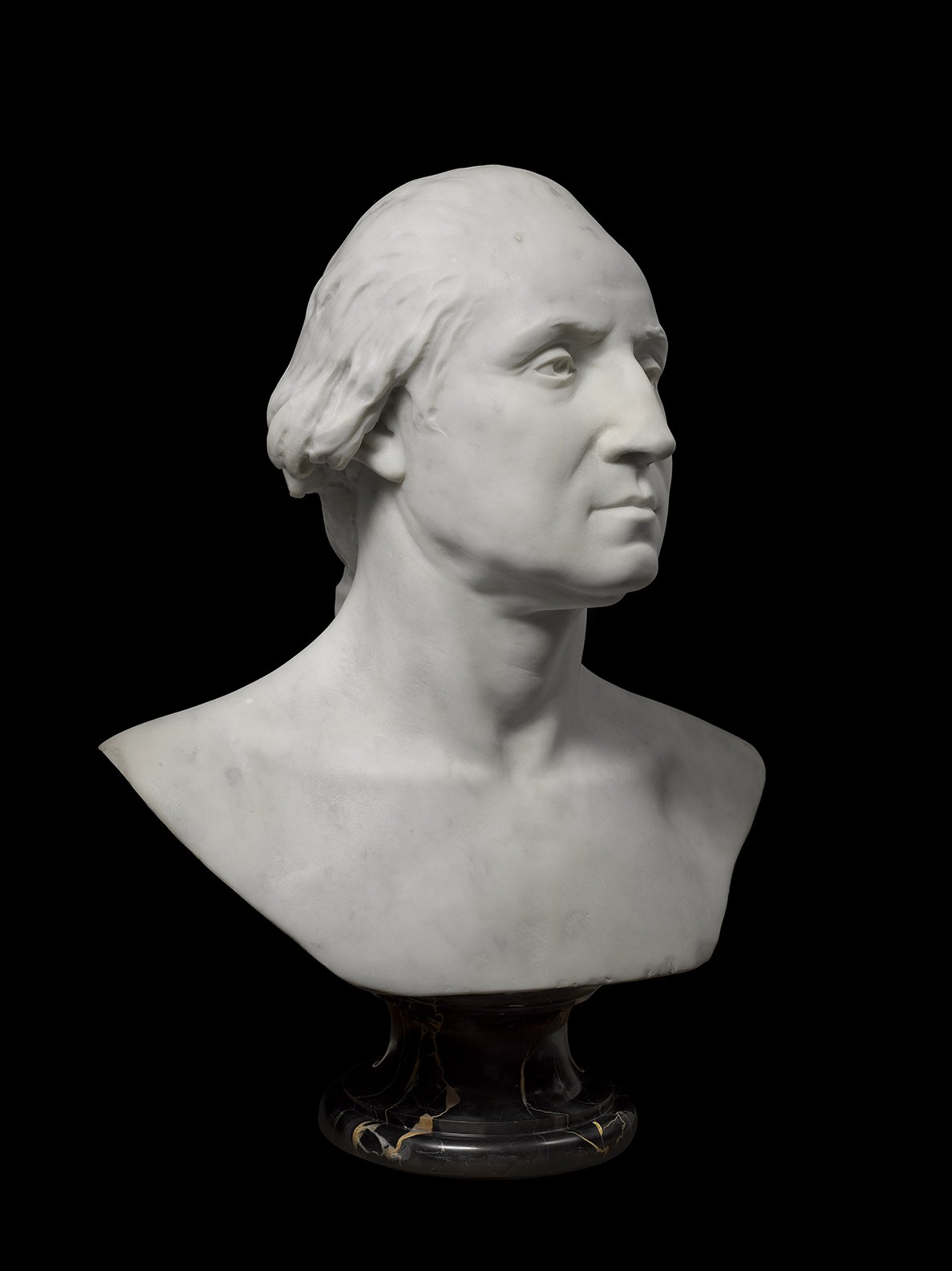
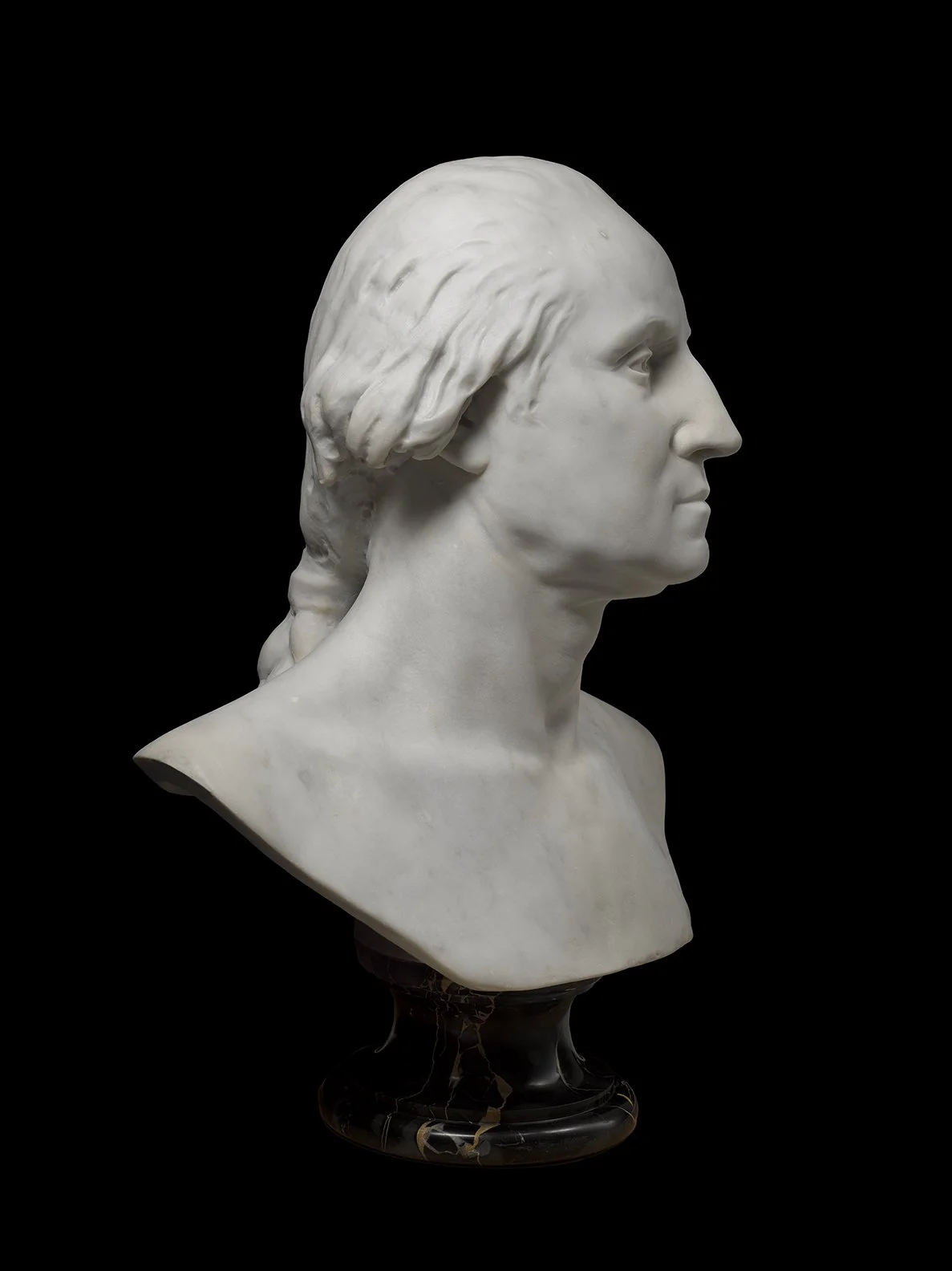
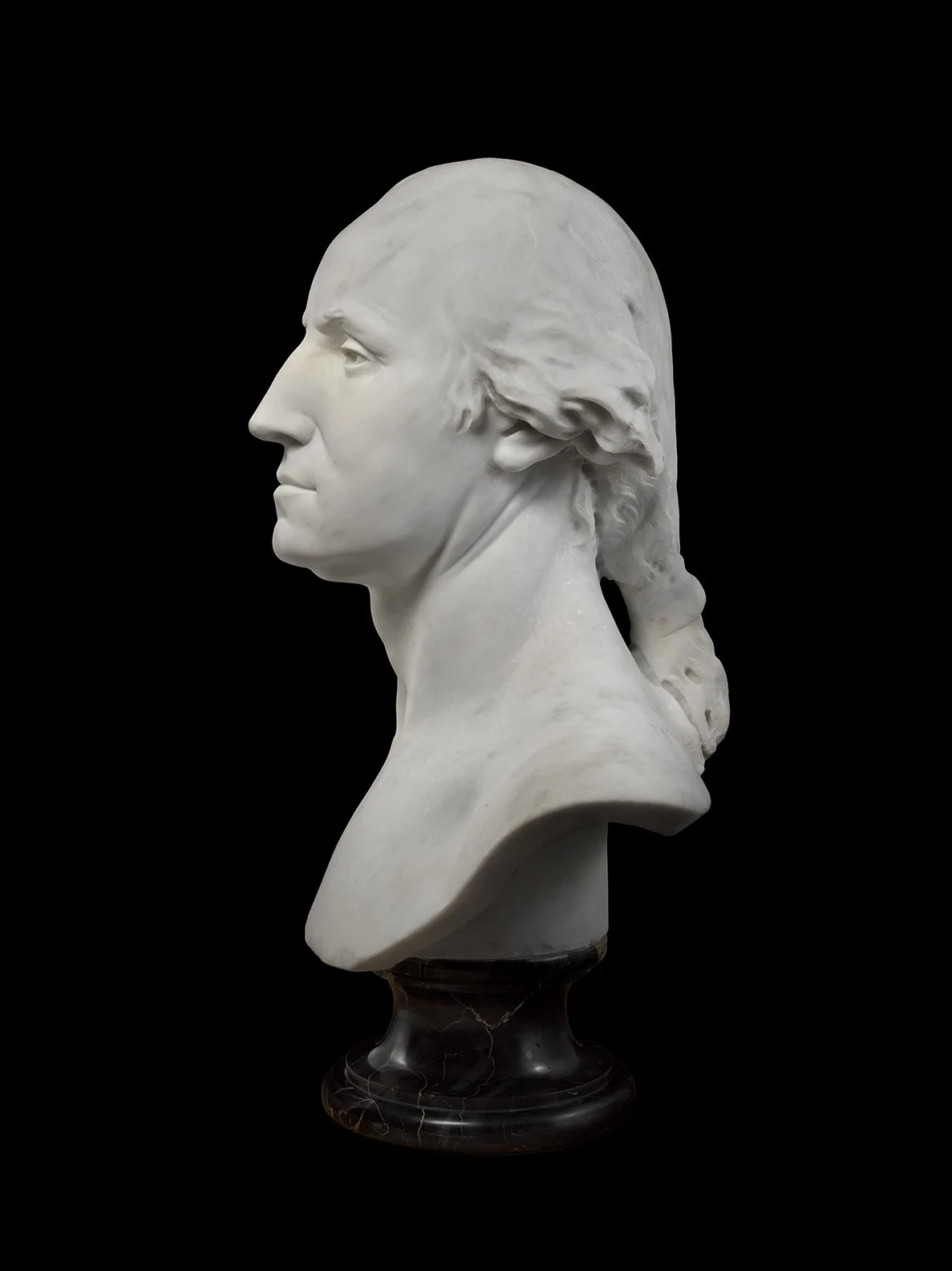
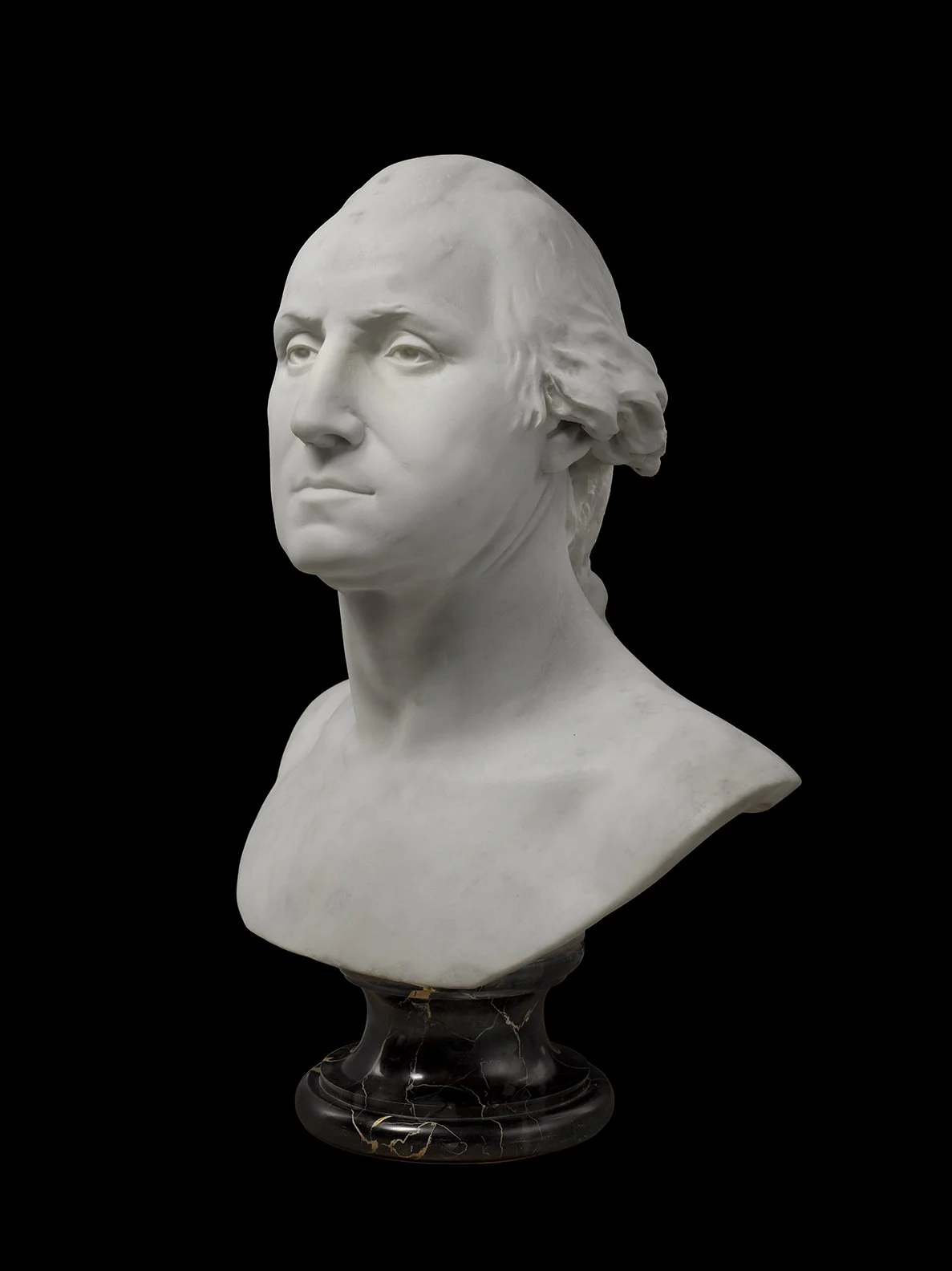
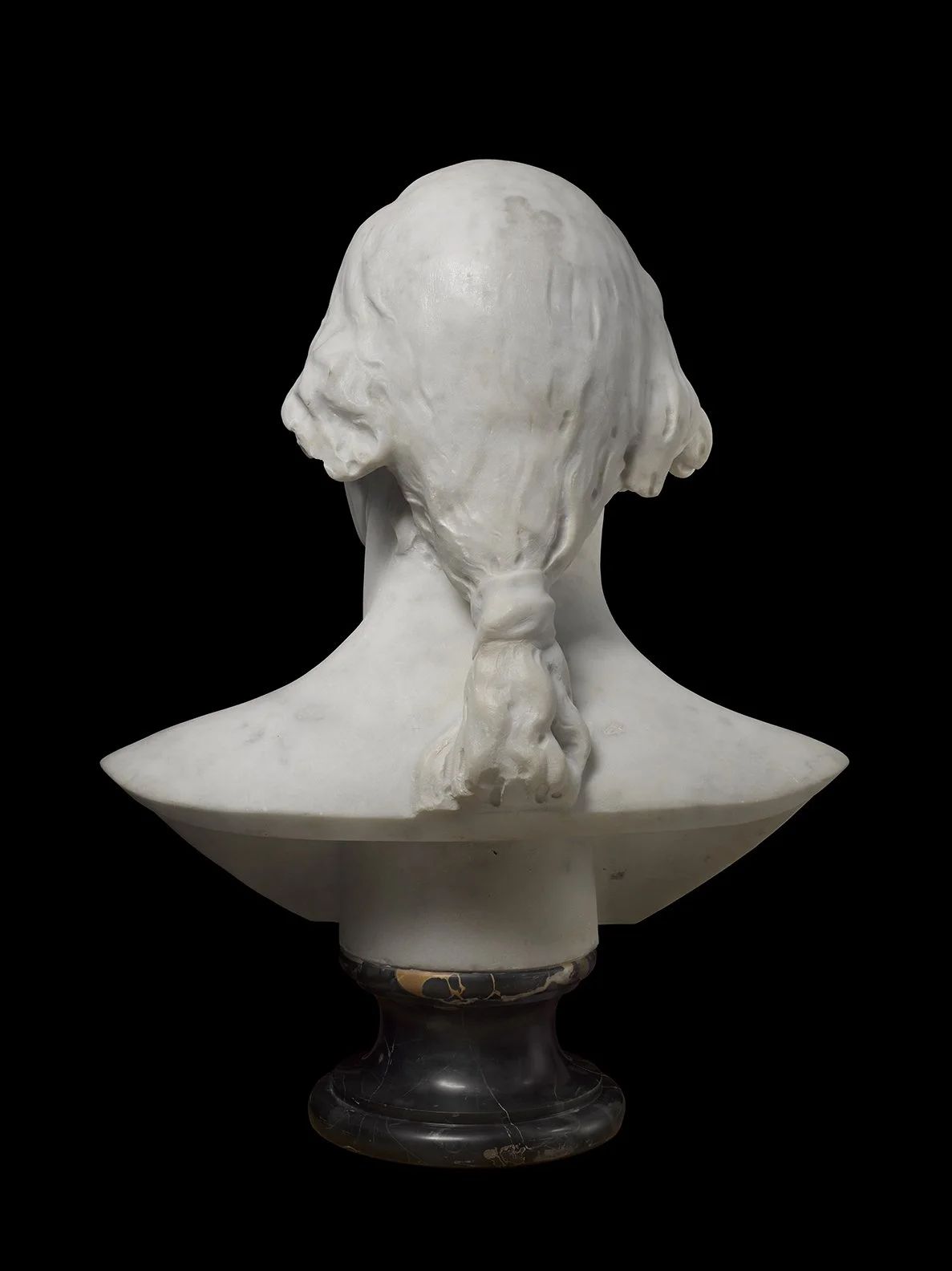
Bust of George Washington
Seravezza marble
22 x 17 x 9 ¾ inches (55.9 x 43.2 x 24.8 cm) with socle
Provenance:
Private Collection, Venice, by 2008
With Hazlitt, Gooden and Fox, London, 2009–2010, as by Houdon.
Artcurial, Paris, 27 March 2019, lot 134, sold as “Entourage de Jean-Antoine Houdon;” where acquired by:
Private Collection, France, until 2025.
Jean-Antoine Houdon’s bust of George Washington is as iconic a sculptural image of the first President as Gilbert Stuart’s is on canvas. Famed through its many reproductions in later casts in plaster and bronze, as well as from derivations by other artists, it conveys the humanity and nobility of the man, without the historical trappings associated with royalty or power. Contemporary examples by Houdon or from his studio are of the greatest rarity. The present work is an extremely fine unpublished example, carved in the white Seravezza marble that the sculptor consistently used.
Houdon considered his portrait of Washington the most important commission of his career. The circumstances of its genesis are well known. After the conclusion of the War of Independence and the signing of the Treaty of Paris in 1783, Congress voted to honor Washington with a bronze equestrian statue. Thomas Jefferson recommended Houdon for the work, but because of the new country’s war debt, the project was soon abandoned. The following year the Virginia legislature apportioned funds for a marble statue of Washington to be housed in the State Capitol in Richmond. Houdon was then proposed for the project by both Jefferson and Benjamin Franklin. Franklin, then resident in Paris, had already been sculpted by Houdon and Jefferson had recently come to know the artist upon his arrival in France that year. A painted portrait of Washington by Charles Willson Peale (now lost) was sent to Paris to serve as a model for Houdon, but the sculptor insisted that he study his subject from life. As Washington was unwilling to leave the United States, Houdon proposed to undertake the journey to Virginia. In July 1785, accompanied by Benjamin Franklin, Houdon set sail for Philadelphia—a sea journey lasting four weeks. From Philadelphia Houdon traveled to Mount Vernon, where, with the assistance of three members of his studio, he remained from October 2nd to October 19th.
At Mount Vernon Houdon took a life mask and made a clay bust of Washington, while recording detailed measurements of his head and body for the full figure. The plaster life mask is now at the Pierpont Morgan Library in New York (Fig. 1), and the clay bust is at Mount Vernon (Fig. 2). Houdon returned to Paris and over the next year prepared a marble bust (unidentified) which was exhibited in his studio in 1786 and shown at the Salon the following year—there listed with recognition of Houdon’s on site sitting of his subject: “M. Houdon…259. Le Géneral Washinton fait par l’Auteur dans la Terre de ce Géneral en Virginie.”
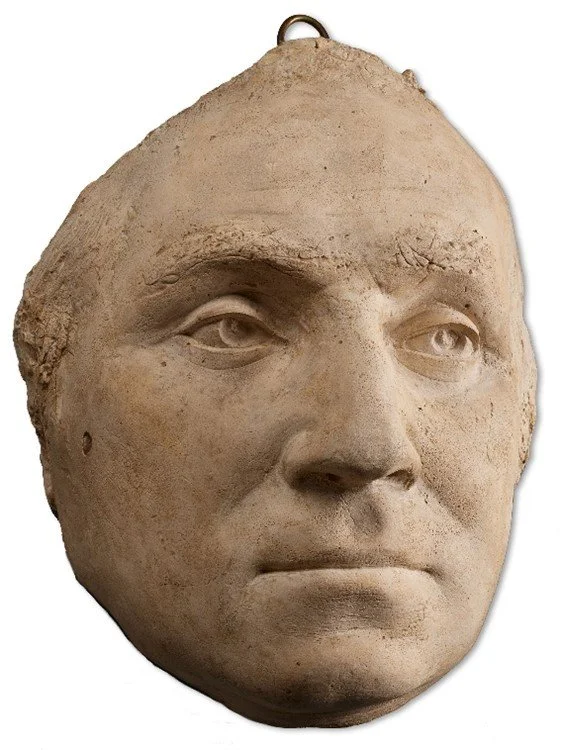
Fig. 1. Houdon: Mask of Washington, plaster, Morgan Library, New York.
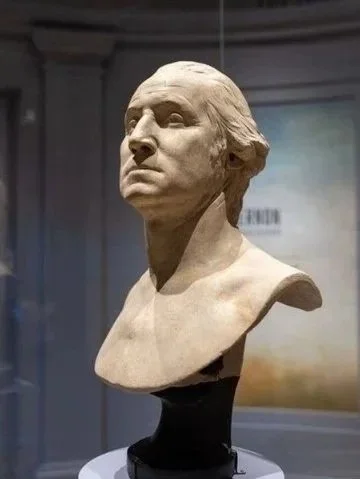
Fig. 2. Houdon, Bust of Washington, terracotta, Mount Vernon, Virginia.
Houdon’s full-length statue for Virginia was completed in 1792 but not installed in Richmond until four years later (Fig. 3). In the meantime, Houdon had produced busts showing his subject “à l’antique,” with and without classical drapery. A plaster version of the latter, acquired directly from Houdon by Jefferson, is in the Boston Athenaeum (Fig. 4). Only one autograph marble version of this type is known, now in the Nationalmuseum in Stockholm (Fig. 5), while a variant, showing Washington in Roman costume, with a toga across a tunic, is at the Los Angeles County Museum of Art (Fig. 6).
The present marble has been recently cleaned and conserved, removing a succession of wax and silicone coatings that had served to cover discolorations on the surface of the work. The bust can now be appreciated for its high quality, though it is evident that it was never brought to its ultimate finish by Houdon. Most likely, it was abandoned at a late stage in the carving process due to the presence of those same discolorations. Still, the sculpture fully conveys the power and inspiring character of Washington, which the sculptor personally experienced nearly 250 years ago.
Condition Note: The bust was restored by Taylor Pearce in London in 2009, at which time it was placed on the black socle present today. The work was recently cleaned and conserved by Steve Tatti in New York. An old repair to the nose has been colored to match the original marble.
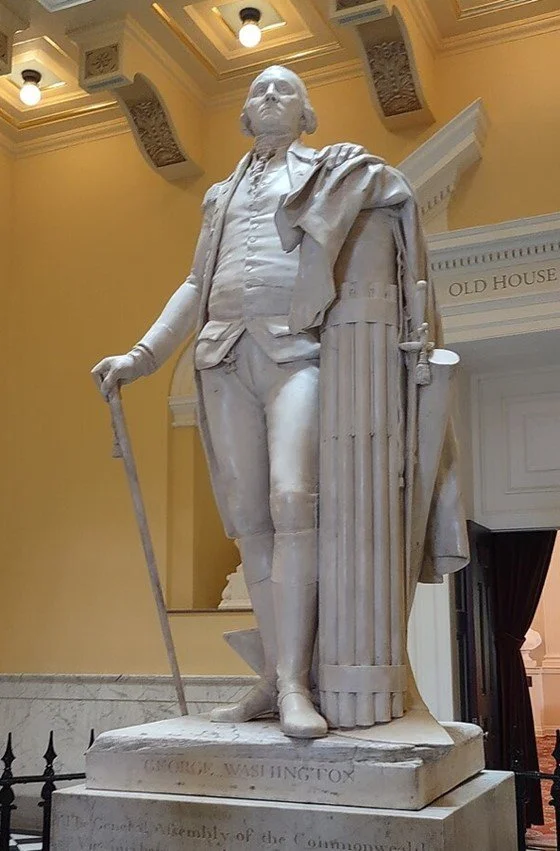
Fig. 3. Houdon, George Washington, marble, State Capitol, Richmond.
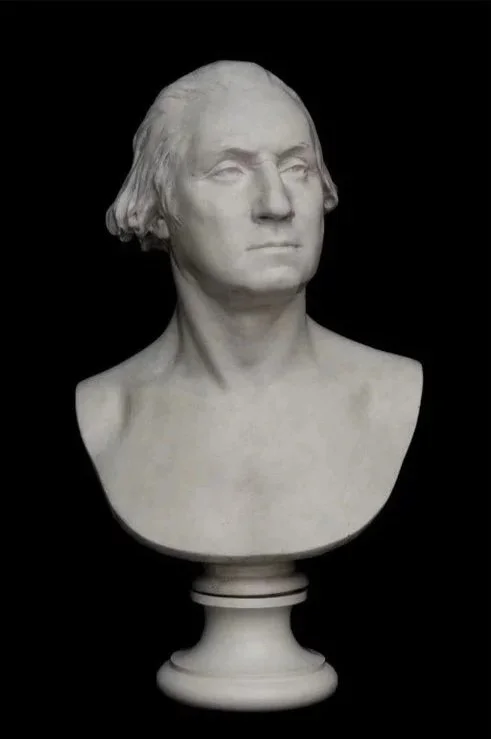
Fig. 4. Houdon, Bust of Washington, plaster, Boston Athenaeum.
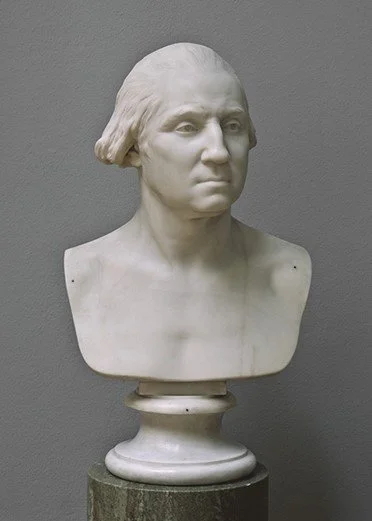
Fig. 5. Houdon, Washington, marble, Nationalmuseum, Stockholm.
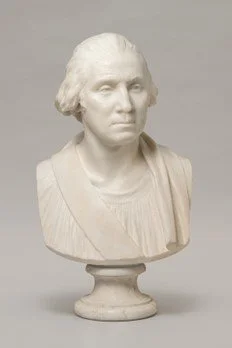
Fig. 6. Houdon,Washington, marble
Los Angeles County Art Museum.