
MAY HOWARD JACKSON
(Philadelphia 1877 – 1931 Long Beach, NY)
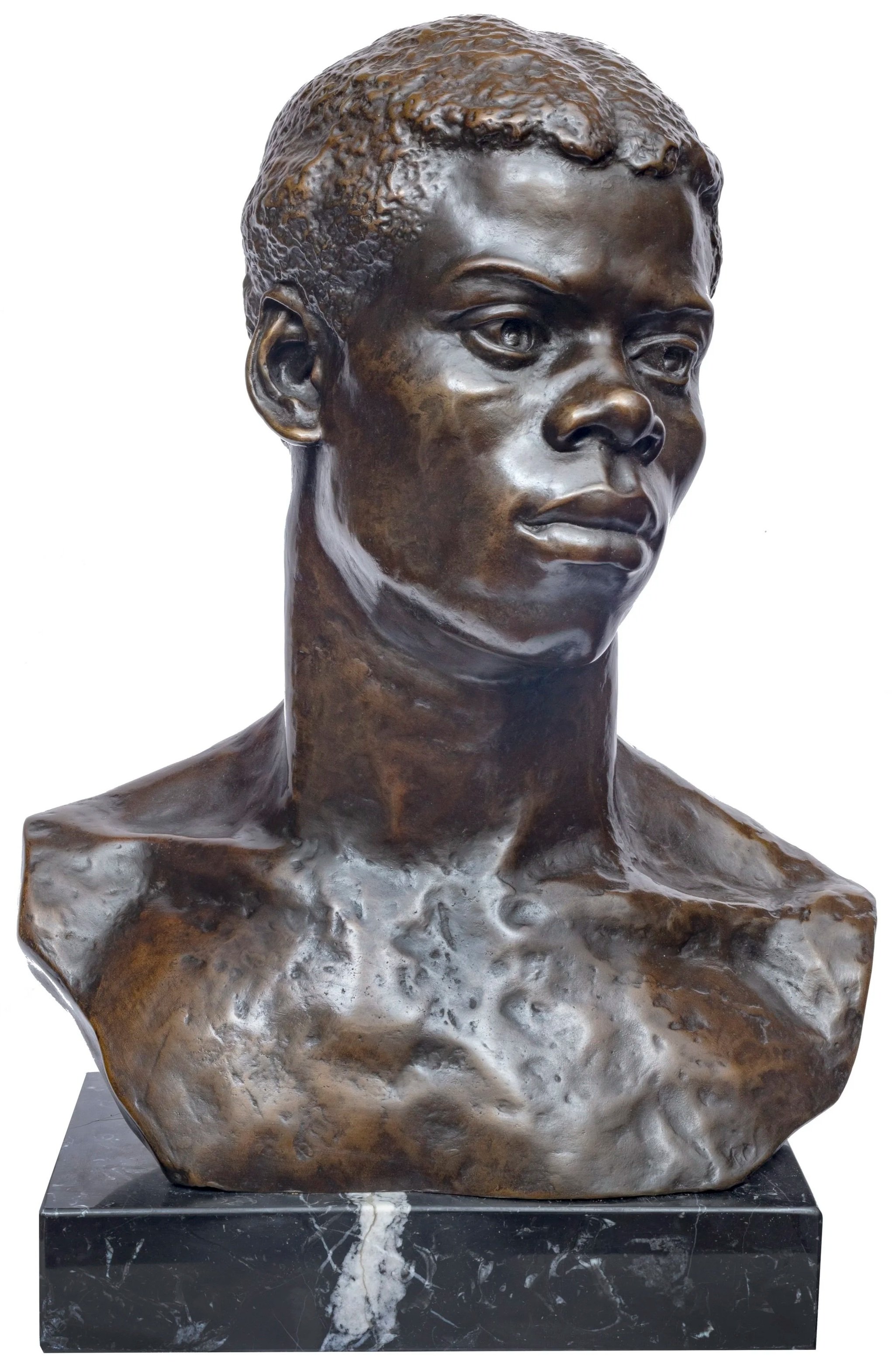
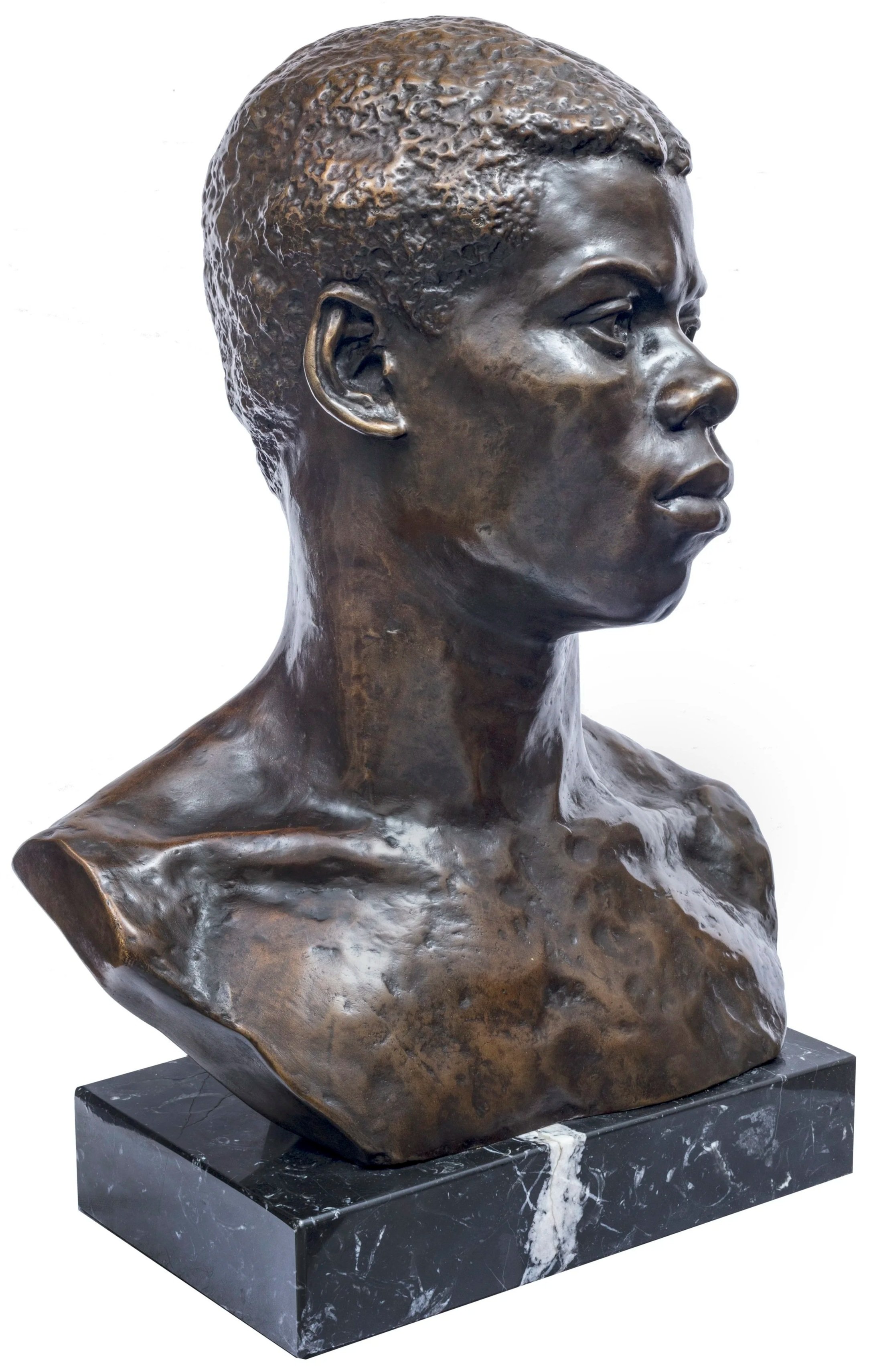
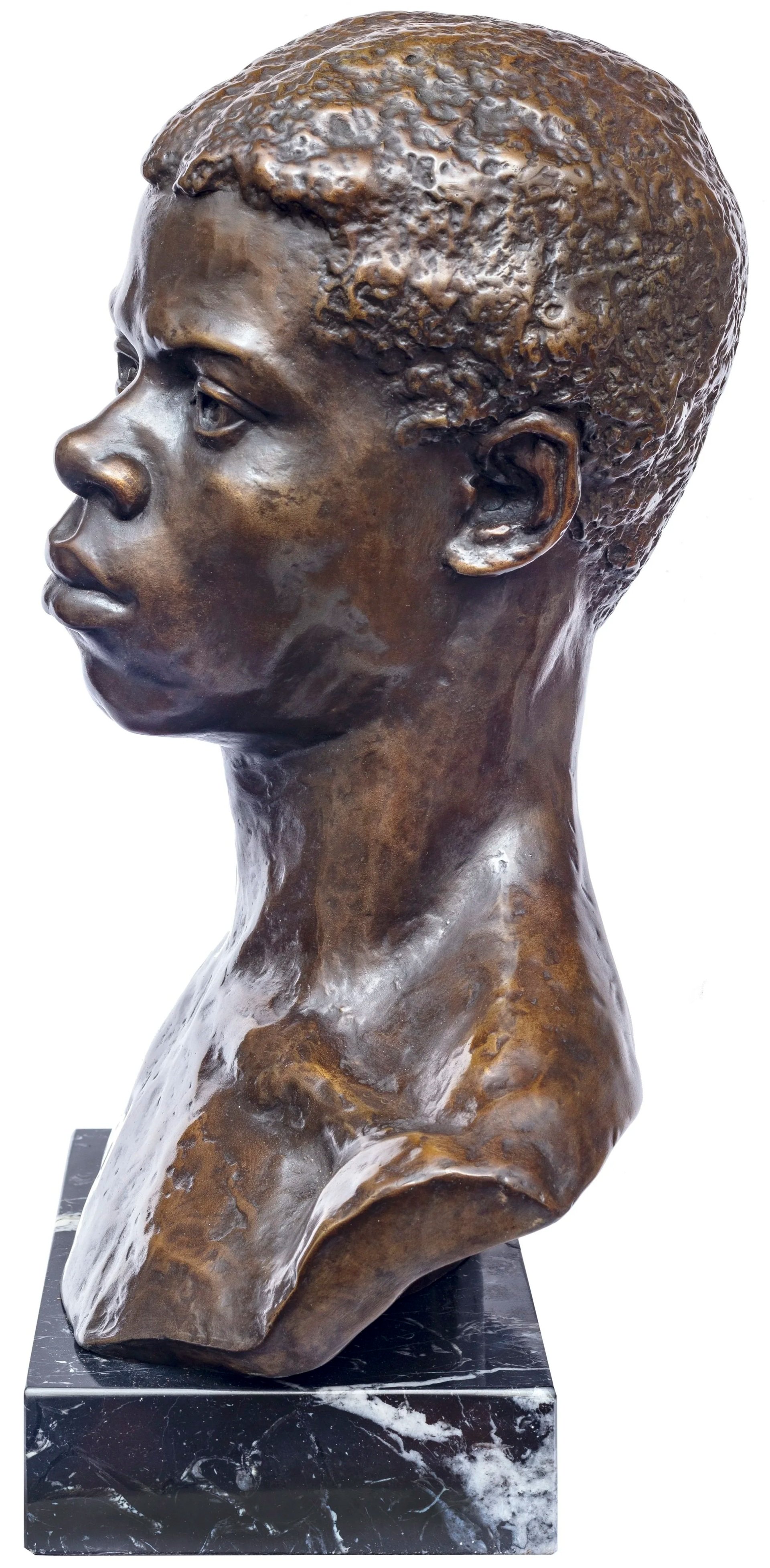
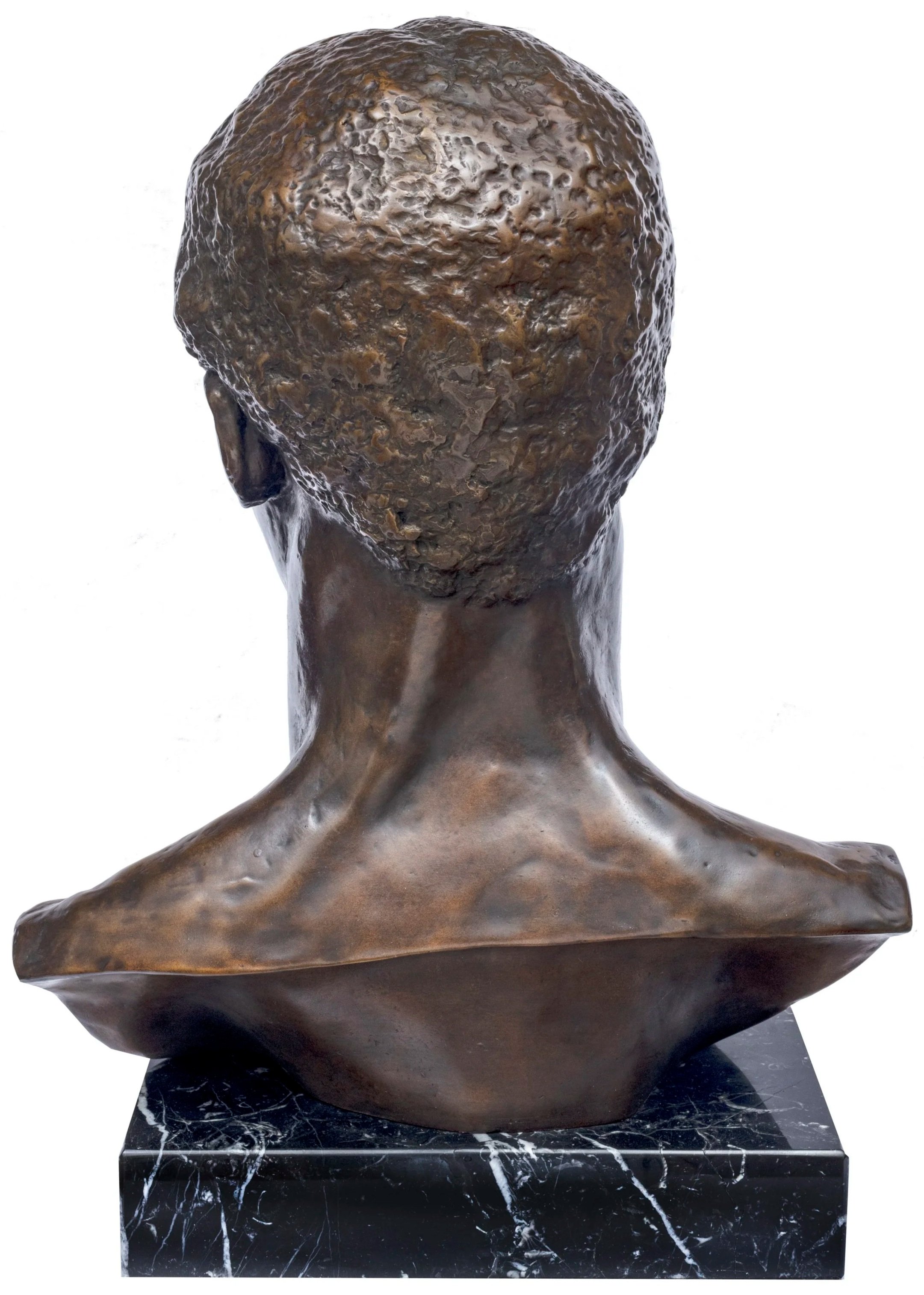
Slave Boy
Modeled 1899, Cast 1980s
Bronze
14 ½ x 12 ¼ x 6 ½ inches (36.8 x 31.1 x 16.5 cm), without base
17 ¼ x 12 ½ x 7 (43.8 x 31.8 x 17.8), with base
Provenance:
(Possibly) The Barnet-Aden Gallery, Washington, D.C.
Adolphus Ealey, Washington, DC, until 1992; sold from his estate in 1993 to:
Private Collection, Potomac, Maryland, 1993–2026.
Both words in the title of this sensitive depiction of a young Black man might cause discomfort among some of today’s viewers. And yet that may well have been the intention of the artist who created and named it. The sculptor, May Howard Jackson, was a biracial artist who, despite having so fair a complexion that she could “pass,” embraced her ethnicity and with her art confronted the fraught issues of race in her country (Figs. 1-2).
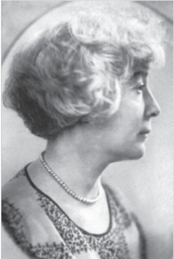
Fig. 1. Photograph of May Howard Jackson.
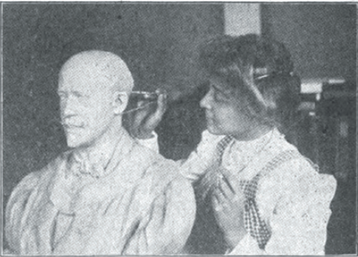
Fig. 2. Photograph of May Howard Jackson sculpting her bust of W. E. B. Du Bois.
May Howard was born in Philadelphia, the daughter of Sallie Durham and Floarda Howard, both listed as “mulatto” on the 1880 census.[1] She first studied at the Public Industrial Art School in Philadelphia, the innovative academy directed by J. Liberty Tadd, after which she entered the Pennsylvania Academy of Fine Arts in 1895. She had received a Board of Education scholarship to study there, the first Black woman to enter PAFA. There she took painting classes with William Merritt Chase and sculpture with Charles Grafly and Joseph Boyle. She completed her studies at PAFA by 1899, the date traditionally associated with the modeling of Slave Boy. Her essentially academic training would both inform her sculptural practice throughout her career but limit her critical reception in the changing progressive environment of the first decades of the 20th century. However, it is in the subject matter of her work that the artist proved most progressive. In the 1980 exhibition catalogue Forever Free: Art by African American Women, 1862– 1980, Jackson is described as “one of the first Black sculptors to reject popular European tastes and to deliberately use America’s racial problems as a thematic source of their art.”[2]
May Howard married William Sherman Jackson in 1902, the couple moving to Washington, D.C., where Jackson taught mathematics and became the Principal of M Street School, the first public High School for African American students in the United States. She established a studio in her home in Washington and over the next two decades received commissions for portrait busts of Black luminaries, among whom were Paul Laurence Dunbar (Fig. 3) and W. E. Du Bois. But although May exhibited at galleries and exhibitions through these years, sales were rare, and recognition of her talent limited.
Slave Boy is Howard Jackson’s earliest surviving work, modeled when she was twenty-two years of age.[3] It is also her most celebrated sculpture, cited in almost every publication on the artist. Its original medium is not documented, although the work is likely to have been modeled in clay and fired as a terracotta. (At the time of its creation and for most of her career, the artist did not have the financial ability to cast her works in bronze.[4]) The present example of Slave Boy, as with all other examples of the sculpture, was cast in the 1980s, under the direction of Adolphus Ealey. Ealey had been the Curator of the Barnett-Aden Collection, the holdings of the Barnett-Aden Gallery (where Ealey had been its last Director), the first successful Black-owned private art gallery in the United States. The gallery was active from 1943 to 1969 and was loosely affiliated with Howard University in Washington, where Howard Jackson taught from 1922 to 1924. Ealey had inherited the Gallery’s collection in 1969, but it is unclear whether the Slave Boy model formed part of the collection or had been separately sourced. The present bronze comes from Ealey’s own collection and was sold after his death in 1992 to the collection from which it now comes. Other casts are in the collection of the Pennsylvania Academy of Fine Art, the Smithsonian American Art Museum, the Kinsey African American Art and History Collection, and the William C. Robinson Collection.[5]
The bust depicts a handsome young Black man, turned slightly to the left and his chest bare. There is no outward indication that he is enslaved, as the sculpture’s title indicates. In fact, the subject’s poise and self-confidence suggest a timelessness, and it is not surprising that in at least one museum collection, the sculpture has been more benignly retitled “Portrait Bust of an African.” However, in the context of the artist’s lifelong concern with racial issues, the contrast between title and representation should rather be seen as purposive. A similarly confrontational titling may be found in the artist’s Mulatto Mother and Child (Fig. 4). That Slave Boy is a sensitive portrait of a man seen neither in the duress or pain, nor encumbered with any signifier of servitude, may itself be taken as a powerful reproach to slavery. This may well accord with contemporary perspectives. As Lisa Farrington has written of the bust:
“Exceptional in Jackson’s case is the fact that she anticipated the Harlem Renaissance by decades, having already begun, at the close of the nineteenth century, to dedicate her creative energies to venerable black portrayals. In 1899, she sculpted a bust of a black youth [Slave Boy]. Sinewy, with high cheekbones, amply proportioned nose and mouth, thick curling hair, and expressive eyes, the face of this young man anticipates Jackson’s later portrait of [Paul Laurence] Dunbar. Its striking physical allure venerates African physiognomy, and the face exudes a sense of self-possession and introspection that ideally suited the imminent vision of the New Negro.”[6]
In her discussion of the cast at the Pennsylvania Academy of Fine Arts, Dana Byrd expands on the significance of the subject:
“Slave Boy was sculpted in 1899 during Jackson’s last year at the Academy and decades after the end of slavery in the United States. In bronze mimicking melanin-rich flesh, the artist rendered an African American youth with an arched eyebrow who stares off into the distance engaged in thought. It is possible that Jackson used an unidentified male as a model, but this sculpture is not a portrait. Rather, as the title informs us, it is a depiction of an enslaved and racialized type, a long-standing subject of Western art. Introspective and resolute, Jackson’s Slave Boy transports us in time and brings us face to face with history. The artist defies stereotype and in rendering the boy with a cognitive life and restrained emotion, re-presents history. In Jackson’s conception of the slave past, enslavement was an imposed status, not a condition. The enslaved had been people capable of emotion, action, and like the Massachusetts 54th Regiment, even heroics.”[7]
There is no doubt that May Howard Jackson’s life was affected by the systemic racism that she experienced in her quest for an artistic career. Soon after her arrival in Washington she applied for entry into the School of the Corcoran Art Gallery, but was rejected due to her race. Later, after exhibiting busts at the National Academy of Design, she was visited by a representative of the Academy who inquired whether she was of “Negro Blood” – after which her work was no longer welcomed. The Washington Society of Fine Arts accepted her as a member, then rejected her once her heritage became known.
W. E. B. Du Bois took note of how this treatment embittered her. On her death in 1931 at age 54 he wrote:
The death of May Howard Jackson is a loss to art. She was a sculptor with peculiar natural gifts. With her sensitive soul she needed encouragement and contacts and delicate appreciation. Instead of this, she ran into the shadows of the Color Line. Problems of race, class, poverty and family may affect different persons quite differently. It may inspire some and discourage others. It may give new determination or set a soul wondering. In the case of May Howard Jackson, the contradictions of the Color Line tore her soul asunder. It made her at once bitter and fierce with energy, cynical of praise and above all at odds with life and people. She met rebuffs in her attempt to study, and in her attempts at exhibition, in her chosen ideal of portraying the American mulatto type; with her own friends and people she faced continual doubt as to whether it was worthwhile and what it was all for. Thus, the questing, unhappy soul of the Artist beat battered wings at the gates of day and wept alone. She accomplished enough to make her fame firm in our annals and yet one must with infinite sorrow, think how much more she might have done had her spirit been free![8]
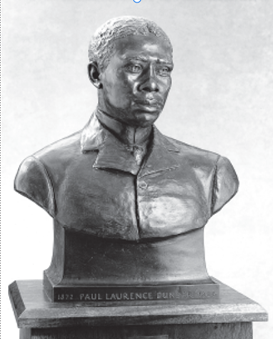
Fig. 3. May Howard Jackson,
Portrait of Paul Laurence Dunbar, 1919, Washington, D.C, Dunbar High School.
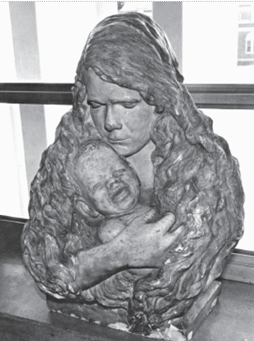
Fig. 4. May Howard Jackson,
Mulatto Mother and Child,
location unknown.
[1] Contrary to the census enumeration, some writers have stated that Sallie was white. As for May’s own identity, see the article by Mary Gibson Brewer in The Afro-American, Baltimore, 17 November 1928, p. 3, titled “May Howard Jackson Could be White, Prefers Colored.” La Follette’s Weekly Magazine named Jackson one of the “Women of the Hour” in 1912. Their brief biographical sketch states that “her mother was a Quaker of good old abolitionist stock. The small amount of colored blood she has came through her father.” Quoted from: Laura Lorhan, “May Howard Jackson and the Development of Jean Toomer’s Multiracial Modernism,” Twentieth Century Literature, 69, p. 197 n.4.
[2] Forever Free: Art by African American Women, 1862–1980, Alexandria, VA, 1980.
[3] Among discussions of Slave Boy, see: The Catalogue of the Barnett-Aden Collection, Tampa, Museum of African American Art and The Florida Education Fund, 1995, p. 26, ill., 135; Lisa Farrington, African-American Art;:A Visual and Cultural History, New York and Oxford, 2017, p. 123, fig. 6.3; Dana E. Byrd, “Those who went before”: Black Art at the Pennsylvania Academy of the Fine Arts,” in Making American Artists: Stories from the Pennsylvania Academy of the Fine Arts 1776–1976, ed. Anna O. Marley, New York, 2023, pp. 57-58, 141, no. 47, ill. On the artist’s career, see especially: Gwendolyn DuBois Shaw, “This Gifted Sculptress of the Race: The Intersectional Art of May Howard Jackson,” in The Art of Remembering: Essays on African American Art and History, Durham and London, 2024, pp. 91ff.
[4] In 1929 on the receipt of the prize from the Harmon Foundation, she he had written to Alain Locke, who was a key advisor to the Foundation, “I must confess that I did not want the money – I wished to put some of my work into bronze – but evidently I’m not to get it that way.” Her first recorded sculpture cast in bronze was in fact her Shell Baby of 1929.
[5] Some of these casts, including the one in the Smithsonian American Art Museum, are incised with a foundry mark (a crucible with the letters XXA within), along with a copyright symbol and number (“5” for the SAAM cast) presumably indicating the number of an edition. The present cast is not marked in this way and may have been the initial casting arranged by Ealey before launching a commercial edition.
[6] Lisa E. Farrington, “May Howard Jackson, Beulah Ecton Woodard, and Selma Burke,” in Amy Helene Kirschke, ed., Women Artists of the Harlem Renaissance, Jackson, MS, 2014, pp. 124-125. 2015), https://doi.org/10.14325/mississippi/9781628460339.003.0006, accessed 27 April 2026.
[7] Byrd, “Those who went before,” pp. 57-58, 141.
[8] W. E. B Du Bois, “May Howard Jackson,” The Crisis, 38, no. 10 (October 1931), p. 351.