
MARIANNA ELMO
(Lecce, 1730 – ca. 1800)
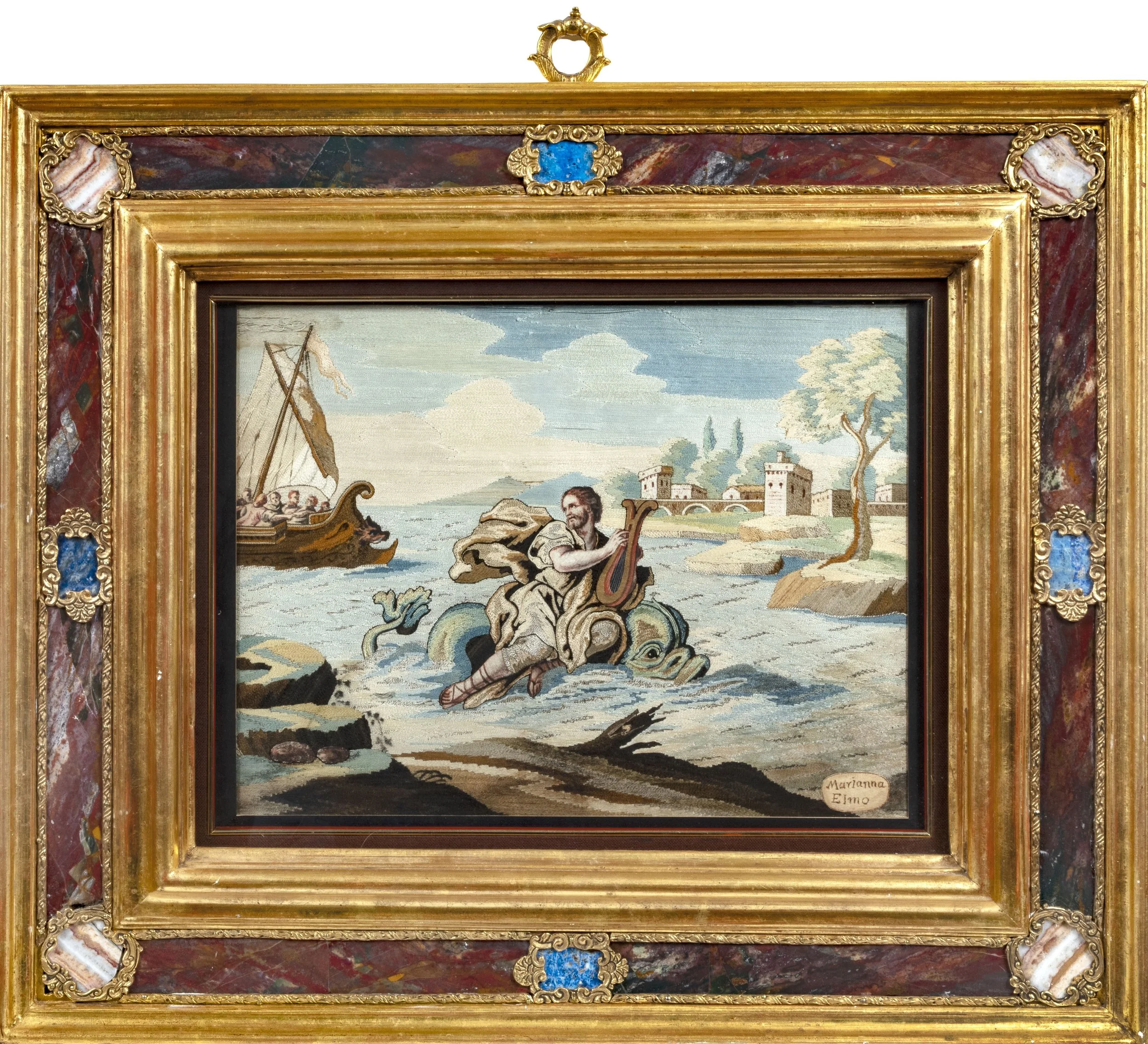
Arion Saved by a Dolphin
Signed on satin insert, lower right: Marianna / Elmo
Silkwork (fili incollati)
12 ¾ x 16 ⅝ inches (32.4 x 42.2 cm)
Provenance: Private Collection, Italy.
Combining the pictorial language of painting with the material richness of textile art, this remarkable work by Marianna Elmo depicts the legendary Greek poet and musician Arion, who was thrown overboard by sailors envious of his riches and carried safely to shore on the back of a dolphin charmed by his song. It is executed in the technique of fili incollati (otherwise known as broderie à fils collés), a practice that flourished in 18th-century Lecce in which silk and metallic threads are applied and adhered to a support coated with wax. Elmo’s composition, which shows Arion playing his lyre atop the dolphin while the sailors look on from their ship, likely depends on Annibale Carracci’s fresco of this myth in the Farnese Gallery in Rome, which circulated widely through prints (Fig. 1).
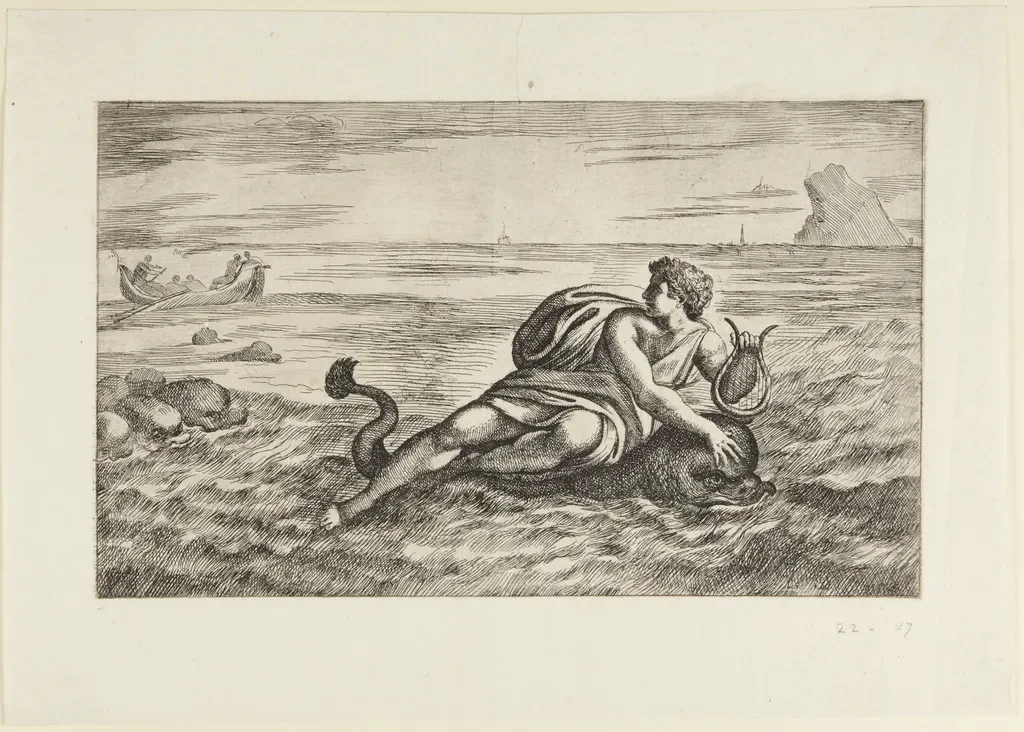
Fig. 1. Jacques Belly, Arion and the Dolphin (after Annibale Carracci), Princeton Art Museum.
Marianna Elmo was born Oronza Maria Giovanna Francesca Antonia Elmo in Lecce on 3 January 1730, the third of eight children of the painter Serafino Elmo (1696–1777).[i] The Elmo were one of several family workshops active in the Salento in the 18thcentury, but were unusual in counting women among their artists. Marianna likely received her initial training in drawing, pastel, and watercolor from her father and brothers, and she may have learned her characteristic silkwork technique from an elder family member of the same name, Marianna Elmo senior (who was active in the 1690s), or in a convent setting. Remarkably, despite never leaving Lecce, Marianna attracted the patronage of the Bourbon court in Naples—for which she made a San Gennaro for the chapel of the Palazzo Reale—and of Cardinal Enrico Enriquez, who commissioned a reliquary casket from her for the Benedictine Abbey of Santa Maria in Banzi (Fig. 2).[ii] Her career can be traced from her debut around 1745–1746 until at least 1767. The date of her death remains unknown.
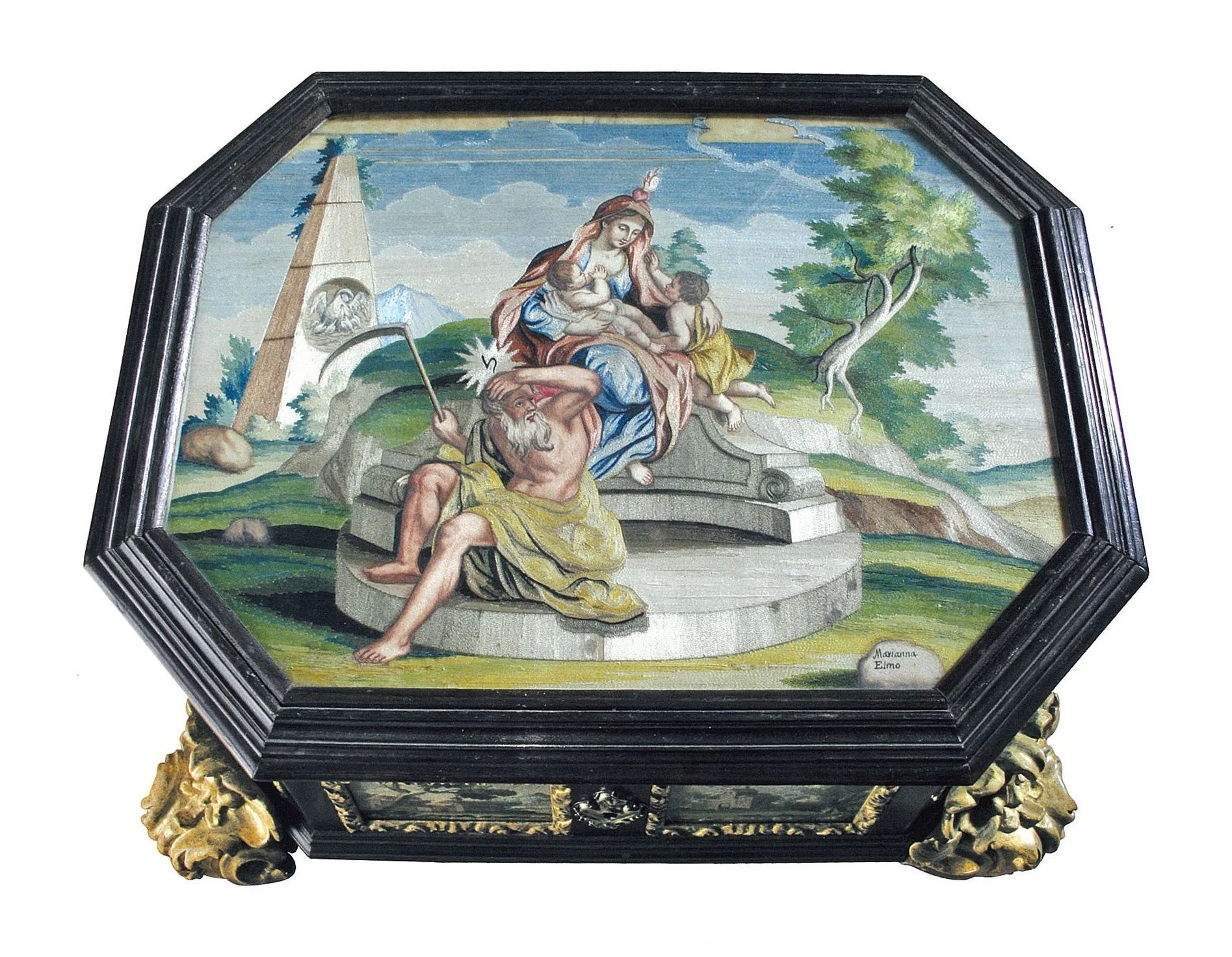
Fig. 2. Marianna Elmo, Reliquary Casket with Eight Landscape Scenes and an Allegory of Charity and Time, Santa Maria in Banzi.
The technique of fili incollati flourished in Lecce from around 1700, and local inventory records attest to a lively local market for “embroidered pictures” among Salentine collectors.[iii] Elmo’s works are constructed on a support of pressed card, on which a simple preparatory drawing was brushed in diluted grey ink. A single layer of amber-colored wax was then applied, translucent enough to leave the drawing visible beneath. Continuous silk threads were then coiled into place and pressed into the wax with a heated spatula. Silver and silver-gilt wire wrap around the silk threads throughout the composition to embellish the surface with shimmering metallic strands, while faces and limbs are rendered on painted silk satin that are adhered to the surface. Elmo customarily signed her works on a small painted satin insert in the shape of a stone or cartouche, as she did here at lower right (Fig. 3).
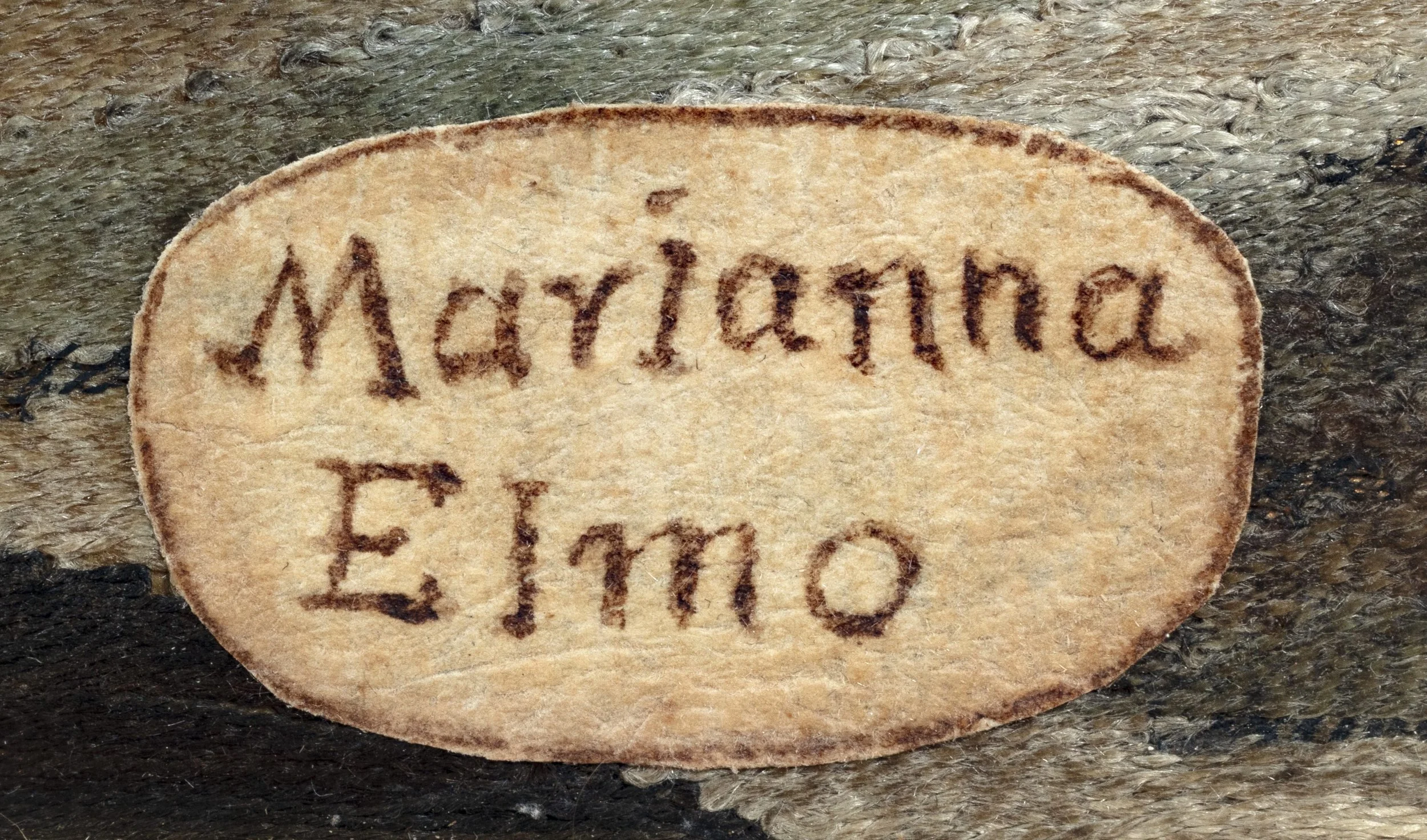
Fig. 3. Detail of the signature in the present work.
Mythological subjects are exceptionally rare both in Marianna Elmo’s oeuvre and the fili incollati tradition as a whole. The great majority of surviving works depict biblical scenes or devotional images of the saints and holy figures venerated in Lecce and the surrounding region of Salento. Working from her father’s painted compositions and from a stock of engravings after works by Carlo Maratta, Charles Le Brun, Peter Paul Rubens, and others, Elmo adapted familiar figure types and changed their attributes to suit each subject, producing images of local devotion for a wide range of patrons. Our Arion Saved by a Dolphin stands out as one of only a small group of secular works by the artist, alongside a handful of Arcadian pastoral scenes and the allegory on the Banzi casket.[iv] It reveals the same working method found throughout her oeuvre. Marianna follows the orientation of Carracci’s fresco as transmitted (with mirrored orientation) through a print, but she enlarges the ship, introduces a shore and a walled town in the landscape at upper right, and gives Arion a beard.
The choice of Arion as a subject may itself have held a particular resonance in Salento. According to the ancient account, the poet was returning to Greece from the nearby city of Taranto when the sailors plotted to rob and kill him.[v] The work thus combines a geographical association familiar to local audiences with the intellectual appeal of classical mythology, and it may have been commissioned by a patron with humanistic interests beyond the devotional sphere that dominated Elmo’s production.
[i] Milena Loiacono, “Il racconto del filo nelle mani gentili di casa Elmo,” in Ricamata pittura. Marianna Elmo e l’arte dei fili incollati nell’Italia Meridionale del Settecento, ed. Giacomo Lanzilotta, Lecce, 2021, pp. 41-51, especially p. 50, note 2.
[ii] Il filo di Marianna: Marianna Elmo, quadri a fili incollati e collages nell’arte meridionale del Settecento, ed. Clara Gelao, Galatina, 2003, pp. 97-98, cat. no 83; and Ricamata pittura, pp. 170-175, cat. no. 33.
[iii] Roberta Civiletto and Mauro Sebastianelli, “Sovrapposizioni e differenze tecniche nell’agopittura, nel ricamo a fili incollati e nei collages. Inediti e poco noti quadri ricamati in Sicilia,” in Ricamata pittura, pp. 55-86.
[iv] On her secular production, see also: Roberta Civiletto, “Il mito, il filo, l’inchiostro. La coppia di quadretti a fili incollati con soggetti mitologici nella collezione di villa Malfitano,” OADI – Rivista dell’Osservatorio per le Arti Decorative in Italia, no. 31 (June 2025), https://doi.org/10.7431/RIV31052025.
[v] Herodotus, Histories, 1.23–24.