MEXICAN SCHOOL, 18th Century
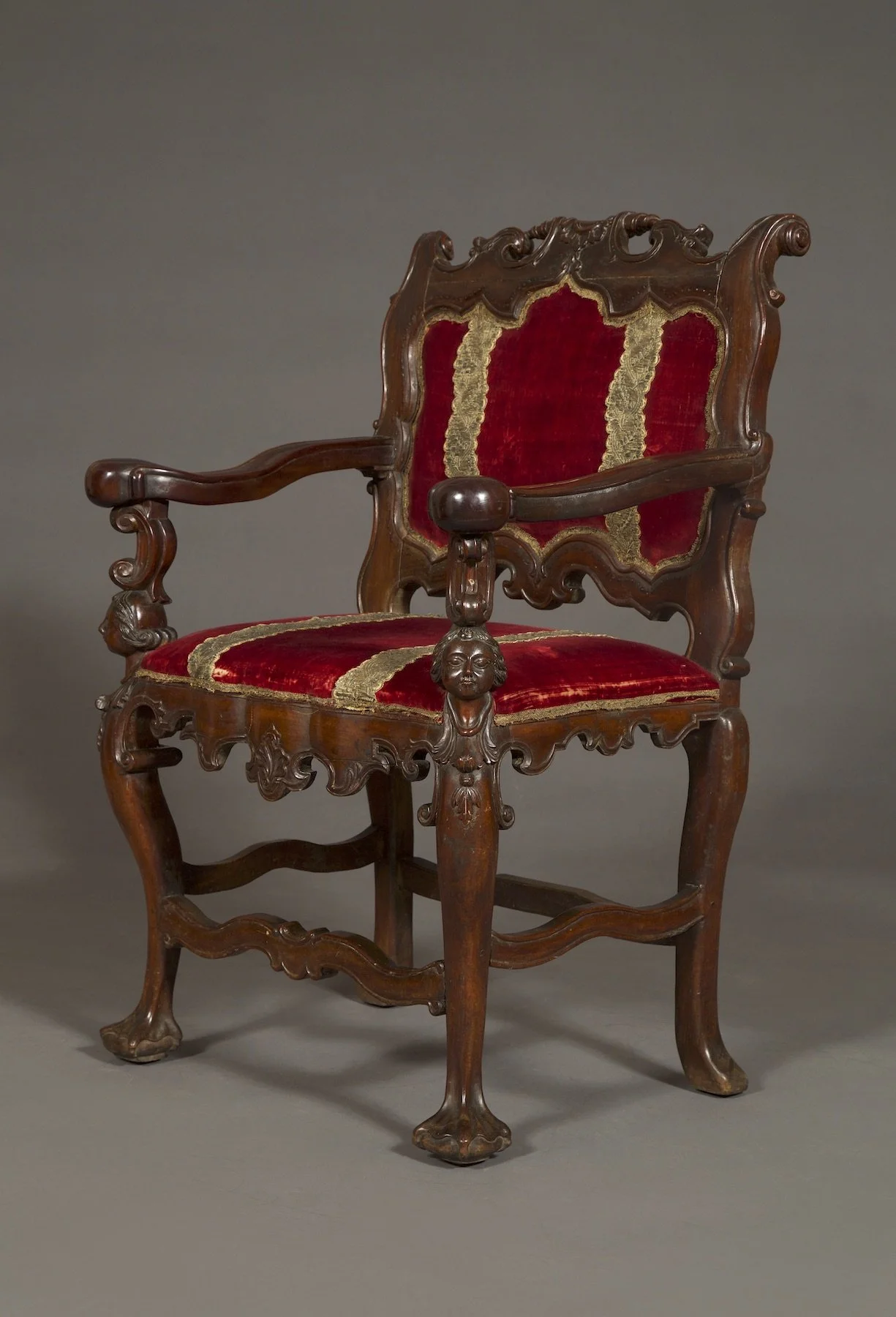
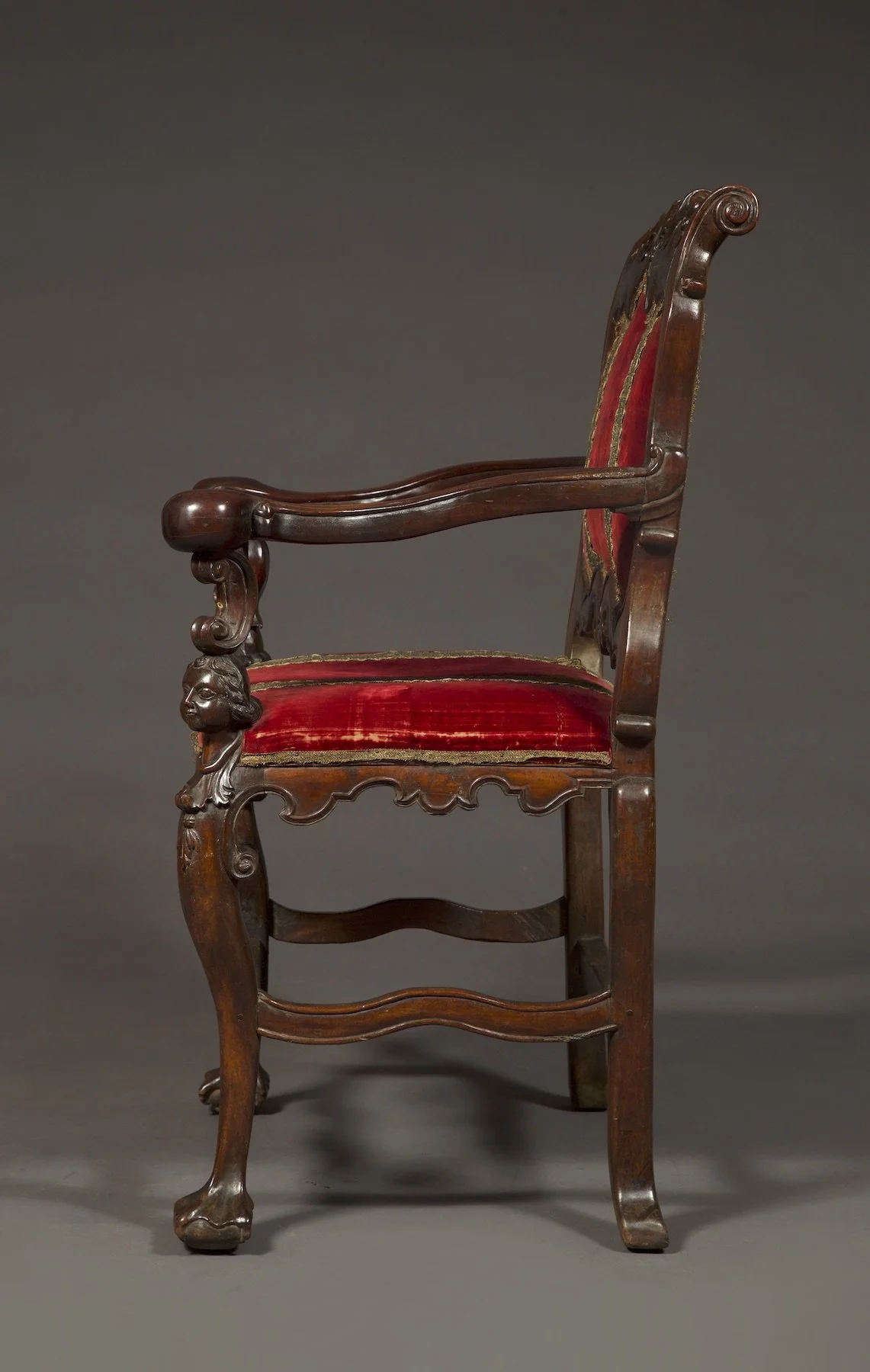
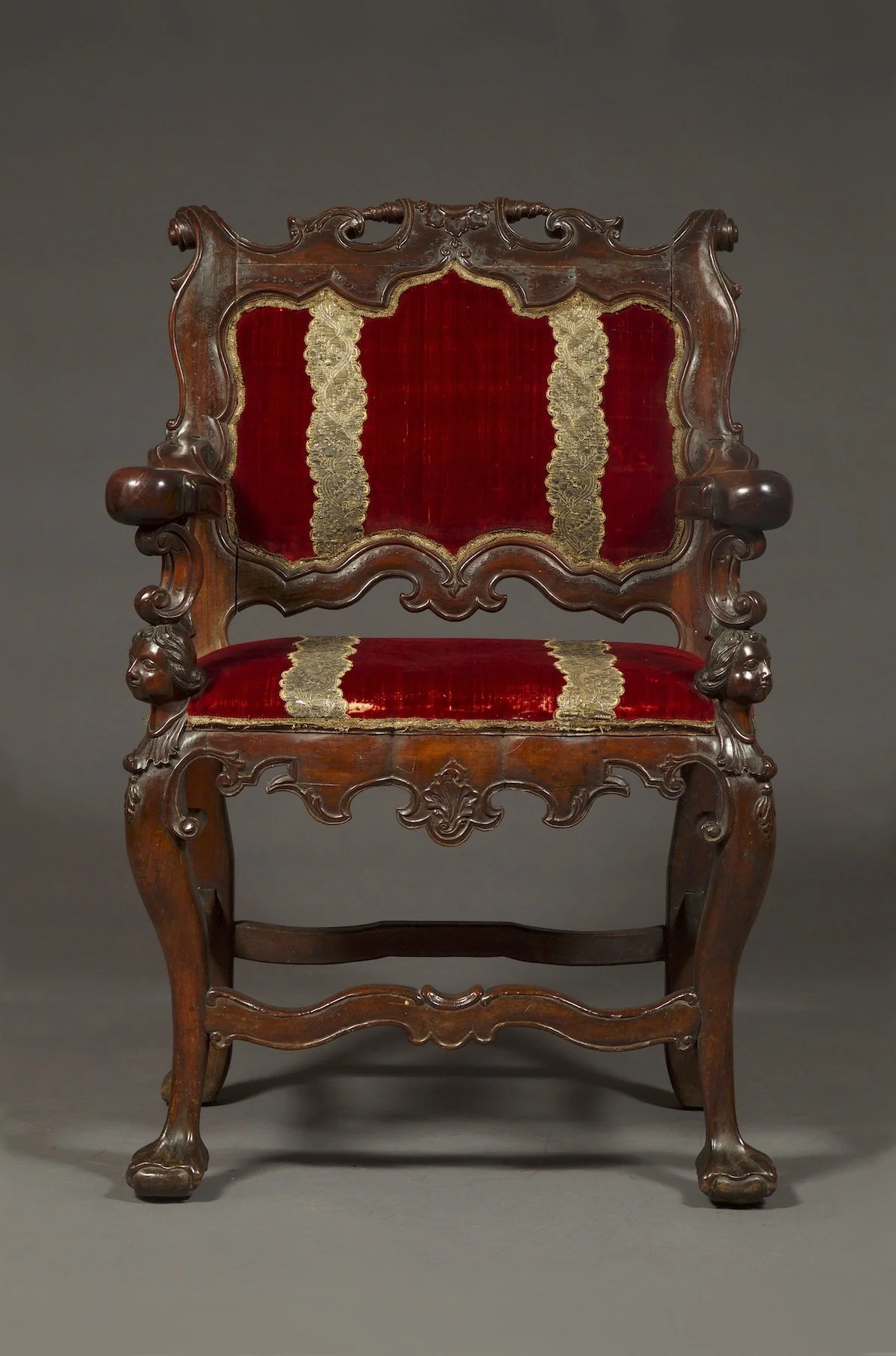
Armchair
Hardwood with gold embroidered red velvet upholstery
42 x 27 x 21 inches (106.7 x 68.6 x 53.3 cm)
Provenance:
Collection of an American diplomat of items acquired in Mexico and South America, formed before 1950.
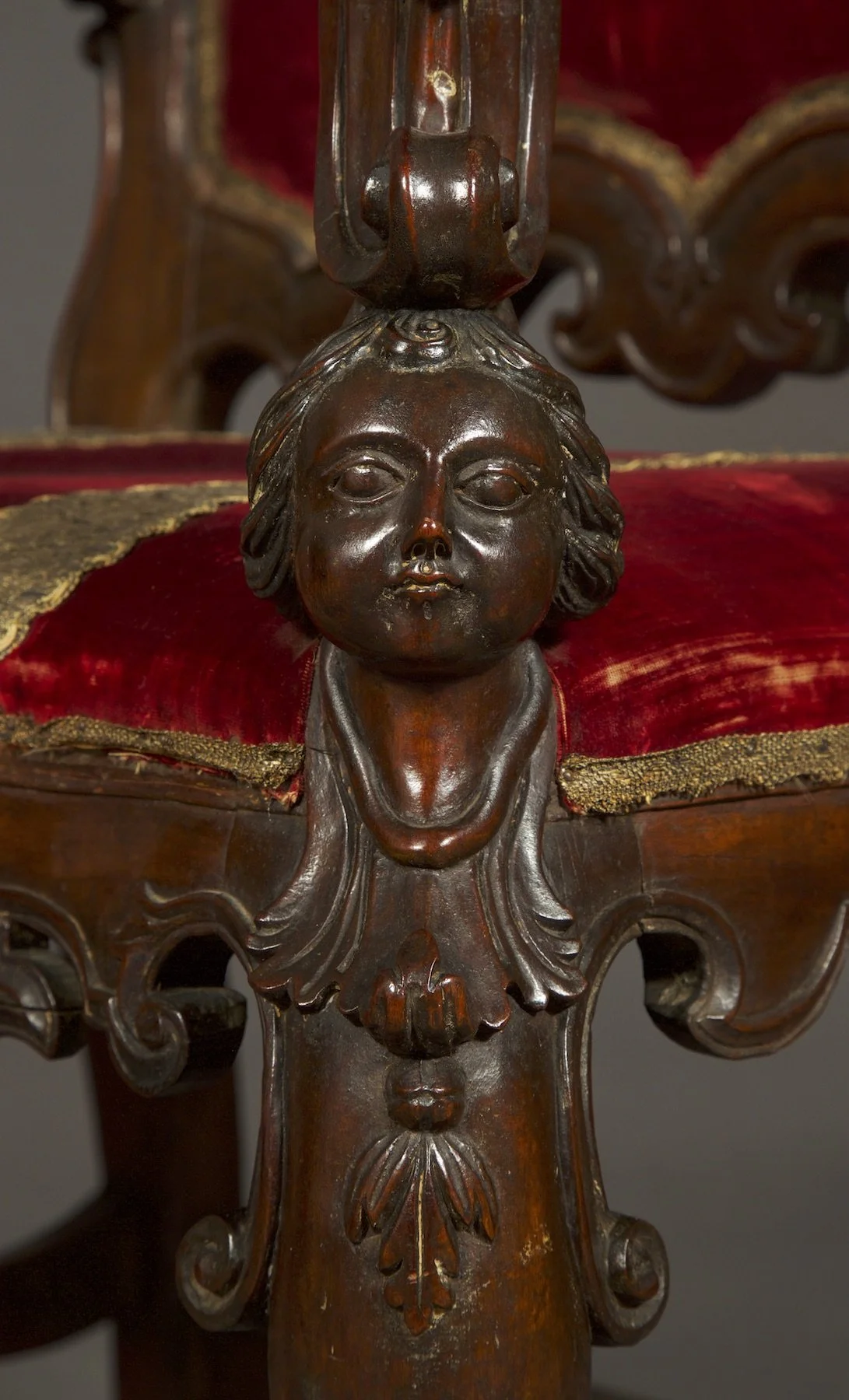
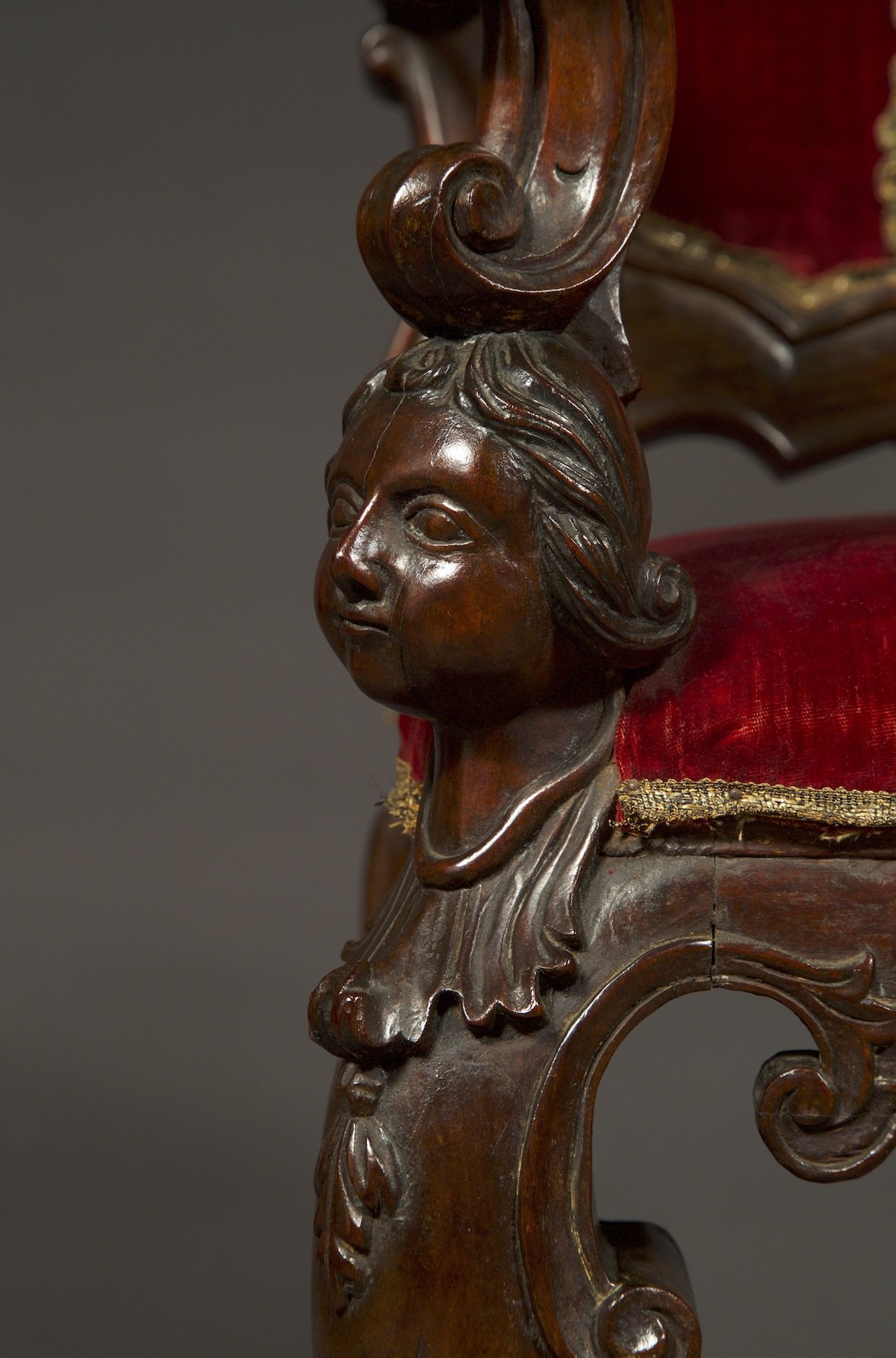
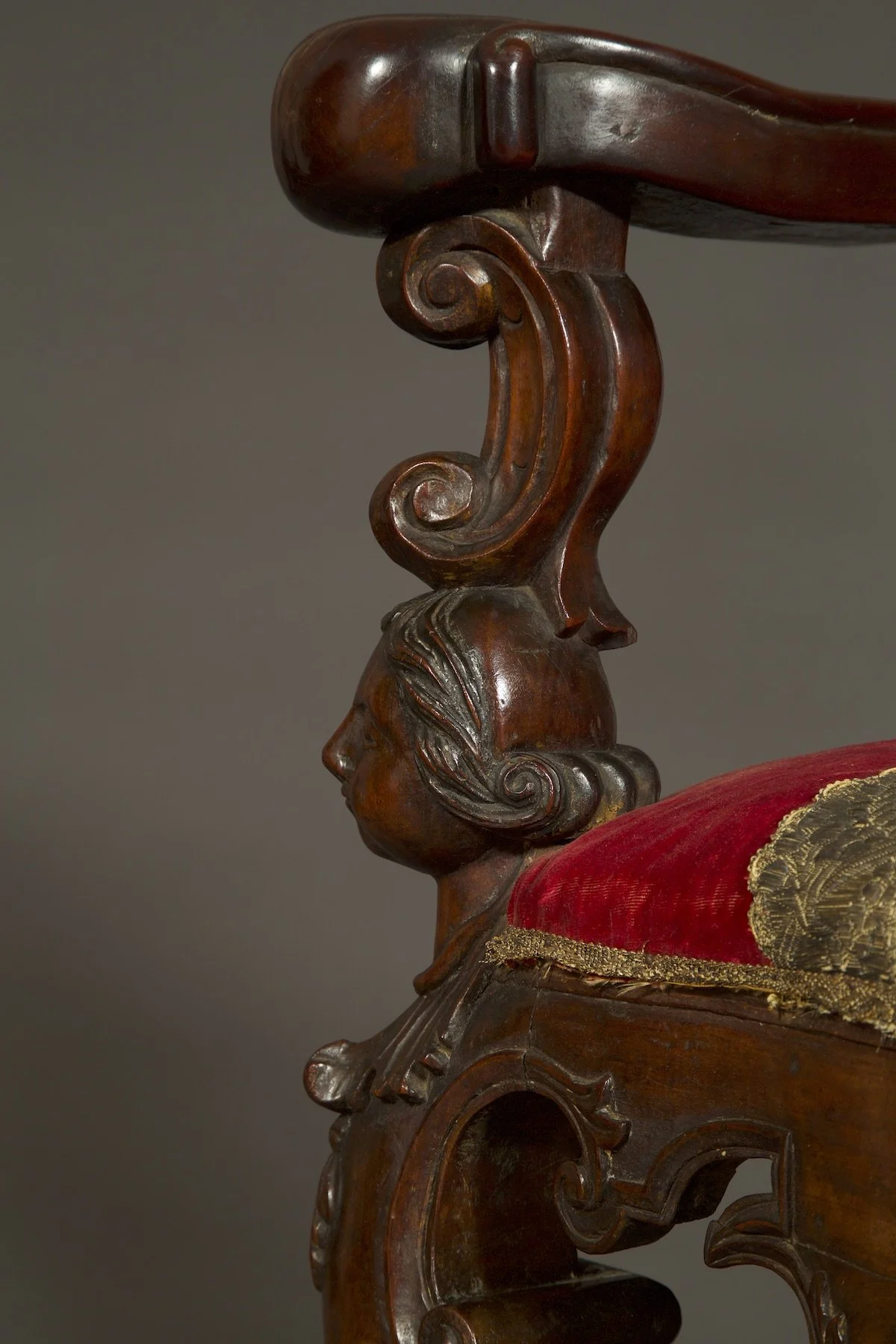
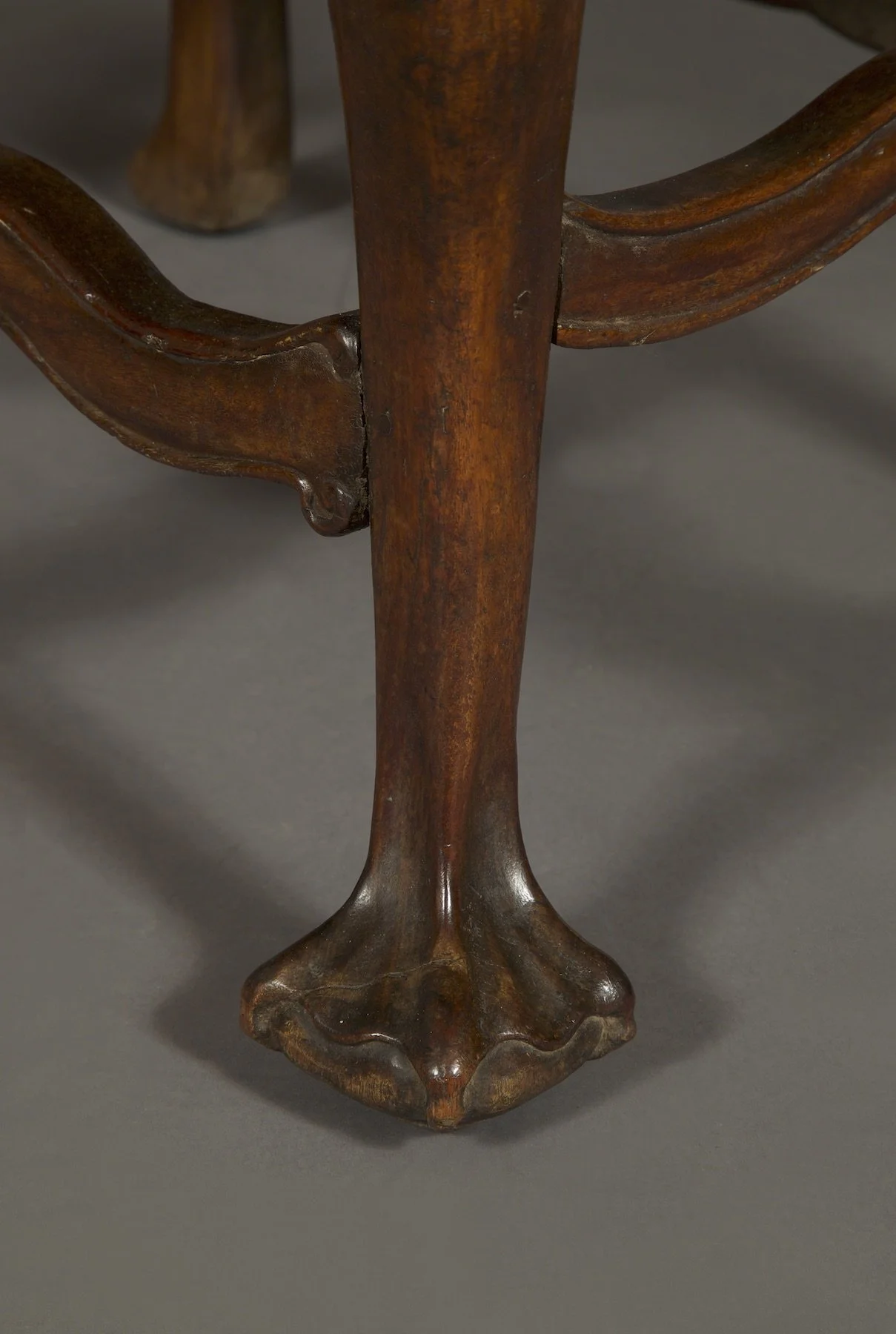
This exceptional armchair exemplifies the blend of global cultural influences on 18th-century Spanish Viceregal furniture. While the design precedents of the present chair arrived by way of Spain in earlier centuries, Mexican furniture making developed into a distinct tradition that blended styles from across time and place. The overall shape of this chair, with its wide rectangular back and wavy box stretcher, essentially derives from Baroque Iberian forms, but the subtle scrolling throughout the chair responds to the transition to Rococo styles. The cabriole legs with flattened ball and claw foot may have been inspired by Chippendale chairs that made their way across the Atlantic to the Americas (or by North American examples). The incorporation of carved busts at the head of the legs further highlights the wonderful eccentricities of Viceregal furniture.
The present chair was likely acquired in Mexico by an American diplomat in the 1920s, and a related example at the Museo Franz Mayer in Mexico City points to New Spain as its origin (Fig. 1). This large bishop’s armchair from the second half of the 18th century has a similar profile to the present chair. It is wide with heavily carved legs, arms, and uprights. The tops of the front legs are also carved with cherubic busts, and it is similarly upholstered in red velvet with gold trim. Our example is comparatively delicate in its carving and in its forms. Here the red velvet upholstered backrest contains gold embroidered edging and two gold foliate embroidered vertical striped panels framed by a shaped carved back with scrolling to the corners and center. From the back issues curving arms supported by C-scrolls resting at each side atop the carved female busts.
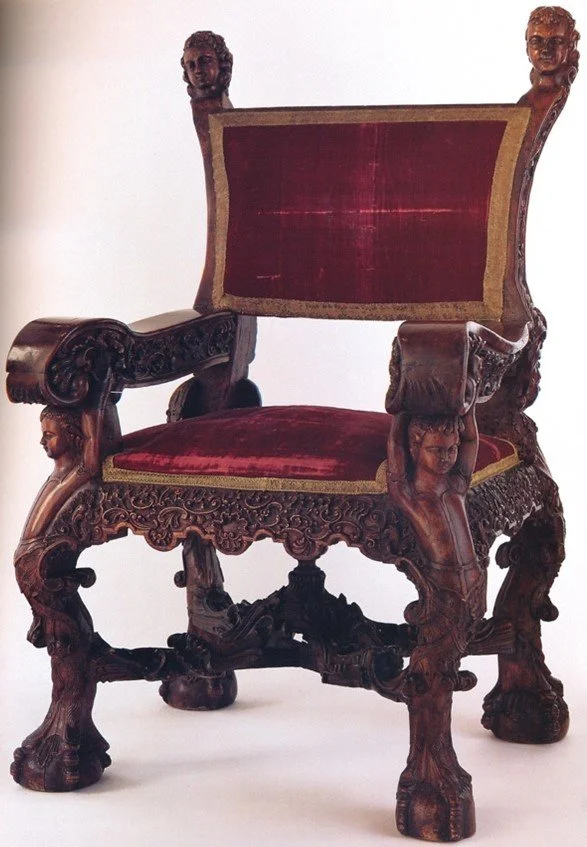
Fig. 1. Mexican School, 18th Century, Armchair, Museo Franz Mayer, Mexico City.