
PERUVIAN SCHOOL, 18th Century
Pair of Gilt Silver Reliefs
Repoussé, chased, and engraved
24 ¾ x 18 ⅛ inches (62.9 x 46 cm) and
21 ½ x 11 ⅞ inches (54.6 x 30.2 cm)
Provenance:
Mrs. Mercedes Blaquier Unzué de Tavares (1908–1989), Buenos Aires, Argentina; and by descent.
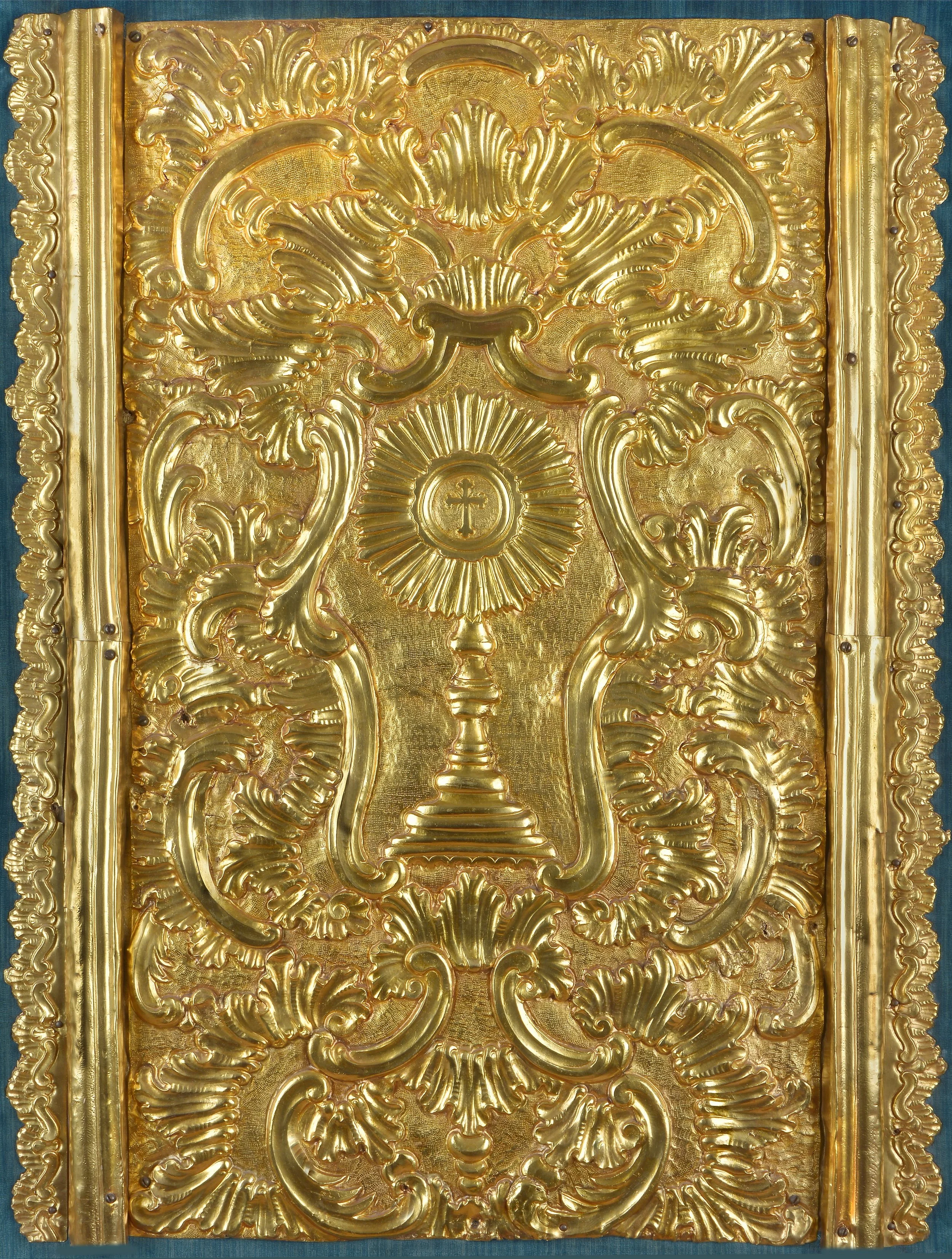
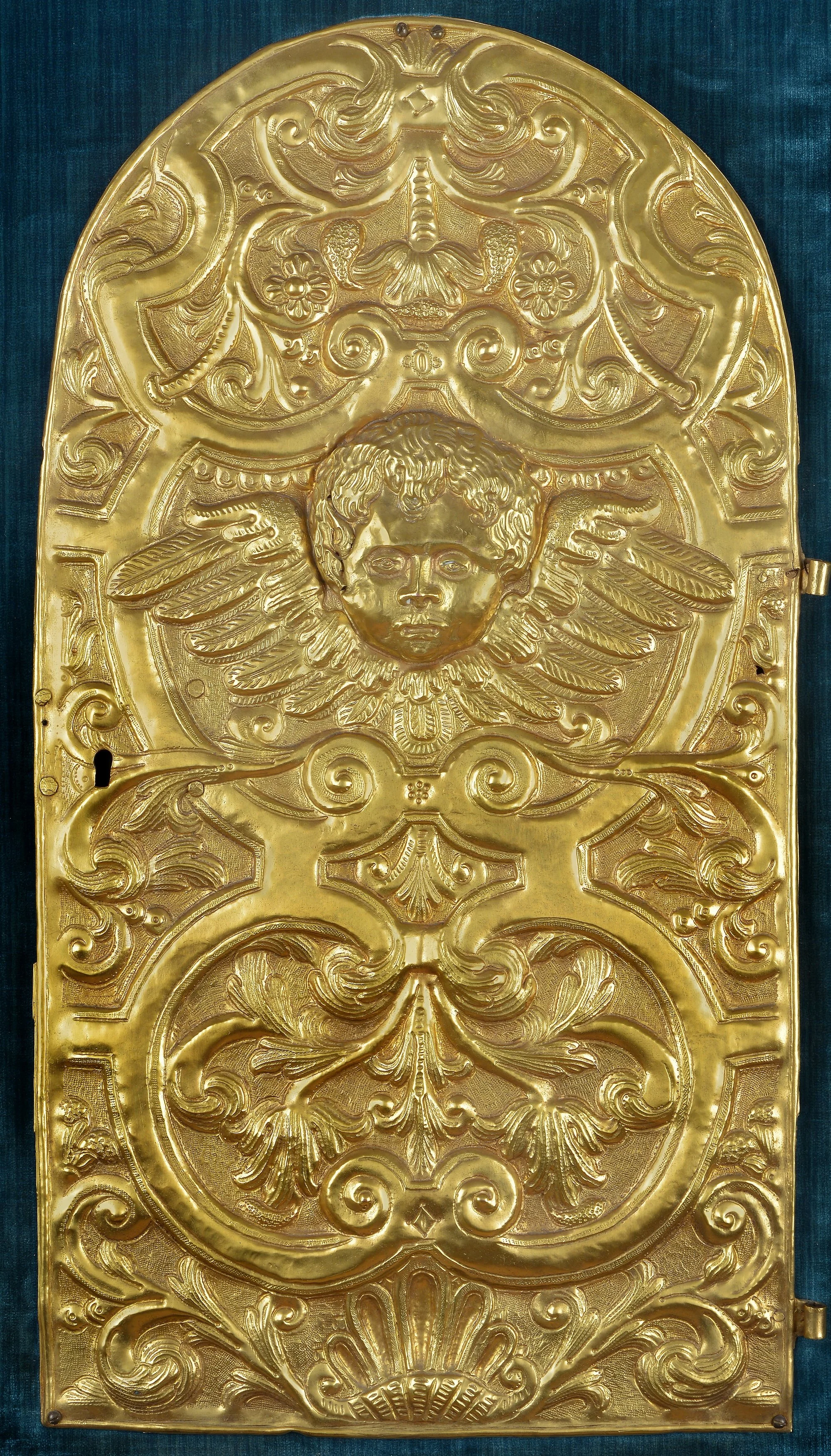
These elaborate repoussé plaques are impressive examples of 18th-century silverwork from Viceregal Peru. It is likely, but not definite that they originally embellished the same ecclesiastical object—they are of closely related style, technique, and subject matter. One prominently features a monstrance for the adoration of the eucharist, and the other, with a winged putto, must have been a tabernacle door behind which the eucharist was stored. A keyhole at the left center confirms its use and origin as part of either a tabernacle or sacrarium. Silver was the material of choice for ecclesiastical decoration in the New World, not only for its status as a precious metal, but also because of its abundance and durability. That these reliefs have been masterfully gilt makes them especially precious and suggests a prominent commission.
From its roots as a synthesis of Spanish tastes and practices with those of indigenous peoples, the art of silversmithing in the Americas developed into a rich tradition that responded to the unique desires and needs of colonial society. Already in the mid-16th century, there was great demand for silver and gold objects both in Spain as well as locally in Latin America, due in no small part to the large amounts of base silver and gold being mined and refined there. This demand remained constant through the 18th century, the high point of the colonial silversmithing and goldsmithing traditions. The present works date from this final period of Viceregal metalwork—their form and style correspond with similar works produced at the time in Peru.