

BIAGIO PUPINI
(Bologna, active 1511 – 1551)
Study after Pedro Machuca’s “Deposition”
Pen and ink with wash and white heightening on prepared paper
7 ¾ x 10 ¾ inches (19.7 x 27.3 cm)
Provenance:
(Possibly) Everhard Jabach (1618–1695), Paris
Giorgio and Armando Neerman, Florence
Morton B. Harris and Mary Jane Harris, New York, until 2013; by whom consigned to:
With Robert Simon Fine Art, New York, 2013; where acquired by:
With Mia N. Weiner, Norfolk, Connecticut; where acquired by:
Private Collection, New Jersey, until 2025.
Exhibited:
“Italian Renaissance Art: Selections from the Piero Corsini Gallery,” Pennsylvania State University Museum of Art, University Park, PA, 25 January – 8 March 1987; Muscarelle Museum of Art, College of William and Mary, Williamsburg, VA, 18 April – 7 June 1987; Springfield Museum of Fine Arts, Springfield, MA, 28 June – 13 September 1987, no. 8
“Sixteenth Century Italian Drawings in New York Collections,” Metropolitan Museum of Art, New York, 11 January – 27 March 1994, no. 3.
Literature:
Marzia Faietti, “Pedro (Machuca), Biagio (Pupini), Innocenzo (Francucci) e la Deposizione di Cristo,” in Aux Quatre Vents: A Festschrift for Bert W. Meijer, ed. Anton W. A. Boschloo, Edward Grasman, and Gert Jan van der Sman, Florence, Centro Di, 2002, pp. 49–51.
William M. Griswold and Linda Wolk-Simon, Sixteenth-Century Italian Drawings in New York Collections, New York, The Metropolitan Museum of Art, 1994, pp. 4–5, cat. no. 3.
Marzia Faietti, “Spagna e Italia in dialogo nell’Europa del Cinquecento,” in Spagna e Italia in dialogo nell’Europa del Cinquecento, ed. Marzia Faietti, Corinna T. Gallori, and Tommaso Mozzati, Florence, Giunti, 2018, p. 192.
Barbara Wisch, Italian Renaissance Art: Selections from the Piero Corsini Gallery, exh. cat., University Park, 1987, pp. 28-29, cat. no. 8.
In this work, Biagio Pupini takes as his subject a drawing of the Deposition of Christ by the Spanish artist Pedro Machuca that is now in the Louvre (Fig. 1). Machucha arrived in Rome sometime before 1515 and remained there until 1520, working closely with Raphael’s circle. In Pupini’s study after Machucha’s drawing, he has omitted the narrative of Nicodemus and Saint Joseph of Arimathea lowering the dead Christ from the cross and instead focused in on the figures beneath the cross. On the left, three attendants comfort the Virgin Mary while Mary Magdalene reaches up towards Christ. And on the right, a Roman soldier in armor holds the pole of a halberd, while two men and a child appear to question him.
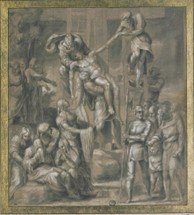
Fig. 1. Pedro Machuca, Deposition from the Cross, Musée du Louvre, Paris.
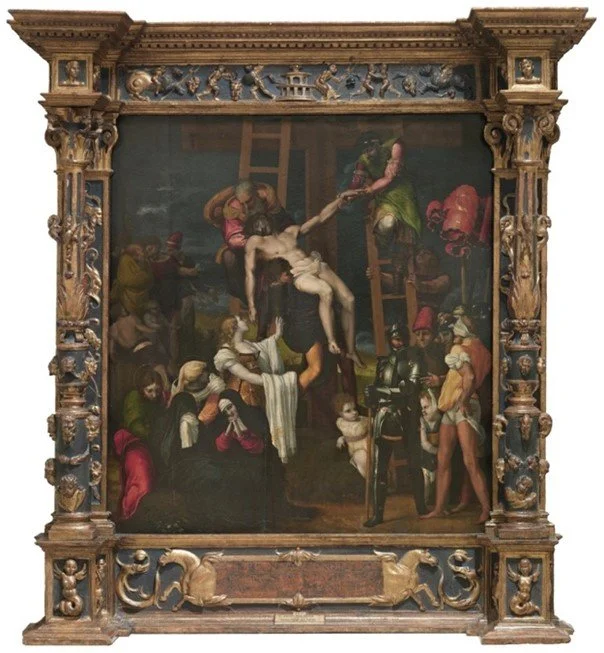
Fig. 2. Pedro Machuca, The Descent from the Cross, Museo Nacional del Prado, Madrid.
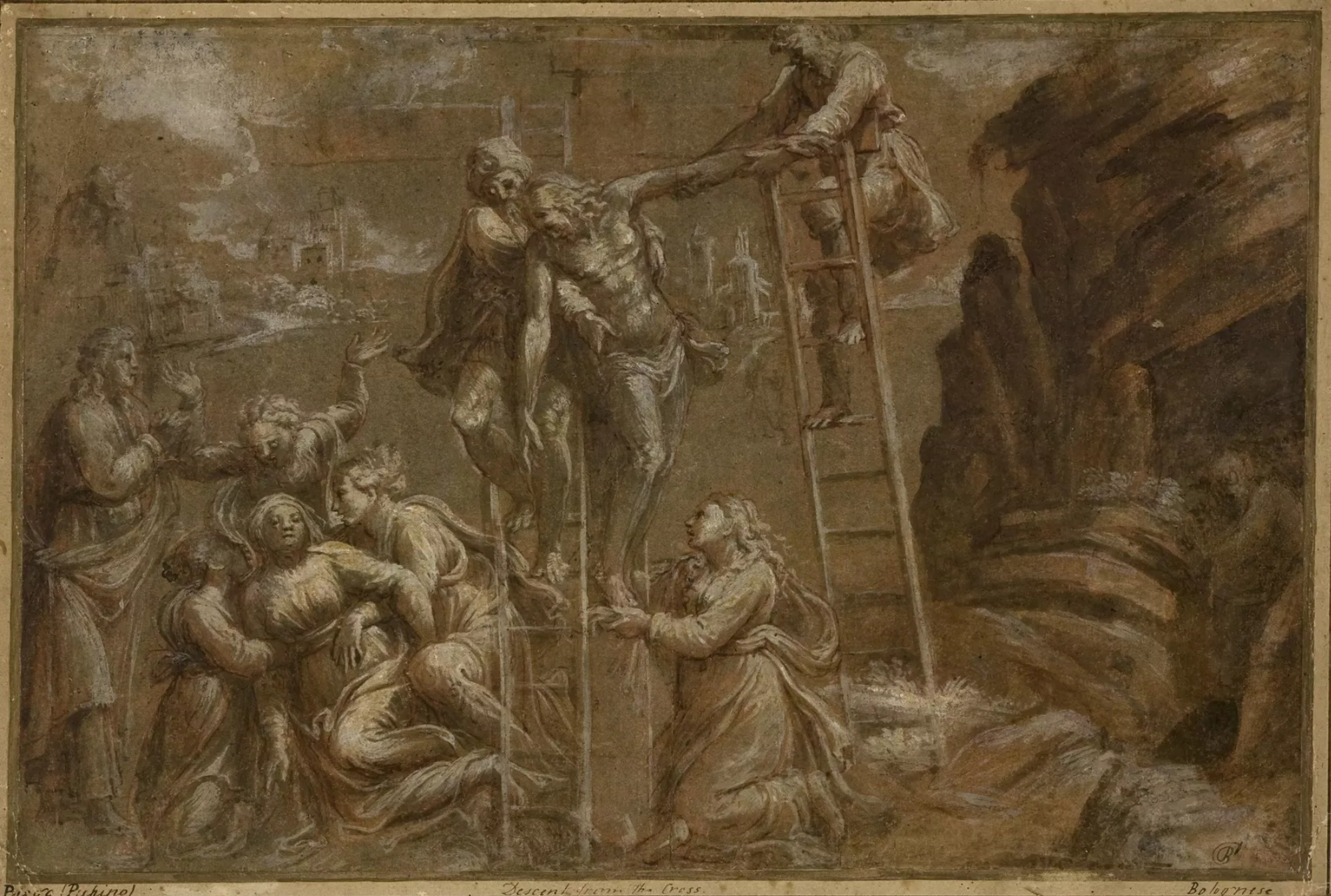
Fig. 3. Biagio Pupini, Descent from the Cross, Art Gallery of South Australia, Adelaide.
Machuca’s original drawing was likely based on a prototype he encountered in Raphael’s workshop. He later used the drawing as the basis for his painting of the Deposition now in the Museo del Prado (Fig. 2). Biagio Pupini’s study after Machuca exemplifies the transmission of Raphaelesque models from Rome to Bologna during this period. Pupini traveled to Rome on several occasions and came into contact with compositions developed within Raphael’s circle. He later became an important conduit for the spread of ideas elaborated in Rome by Raphael and his followers. In addition to our drawing, Pupini echoed Machuca’s Deposition in a drawing in the Art Gallery of South Australia that focuses on the top half of the composition—with Christ being lowered down from the cross (Fig. 3). Pupini’s drawings after Machuca likely provided the model for Innocenzo da Imola’s fresco of the same subject in the church of Santissimo Salvatore in Bologna (Fig. 4). This type of transmission was a common practice in Bologna’s flourishing artistic culture, where compositional models by celebrated masters were circulated and emulated.
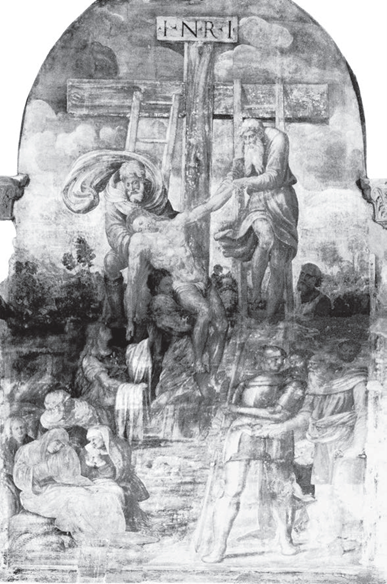
Fig. 4. Innocenzo da Imola, Deposition, Santissimo Salvatore, Bologna.
Biagio Pupini, son of the Bolognese painter Ugolino Pupini and a pupil of Francesco Francia, was a painter and draughtsman active primarily in his native city of Bologna. His artistic personality remains only partially known due to the scarcity of documentary evidence relating to his production and the rarity of his surviving painted works. By contrast, a substantial number of his drawings are preserved in the Louvre. These range from copies after masters such as Raphael, Michelangelo, Giulio Romano, and Parmigianino, to studies after antiquity and preparatory sketches for works that are now unidentified or lost. Many of these drawings were not intended as preparatory studies but rather function as independent exercises after other works. Together, they testify to an extraordinarily intense graphic activity that has long been underestimated.
Dr. Catherine Monbeig-Goguel previously shared with Dr. Philippe Costamagna that the white heightening visible on our Pupini drawing is characteristic of additions made by Corneille de Lyon to drawings from the Jabach collection in the 17th century. Jabach’s first collection entered the Louvre, and Corneille—premier peintre du roi—retouched many of its drawings. Monbeig-Goguel has identified his hand on numerous Pupini sheets from this initial Jabach group. Corneille also advised Jabach in assembling a second major collection of drawings, which later passed into important French collections such as those of Crozat and Mariette. It is therefore plausible that our drawing belonged to this second Jabach collection.