
ROBERT SELDON DUNCANSON
(Fayette, New York 1821 – 1872 Detroit, Michigan)
Kennedy Peak, Shenandoah
Oil on canvas
15 ⅝ x 21 ½ inches (39.7 x 54.6 cm)
Provenance
Private Collection, Bedminster, New Jersey; acquired from their estate in 2021 by:
Private Collection, Pennsylvania.
Exhibited:
“Robert Selden Duncanson and His Courageous Southern Travels,” Meyer Fine Art, Fredericksburg, Virginia, 14 June – 28 April 2024.
Literature:
Michael F. Meyer and Julie E. Meyer, Robert Selden Duncanson and His Courageous Southern Travels, exh. cat., Fredericksburg, 2024, pp. 65-66.
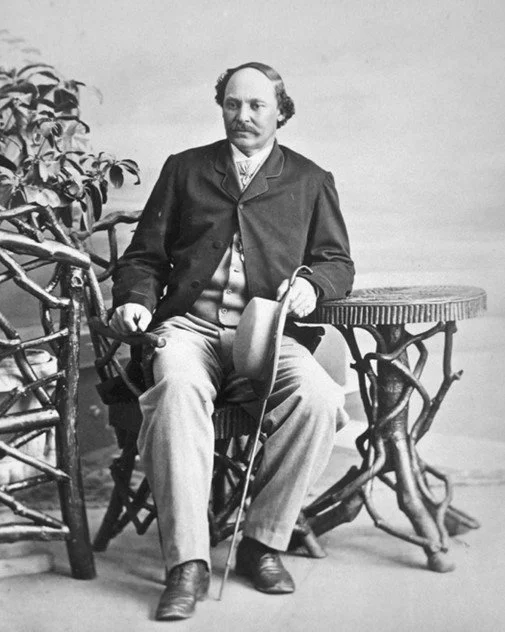
Fig. 1. Photograph of Robert S. Duncanson by William Notman in Montreal in 1864.
Robert Seldon Duncanson was one of the most accomplished and widely acclaimed Black artists working in the United States in the mid-19th century (Fig. 1). Born in upstate New York to a family of freed enslaved people from Virginia, Duncanson’s first exposure to painting began in his family’s trades of carpentry and house painting. He was self-taught as an artist and built a successful career as a landscape painter, essentially as a second-generation member of the Hudson River School. Duncanson was the first Black American painter to study abroad and exhibit internationally. He painted across the United States, as well as in Canada and Europe, and he earned significant critical praise during his lifetime. Today, he is recognized and appreciated not only for his artistic achievements, but also for the distinct perspective he brought to representations of the American landscape, one shaped by his experience as a Black artist in antebellum America.
The present painting depicts Ruffner’s Ferry along the South Fork of the Shenandoah River in Page County, Virginia. The expansive landscape looks north towards Kennedy Peak (known in Duncanson’s time as Kanadys Peak). In the lower left foreground, two branches are tied to and lean on a central pole with a fork—possibly an apparatus for securing the canoe that we witness gliding quietly across the river. Another canoe appears to be overturned at the shoreline and projects out of the water. The scene is set at midday, and the strong light creates a hazy view of the mountain in the distance. The landscape reflects a specific historical moment, as the Shenandoah Valley was heavily logged in the mid-19th century to supply nearby pig iron furnaces. The bare slopes of the mountain suggest a landscape already altered by industry. Ruffner’s Ferry itself was a well-known crossing point of the river before the Civil War, and Duncanson is known to have paused at ferry sites to sketch throughout his travels. While the wilderness has since grown back at this site, the landscape has been dramatically transformed by the damming of the river and is now partially submerged. Kennedy Peak remains a significant geographical landmark in the Shenandoah Valley.
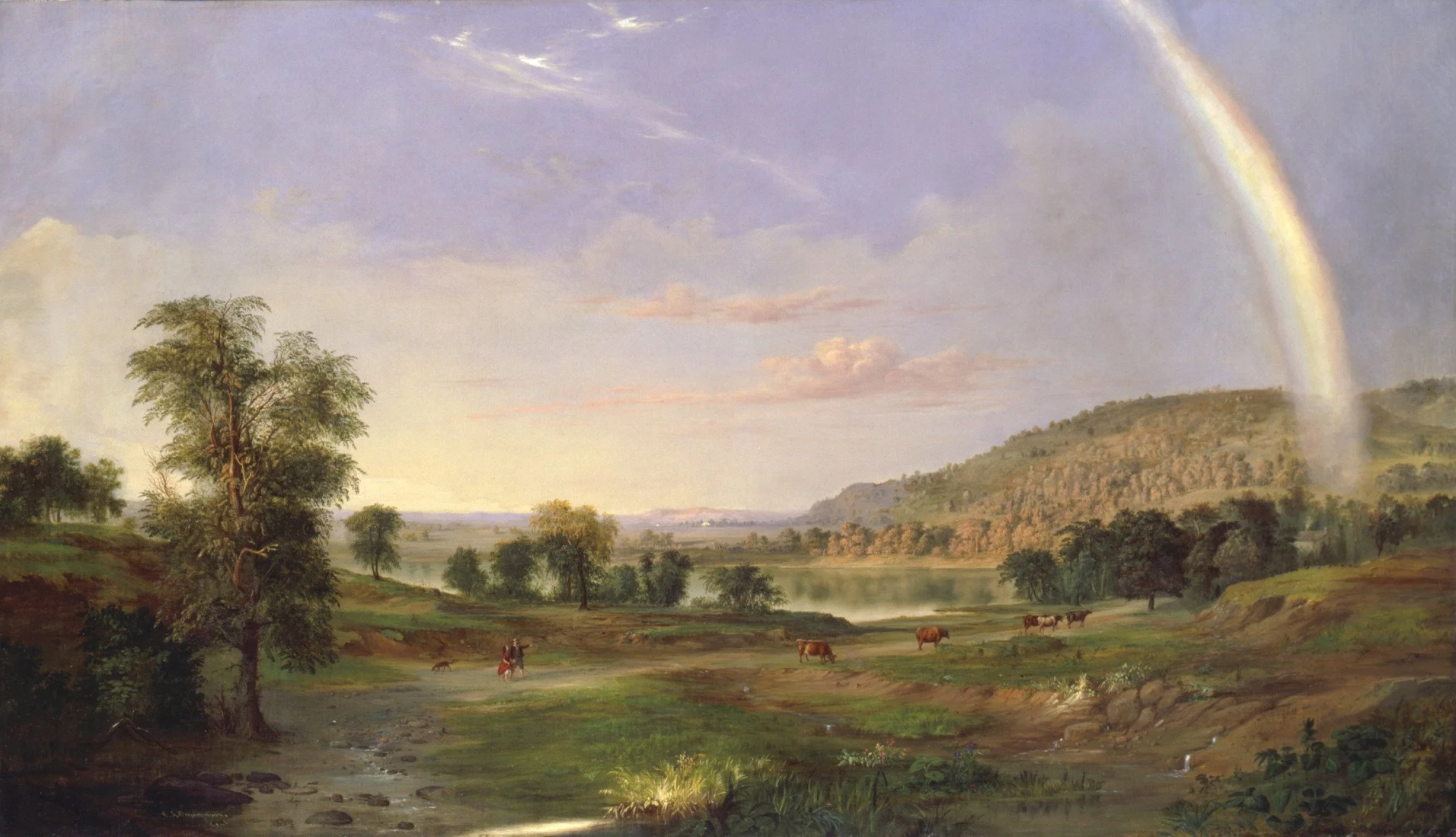
Fig. 2. Robert S. Duncanson, Landscape with Rainbow, Smithsonian American Art Museum, Washington DC.
Within the broader context of 19th century American painting, Duncanson’s work invites comparison with that of Frederic Edwin Church, Albert Bierstadt, and Worthington Whittredge, all of whom used landscape to construct narratives about the nation. While many of his contemporaries looked westward towards the country’s expansion, Duncanson was unique in his orientation towards the South and in his treatment of themes that relate to the Black experience. His earliest trip south of the Mason-Dixon Line seems to have been in the late 1840s (based on signature and date on a painting of Long Point on the Gauley River in Virginia), and he sketched and painted in Tennessee and North Carolina in the early 1850s.[1] His landscapes frequently tell the tell the stories of escaped enslaved people and the Underground Railroad, whether explicitly or in coded ways, but always with an emphasis on the pursuit of freedom. One of the clearest examples of this is found in Duncanson’s Landscape with Rainbow in the Smithsonian American Art Museum (Fig. 2)—a hopeful scene in which a couple points towards a safe house to which enslaved people fled while seeking freedom. The rainbow similarly falls directly onto the roof, highlighting the house, while a dog sniffs in the opposite direction of the house. It has been theorized that Duncanson, who was known to house runaway enslaved people at his home in Hamilton Turnpike (near Cincinnati), may even have set out to travel the route of the Underground Railway and paint the landmarks along the way as a way of documenting the pathway to freedom. Duncanson’s landscapes beautifully encapsulate both his artistic ambition and the lived experience of a Black artist working in the United States before and after the Civil War.
[1] Michael F. Meyer and Julie E. Meyer, Robert Selden Duncanson and His Courageous Southern Travels, exh. cat., Fredericksburg, 2024, pp. 1, 31-32.