
GIOVANNI FRANCESCO ROMANELLI
(Viterbo, ca. 1610 – 1662)
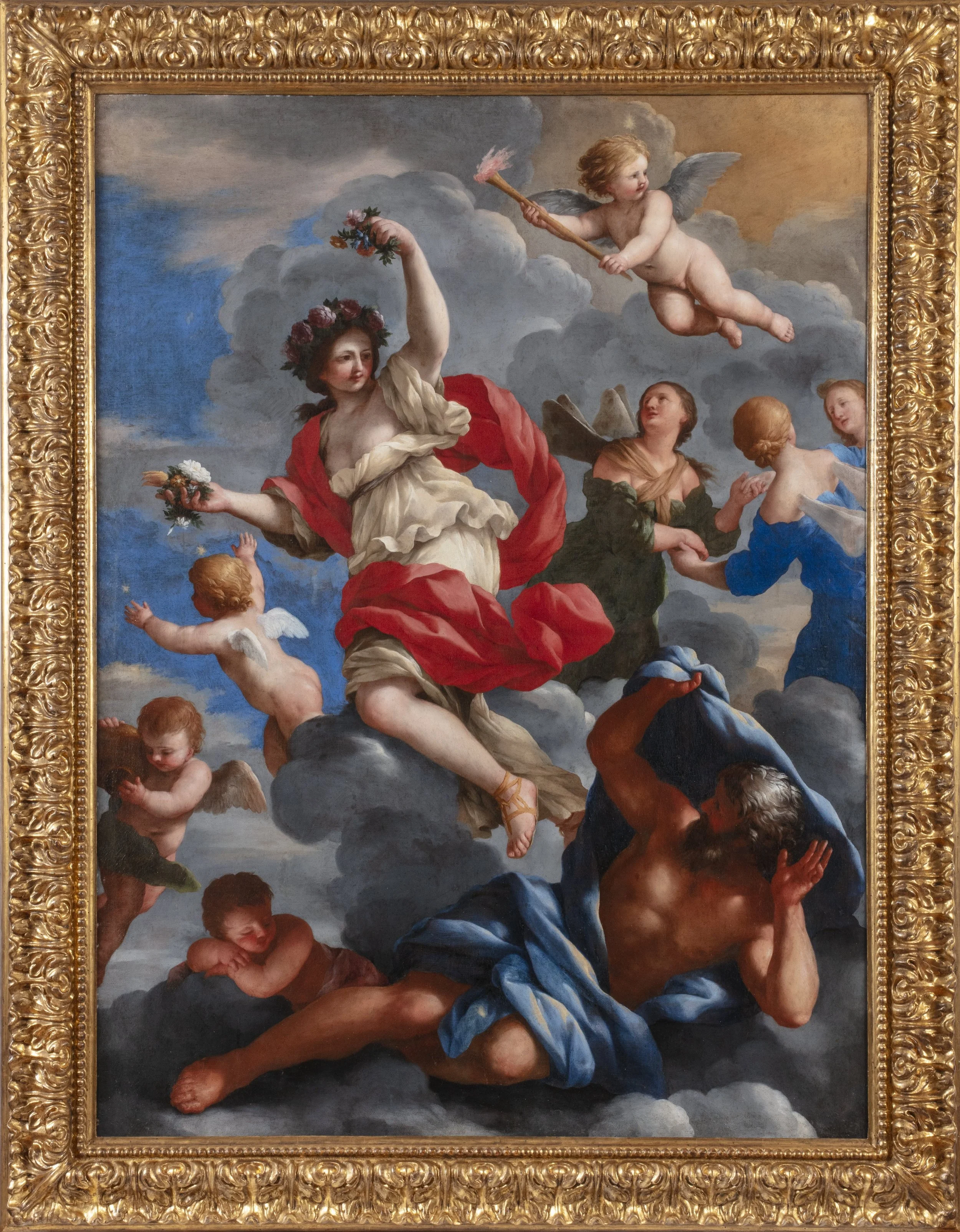
Aurora and Tithonus
Oil on canvas
52 ⅝ x 39 inches (133.5 x 99 cm)
Provenance:
Private Collection, Spain, until 2025.
The myth of Aurora and Tithonus centers on the theme of tragic immortality and immortal love. As recounted by Homer—and later (and most poignantly) by Tennyson—Aurora, the goddess of the dawn, fell in love with the mortal Trojan prince Tithonus, son of King Laomedon. The goddess asked Jupiter to make Tithonus immortal so that she could be with him forever, but crucially, she forgot to request that he remain forever young. Tithonus thus aged endlessly, and Aurora was compelled to leave her lover every morning, only to find him older and weaker the next day. Eventually he was transformed into a cicada, which is reborn each year with the song of the spring.
This tragic tale of love and the pitfalls of immortality is here captured with fresh, expressive brushwork and bold coloration by Giovanni Francesco Romanelli. Romanelli excelled as a painter of mythological scenes, particularly in fresco decoration. Our canvas is a finished modello for such a project—one either never completed or lost. In his treatment of the subject, Romanelli depicts the youthful and flower-adorned Aurora taking flight to bring forth dawn. She is surrounded by putti—one at the top left carrying the light of the morning—and by three winged women at the right, the Horae, who represent the changing seasons. The aged Tithonus reclines on a cloud at the bottom of the composition. He lifts a blue drapery as if he has just awakened, while a putto dozes at his feet, signifying the end of night.
Romanelli worked with many of the greatest artists of the Roman Baroque. He was first a student of Domenichino, then a collaborator with Pietro da Cortona, with whom he is recorded working on the ceiling decorations in Palazzo Barberini. Later commissions came through Bernini and the Barberini Pope Urban VIII. These include frescoes in Saint Peter’s and the Vatican Palace. In 1646 the artist left Rome for Paris at the invitation of Cardinal Mazarin. There he spent two years working on various projects, including the frescoed ceilings of the Galerie Mazarine, now a part of the Bibliothèque Nationale. Several of the vibrant figures seen in flight in our painting find analogous counterparts in the Mazarin decorations (Figs. 1-2). After his return to Rome in 1648, the artist undertook several secular decorative projects in the city—mythological frescoes in Palazzo Costaguti, Palazzo Altemps, and Palazzo Lante. He returned to Paris in 1655 to paint the summer apartments of the Queen in the Palais du Louvre.
Dr. Silvia Bruno, in confirming Romanelli’s authorship of our painting, dates it to the period of the artist’s activity in Rome in the early 1650s. She has associated with it a red chalk sketch by Romanelli formerly in a private collection in Turin.[1] That drawing records a close compositional variant of our painting, modified to an oval format, and with an additional putto behind Tithonus (Fig. 3).[2]
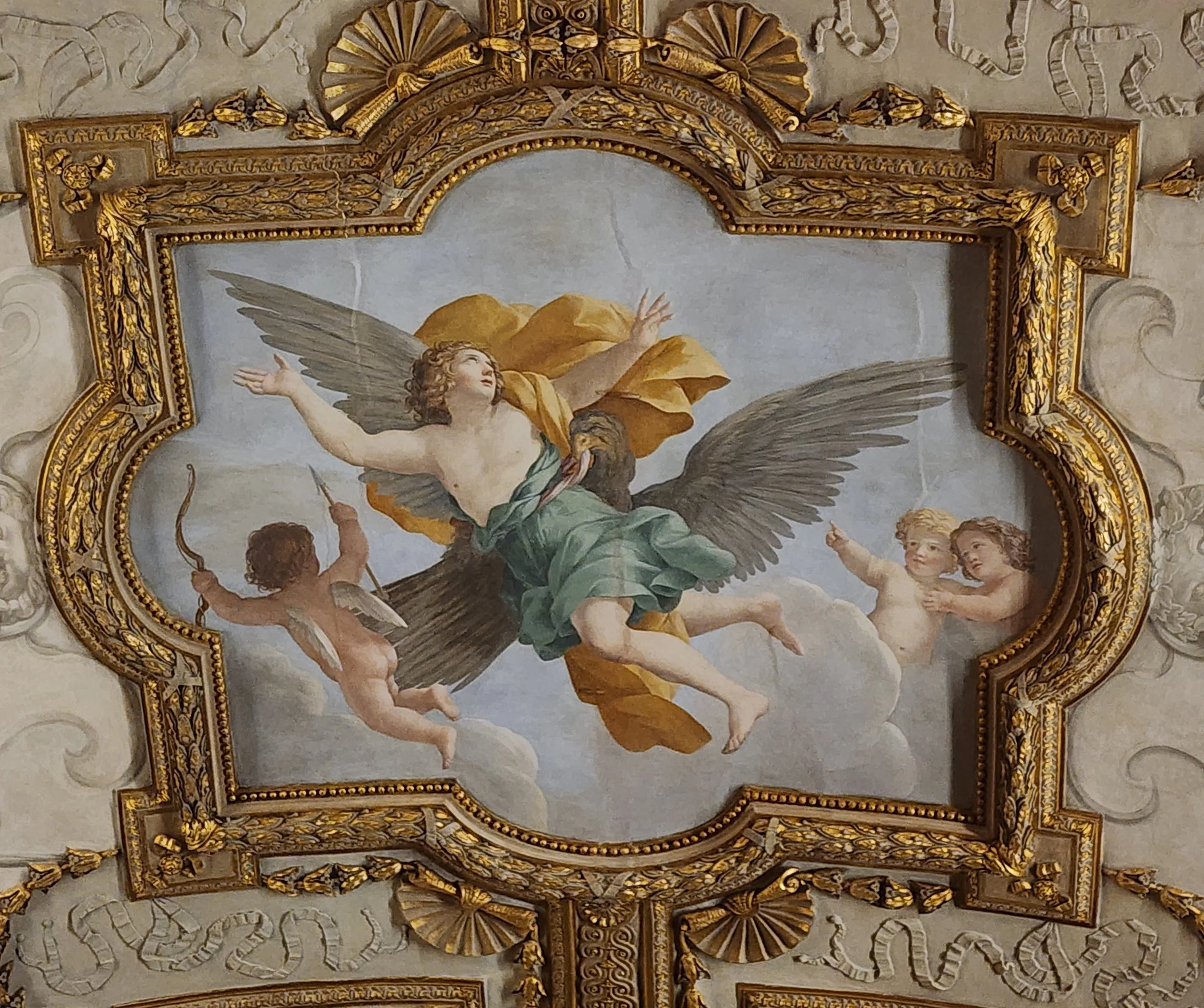
Fig. 1. Detail from Romanelli’s ceiling frescoes in the Galerie Mazarine, Bibliothèque Nationale, Paris.
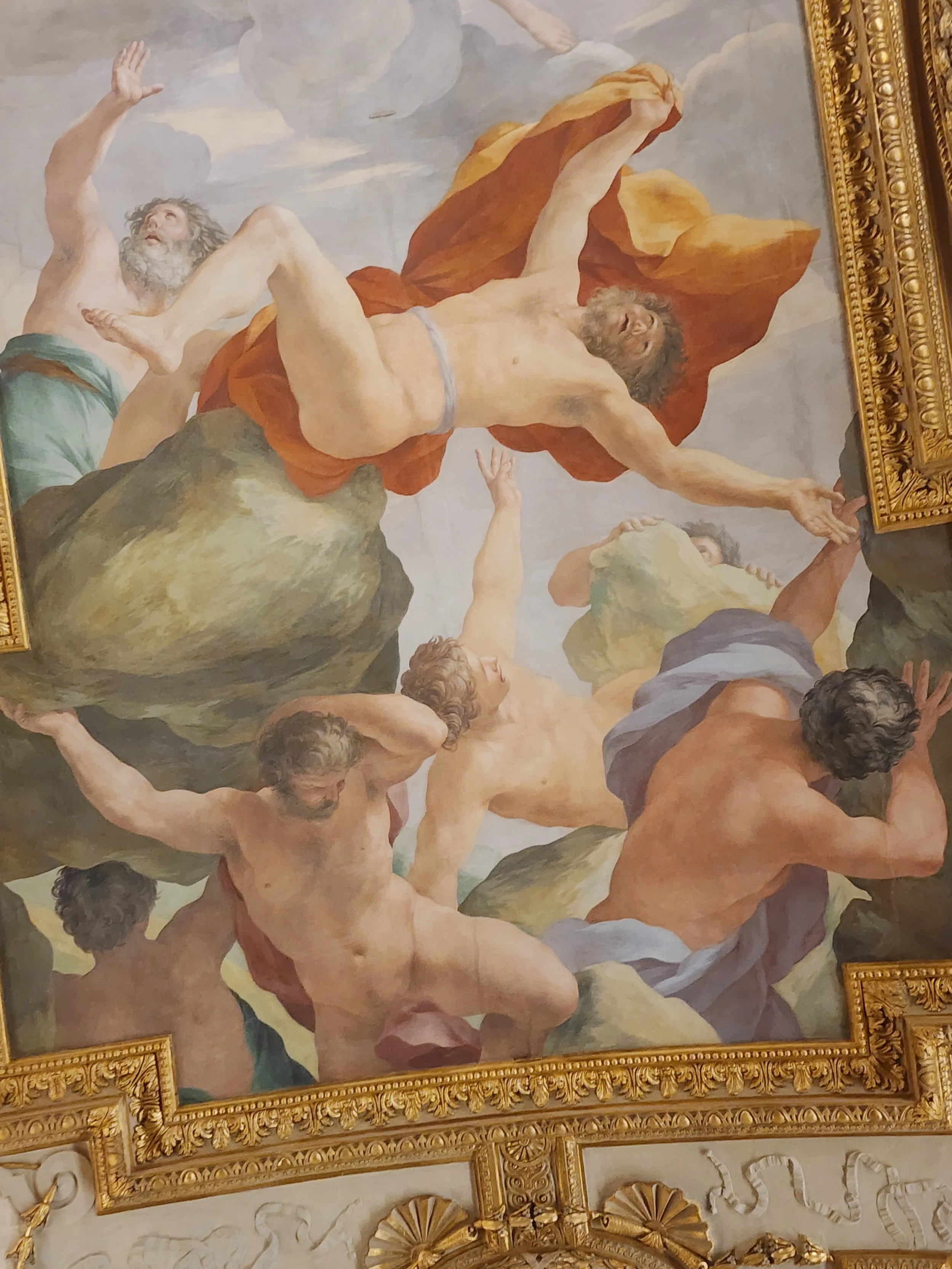
Fig. 2. Detail from Romanelli’s ceiling frescoes in the Galerie Mazarine, Bibliothèque Nationale, Paris.
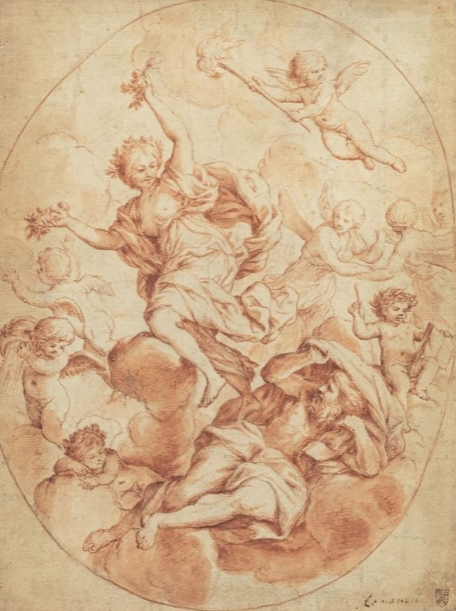
Fig. 3. Giovanni Francesco Romanelli, Aurora and Tithonus, red chalk on paper, formerly art market, Genoa.
[1] 33 x 24.5 cm. Sold at Cambi Casa D’Aste, Genoa, 13 December 2019, lot 458.
[2] A catalogue entry on this painting by Dr. Burno is available upon request.