
ELISABETTA SIRANI
(Bologna 1638 – 1665 Bologna)
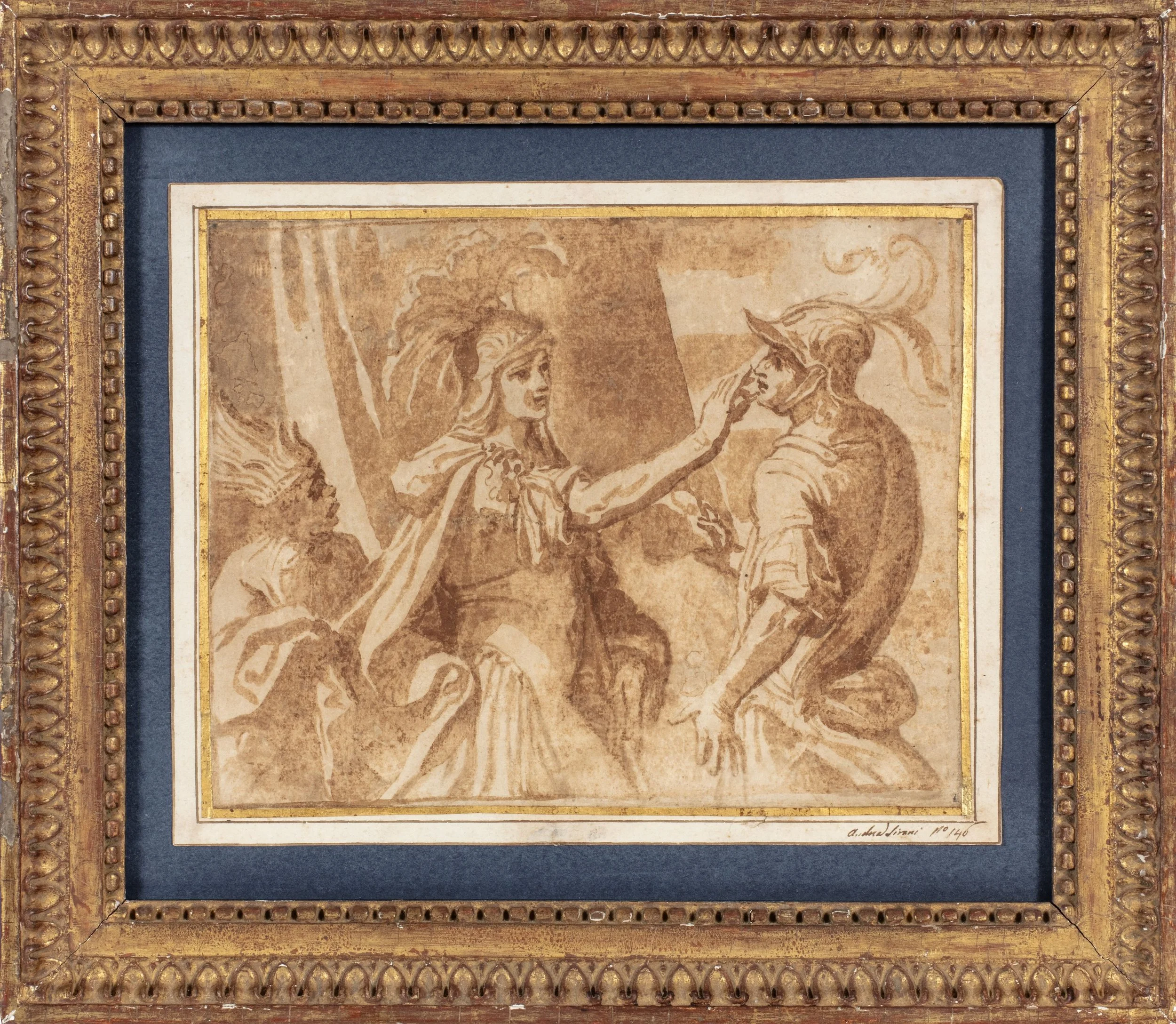
Alexander the Great Sealing the Lips of Hephaestion with a Ring
Brush and brown wash over traces of black chalk on paper
7 ½ x 9 ⅝ inches (19 x 24.5 cm)
Provenance:
Private Collection, Italy.
Dorotheum, Vienna, 1 October 2024, lot 147, and 14 March 2025, lot 122, as Giovanni Andrea Sirani.
Literature:
Massimo Pulini, Il Diario di Elisabetta Sirani: Una Monografia in Forma di Album, Rimini, 2025, pp. 262, cat. no. 145.B.
Famously described by Carlo Malvasia as “the glory of the female sex, the gem of Italy, the sun of Europe,” Elisabetta Sirani enjoyed great renown across Europe for her prolific talent and reputed beauty. Daughter of Giovanni Andrea Sirani (1610–1670), Guido Reni’s principal assistant, she had begun painting by the age of 17, most likely training under her father, since as a woman she would not have had access to an academy. Sirani worked principally for private aristocratic and ecclesiastic patrons, producing small-scale devotional works, larger religious and historical pictures, as well as altarpieces for major churches in and around her native city of Bologna. Upon her early death in 1665, aged just 27, she was immortalized in a series of poetic eulogies in which she was variously described as a “miracolo del Mondo” (“miracle of the world”), a female Apelles, even a Phoenix, the mythical bird who was continually reborn.[i]
As distinguished as Sirani was as a painter, she was equally celebrated as an engraver and a draughtswoman. Her graphic oeuvre is the largest of any female artist in early modern Italy, and her drawings are rendered with a highly individual style and technique. Sirani rapidly executed her drawings, which lends an especially painterly verve to her compositions. Her technique is also distinctive for her exclusive use of a brush with ink, rather than a pen.
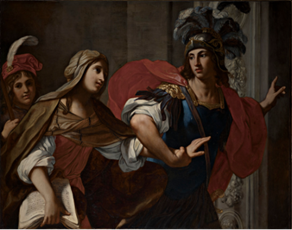
Fig. 1. Alexander the Great and the Delphic Sibyl, 1664, Michelangelo Poletti Collection, San Martino in Soverzano di Minerbio.
This drawing is a preparatory study for Sirani’s painting of Alexander the Great Sealing the Lips of Hephaestion with a Ring, which was commissioned in 1664—the final year of her short but productive life—by Duke Alessandro Pico II of Mirandola. While the painting is no longer extant (or has not yet been traced), it is described by Sirani in her list of her works, which was published by Malvasia. It appears in the list alongside a pendant painting, Alexander and the Delphic Sibyl, of 1665 (Fig. 1).[ii] In that painting Alexander wears an elaborate plumed helmet with an inlaid fish pattern, which can be seen also in the present drawing. Both works also share a similarly balanced composition, with the protagonists depicted half-length and accompanied by a servant.
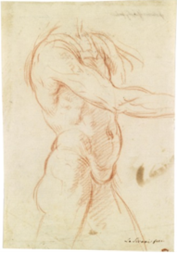
Fig. 2. Study for a Soldier, 1664, formerly Dorotheum, Vienna, 4 November 2011, lot 88.
Alexander the Great was a popular figure in 17th-century Italian art. While he was often represented as the conquering hero who was magnanimous in victory, the episode depicted here (which derives from Plutarch) is a comparatively rare and unusually tender representation of male companionship.[iii] Alexander shares a letter from his mother with Hephaestion, while offering his ring to kiss to swear his friend to silence. The letter can be seen here in Hephaestion’s hand, and the ring is held to his lips. The scene illustrates Alexander’s deep trust for Hephasestion, who he considered not only his confidant but also his alter ego. Sirani’s choice of subject highlights her willingness to engage with grand historical themes, which she interpreted with great originality. This sets her apart from many female artists of the period—who primarily focused on portraits, still lifes, and religious scenes—and was an aspect of her art that was often overlooked by contemporary writers, who were more impressed by her gender. Sirani’s knowledge of this classical subject undoubtedly came from Plutarch’s Parallel Lives, a copy of which is recorded in the 1666 inventory of her father’s library.[iv]
Only recently rediscovered, this work represents a significant addition to the known corpus of drawings by Elisabetta Sirani. The drawing constitutes the final preparatory study for the painting and is the sole surviving record of Sirani’s full composition. One further preparatory drawing for the painting is known—a preliminary study in red chalk of a nude torso with indications of armour that corresponds to the figure of Alexander reaching out to Hephaestion (Fig. 2).[v]
Elisabetta Sirani’s authorship of this drawing has been confirmed by Dr. Babette Bohn on the basis of firsthand inspection.
[i] “La poesia muta celebrata dalla pittura loquace. Applausi di nobili ingegni al pennello immortale della Sra. Elisabetta Sirani pittrice bolognese,” 1666. See: Babette Bohn, “Il Fenomeno della Firma: Elisabetta Sirani,” in Elisabetta Sirani. “Pittrice Eroina” 1638–1665, exh. cat., Museo Civico Archeologico, Bologna, 2004-2005, pp. 113-114.
[ii] The paintings of Alexander and Hephaestion (1664) and its pendant, Alexander and the Delphic Sibyl (1665), are described in her diaries as follows: “An Alexander the Great when he violently wants from the Delphic Sibyl the oracles on the Persian War, half life-size figures, with a page's head behind the said Alexander, for a painting amateur. […] A similar one of Alexander, when with his seal he signals to seal the mouth to Hephaestion after having read him the letter written by his mother, for the Duke of Mirandola.” See: Carlo Cesare Malvasia, Felsina Pittrice: Vite de Pittori Bolognese, vol. 2, Bologna, 1678, p. 475; and Massimo Pulini, Il Diario di Elisabetta Sirani, Rimini, 2025, p. 261, cat. nos. 144 and 145.
[iii] Sirani’s is one of the earliest depictions of the subject, with only two precedents: an engraving by Giulio Bonasone dated 1574 and a painting by the Roman artist Andrea Camassei from circa 1640. See: The Illustrated Bartsch, vol. 29 (formerly vol. 15 15), part 2, cat. no. 296, New York, 1983, p. 165.
[iv] Plutarch, Parallel Lives, Venice, 1602, Book 39, pp. 4-5.
[v] Pulini, Il Diario, p. 261, cat. no. 144.