
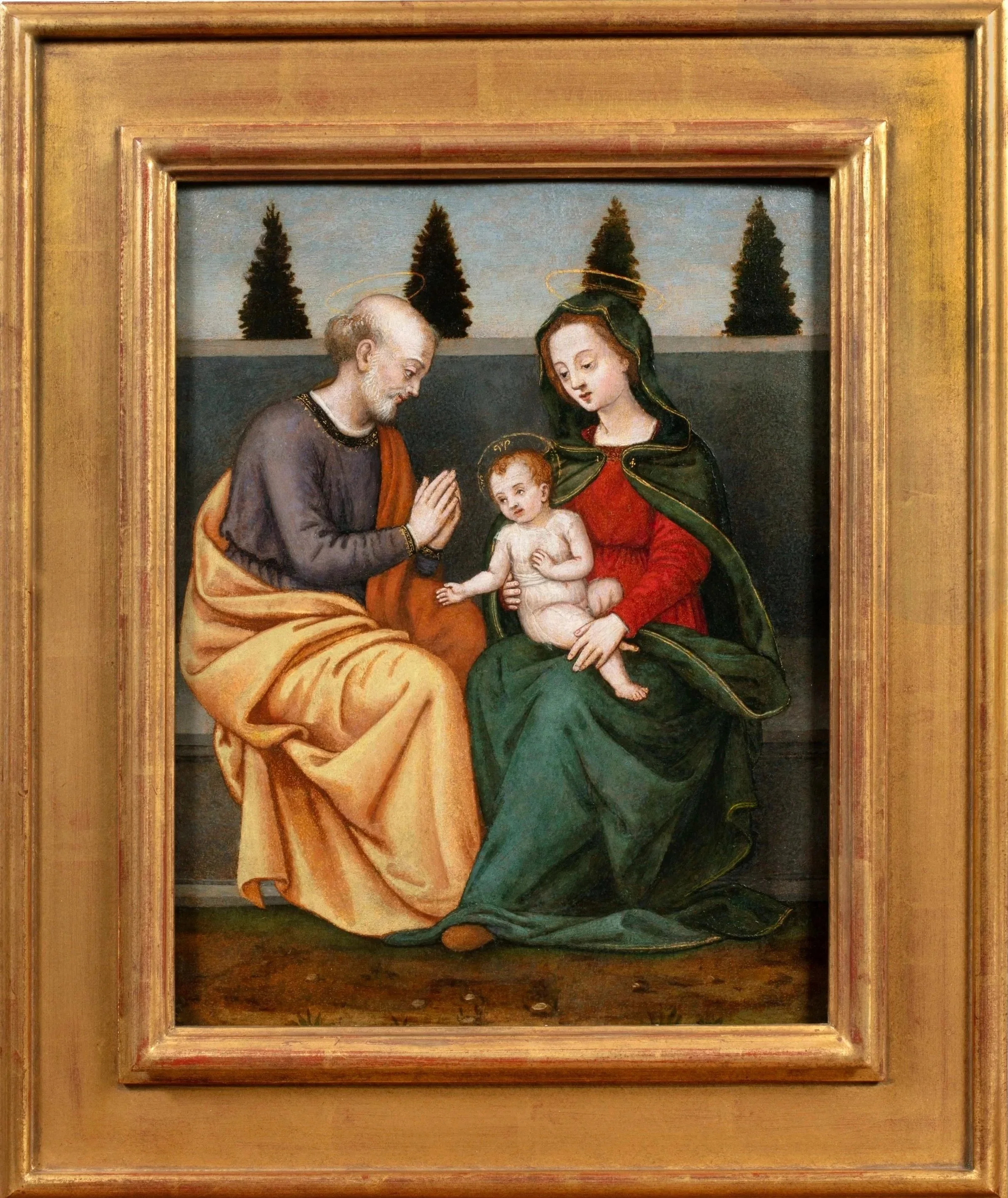
SUOR PLAUTILLA NELLI
(Florence, 1524 – 1588)
The Holy Family
Oil on panel
12 ⅜ x 9 ⅝ inches (31.4 x 24.4 cm)
Provenance:
Private Collection, Belgium, ca. 1960s–1980s (according to a label on the reverse of the old frame).[1]
Private Collection, France.

Fig. 1. Plautilla Nelli, Madonna and Child with Saints Agnes, Dominic, and Catherine of Siena, Private Collection, Florence.
While the majority of Plautilla’s devotional works focus on the Madonna and Child accompanied by attendant saints, this panel is noteworthy for its depiction of Saint Joseph as a solitary figure in adoration of the Christ child. In this tender scene, the Holy Family is seated together on a stone bench in an outdoor garden. Four slender cypress trees rise above the wall behind them, punctuating the blue sky. Nelli employed a related backdrop in her Madonna and Child with Saints Agnes, Dominic, and Catherine of Siena (Fig. 1). In both paintings, the setting may allude to the biblical hortus conclusus—the epithet of the enclosed garden from the Song of Songs (4:12) that became associated with the Madonna’s virginity and purity. The theme of purity may have been symbolized in another element that was planned for the composition but ultimately not included in the final painting. Technical imagery has revealed that Plautilla initially included a diminutive bowl perched on the ledge between the heads of the Saint Joseph and the Virgin (Plate 1; Fig. 2). In addition to the underdrawing made visible by the infrared reflectography, the recent conservation of this panel showed that she had begun to paint the bowl but eventually painted it out. Beyond its symbolic associations with purity, the bowl may allude to the rejection of worldy possessions and desire for spiritual nourishment—a theme that would have resonated with a nun-painter and her Dominican audience.
Plautilla’s design of the figural group finds compositional links across her oeuvre and her main sources of influence. The seated pose of the Madonna, with her proper left leg crossed in front of her right leg, is essentially a repetition of that found in her Madonna and Child in the Museum Catherijneconvent in Utrecht (Fig. 3). Saint Joseph, who is unusually depicted at the same scale and on the same plane as the Virgin, finds his origins in the works of Fra Bartolomeo. Joseph’s pose and the pattern of folds of his drapery have close cognates in a few of the frate’s drawings in the Museum Boijmans Van Beuningen and most clearly in his painting of The Holy Family in the Museo Nacional Thyssen-Bornemisza, Madrid.[2] Plautilla has adapted her model into a more prayerful position, as Saint Joseph clasps his hands and directs his attention to the Christ child. The lively infant—imbued with a sense of movement that is typical of the artist—responds by turning and reaching out towards his father. The marrying of compositional formulae and the resulting emphasis on Saint Joseph might suggest that this painting was intended for a male patron, perhaps named Giuseppe. It might also, more broadly, reflect the growing devotion to Joseph in 16th-century Florence.
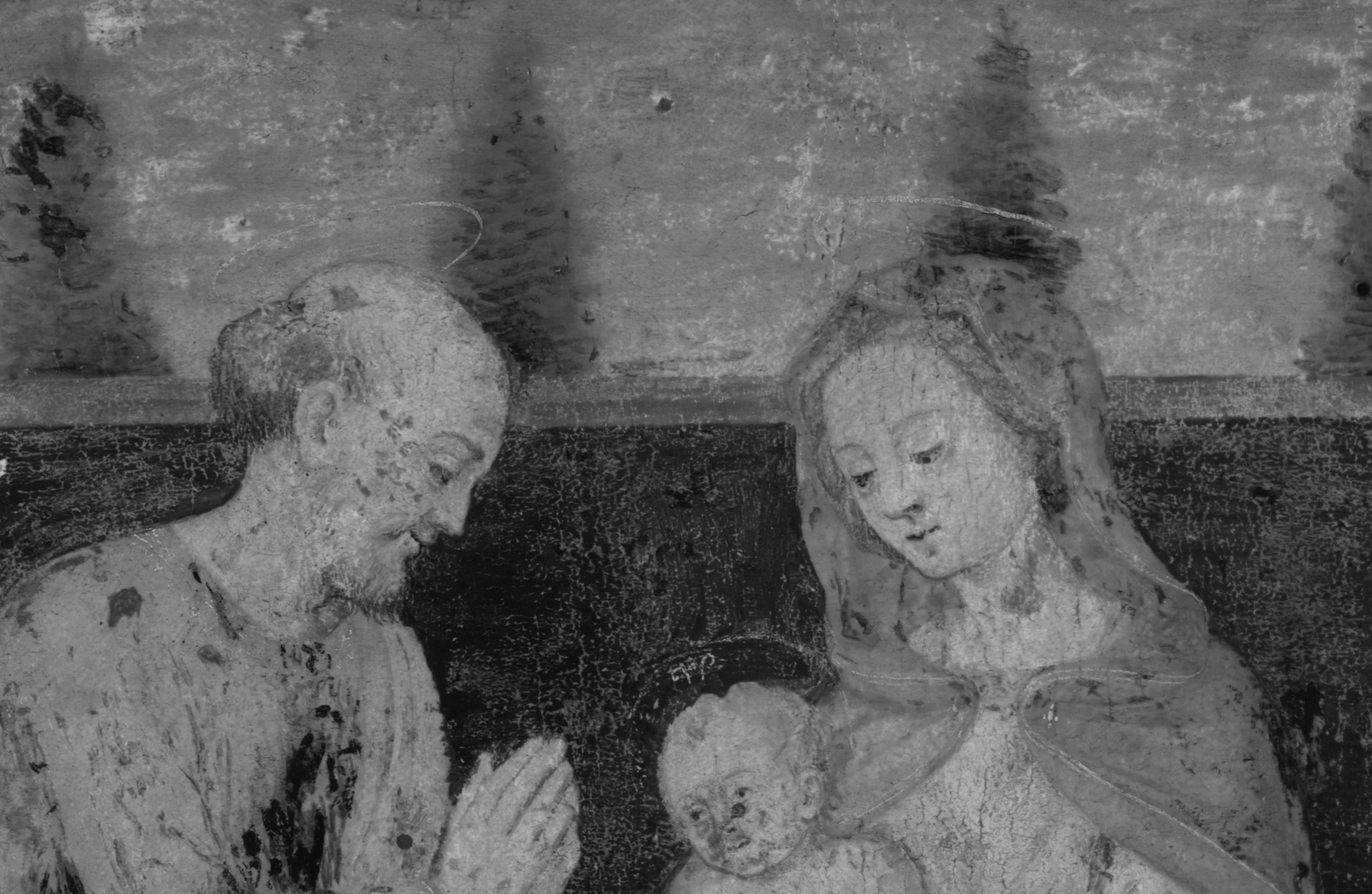
Fig. 2. Detail of the underdrawing for a bowl in the infrared reflectogram of the present work.
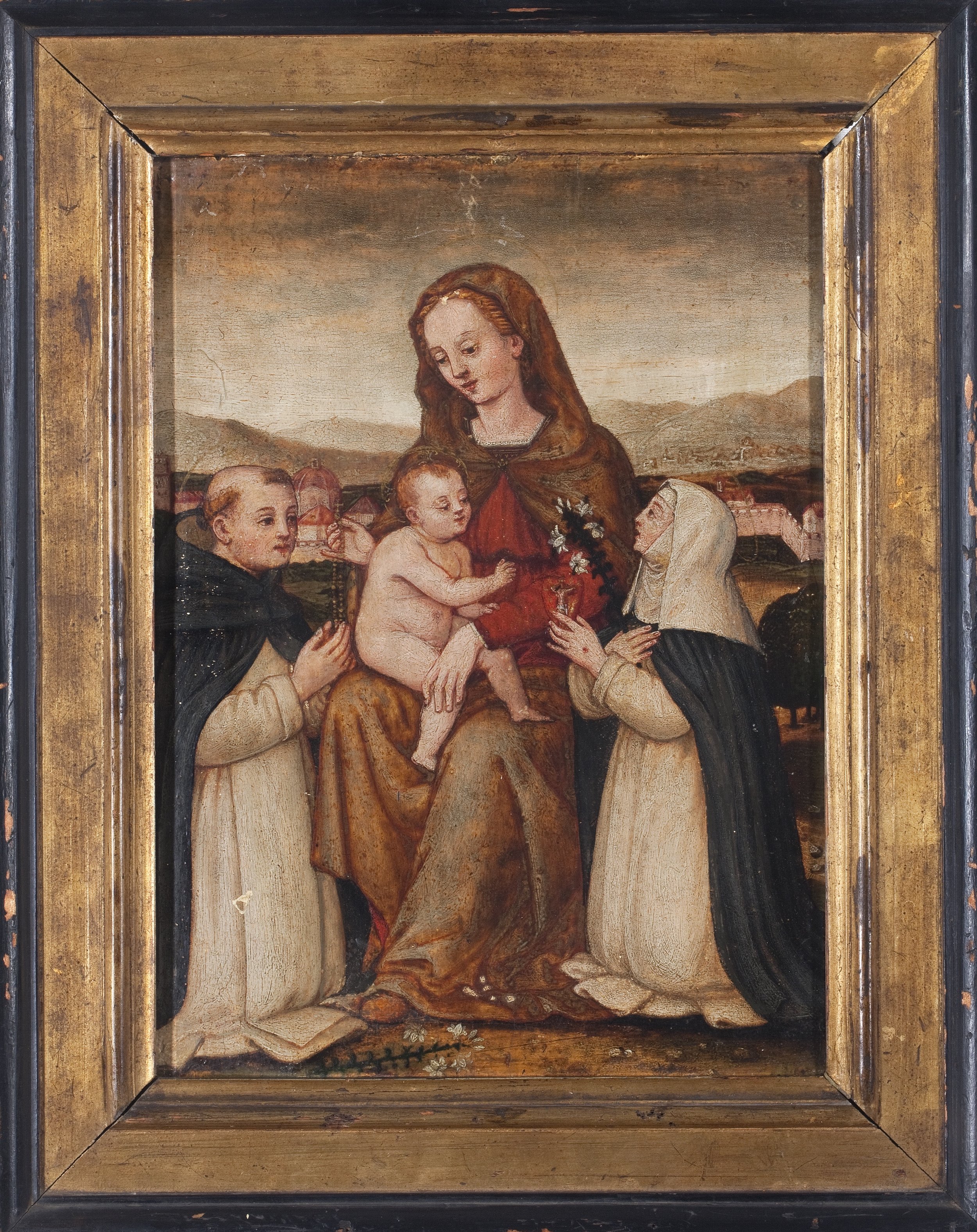
Fig. 3. Plautilla Nelli, Madonna and Child with Saints Dominic and Catherine of Siena, Museum Catharijneconvent, Utrecht.
Technical Images
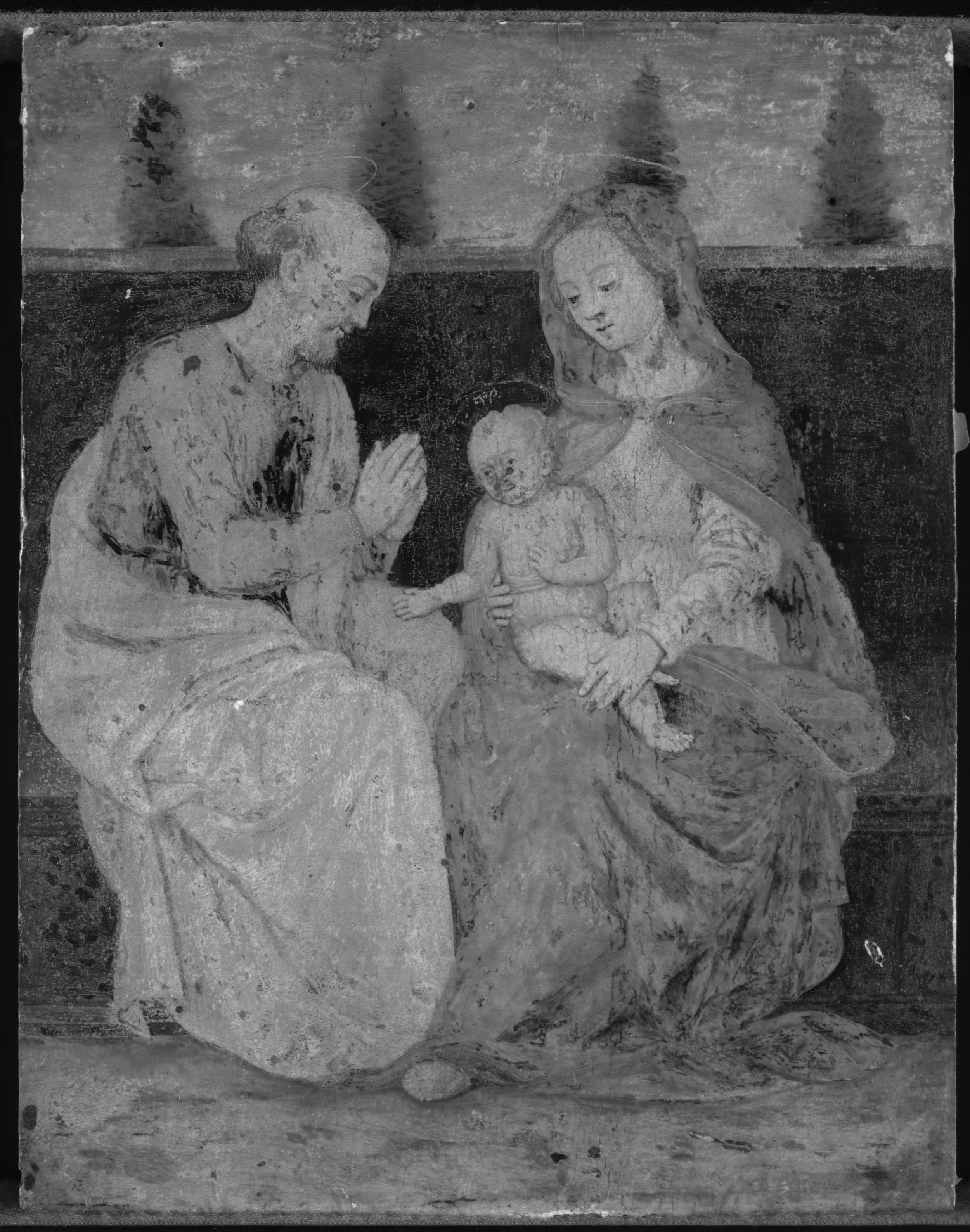
Plate 1. Infrared Reflectogram of the present work.
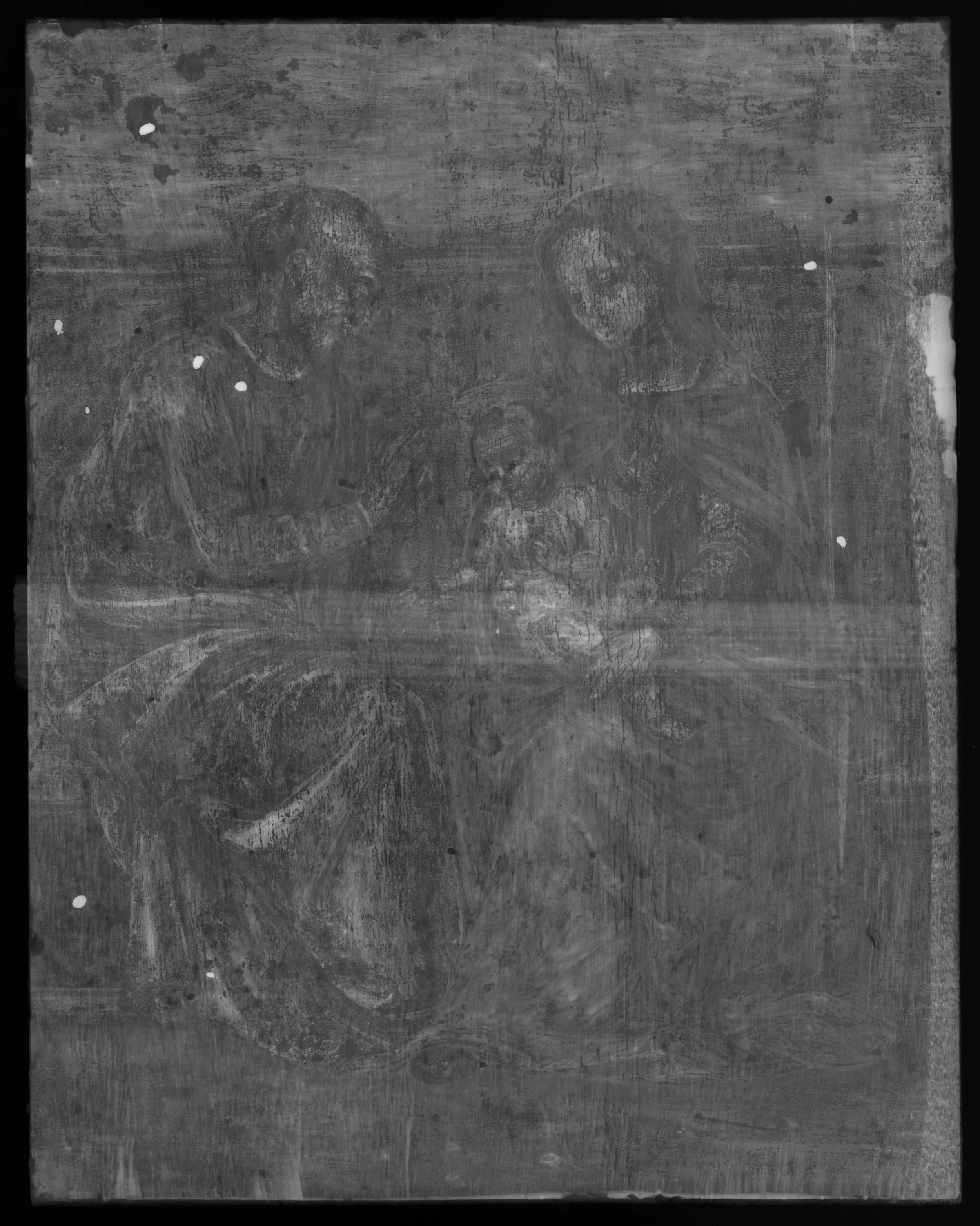
Plate 2. X-radiograph of the present work.
[1] The label on the reverse of the old frame indicates that the painting was reframed in Brussels by the Maison Van Thienen during the years 1964–1986, during which Charles Van Thienen led the family firm.
[2] For the related drawings in the Boijmans, see: I 563 N 75 and I 563 M 47. For the Thyssen painting (inv. no. 29, 1955.6), see: https://www.museothyssen.org/en/collection/artists/bartolommeo-fra/holy-family-infant-saint-john-baptist.