
SUOR PLAUTILLA NELLI
(Florence, 1524 – 1588)
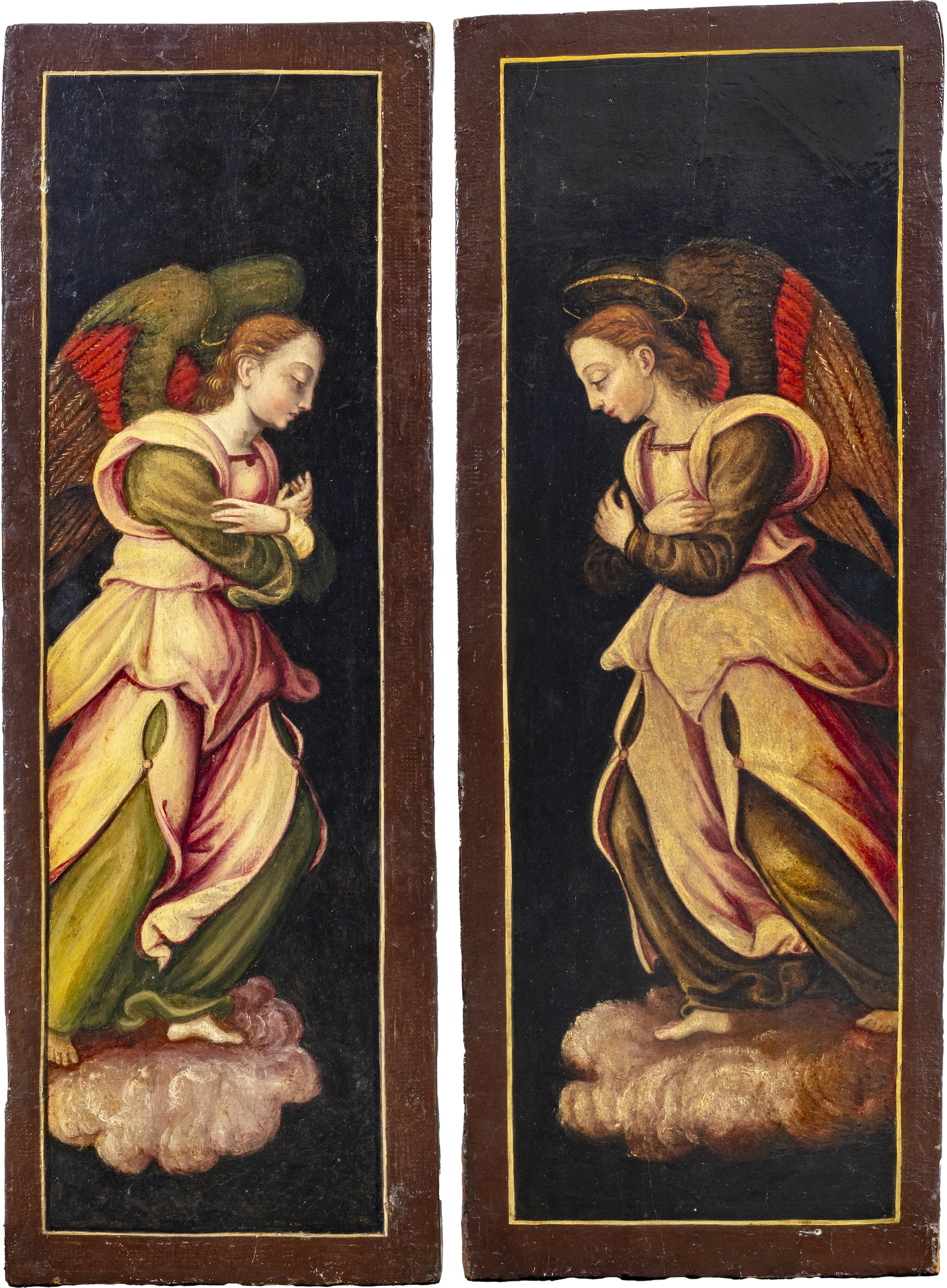
Two Angels
Oil on panel
23 ¾ x 8 ⅛ inches (60.3 x 20,6 cm), left panel
23 ¾ x 9 inches (60.3 x 22.9 cm), right panel
Provenance:
Private Collection, Stamford, Connecticut, until 2025; where acquired by:
Private Collection, New York.
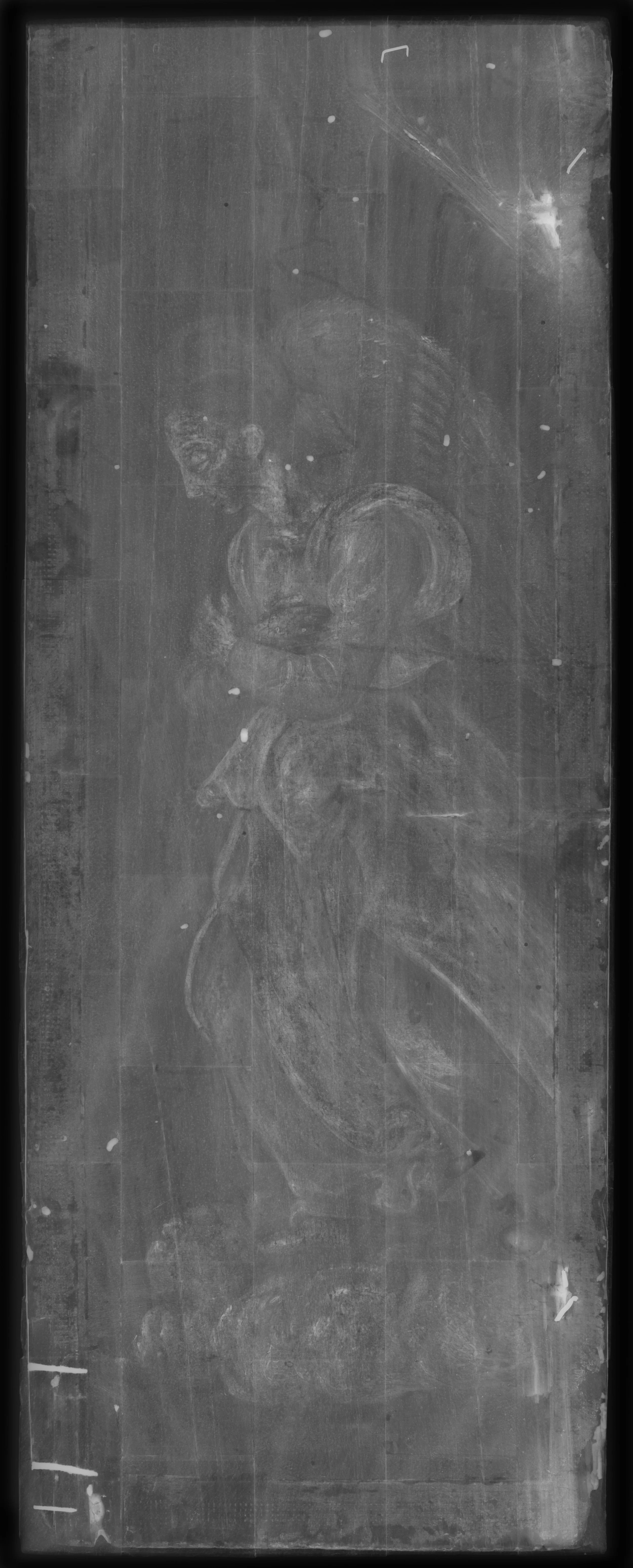
These two panels, each depicting an adoring angel, likely formed the sportelli (wings) of a small triptych. In their original context, they may have resembled the large panels of Angels by Giovanni Antonio Sogliani, of which two are in the Alana Collection (Fig. 1) and a third is in the Yale University Art Gallery. Alessandro Nesi recently proposed that these three panels and a now-lost fourth Angel formed the inner and outer wings of a large folding triptych that had at its center an image of the Effusio sanguinis—Christ full-length and expressing blood from his wounds.[1] The present panels are thinned and could have conceivably been painted on both sides. Thus, a similar configuration as double-sided wings can be envisaged for them, although on a much smaller scale.
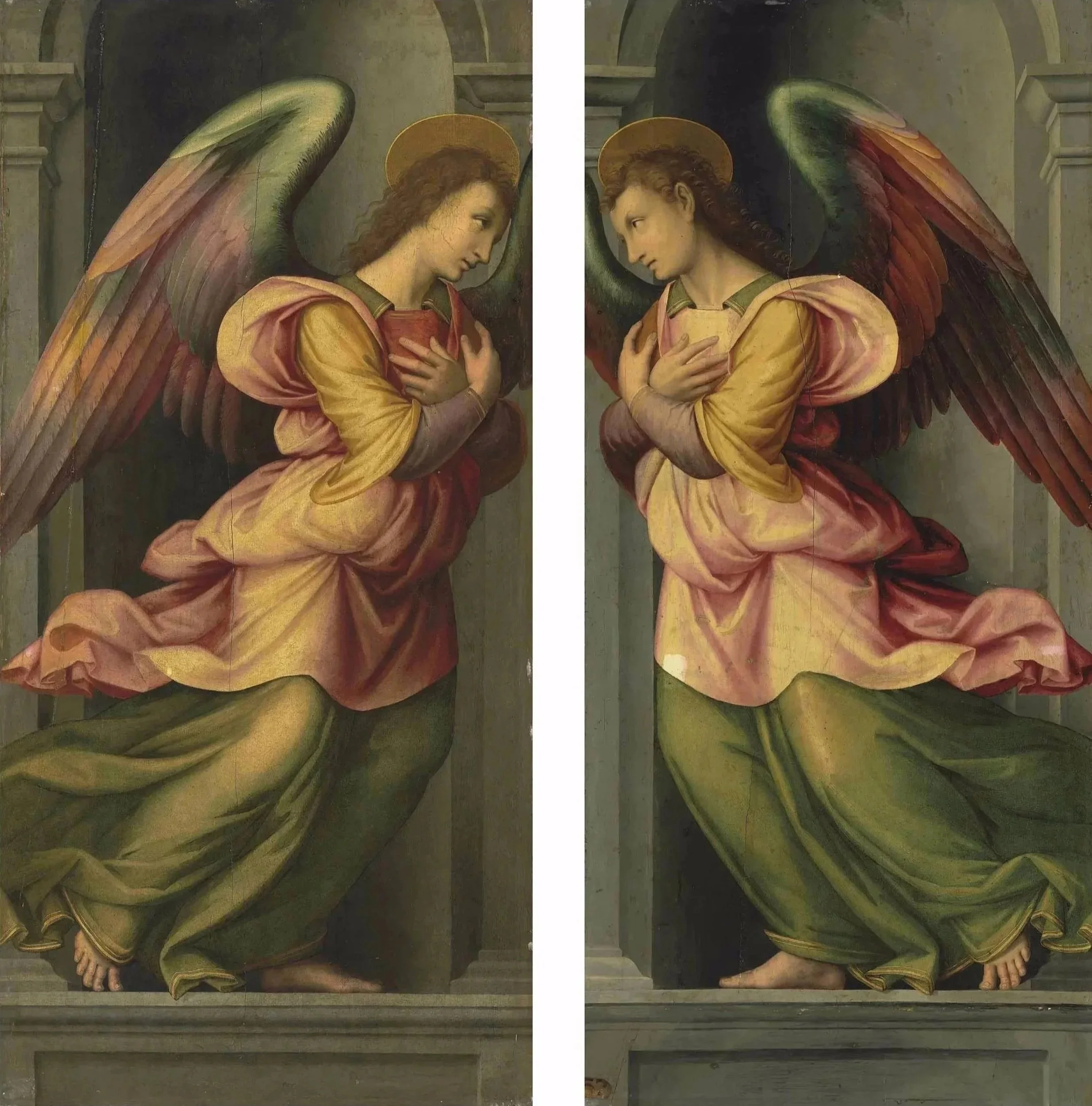
Fig. 1. Giovanni Antonio Sogliani, Two Angels, Alana Collection, Newark, Delaware.
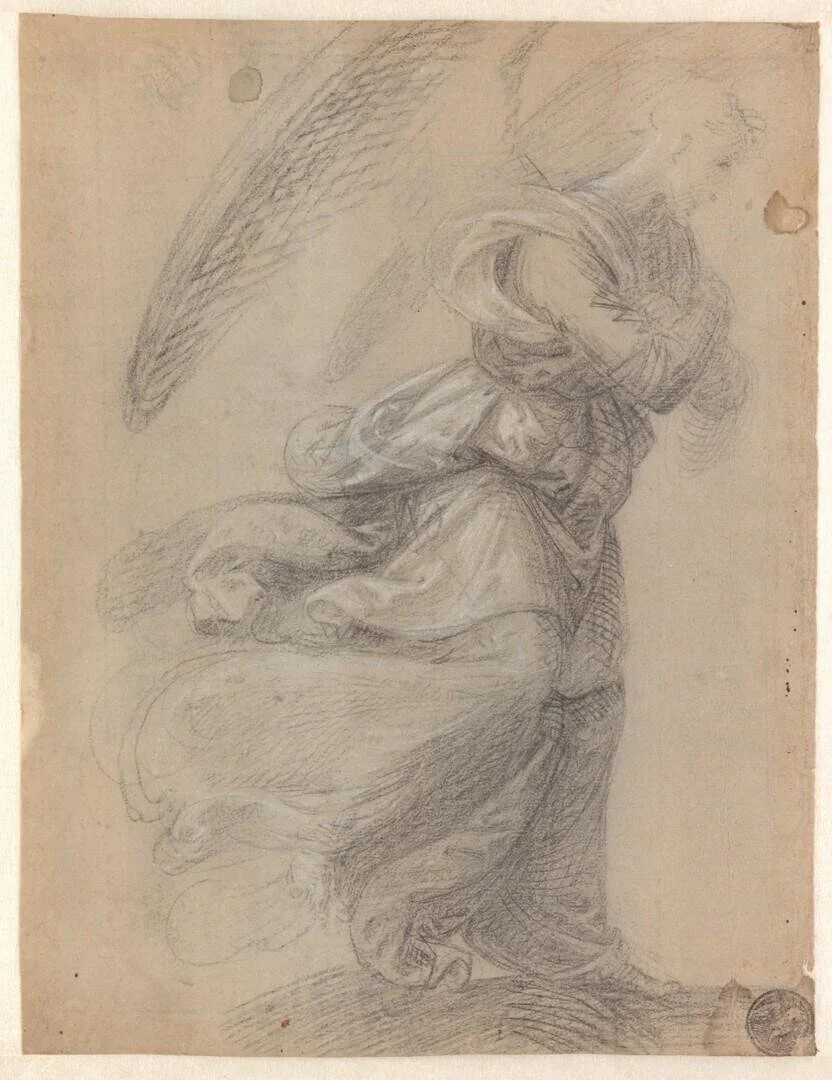
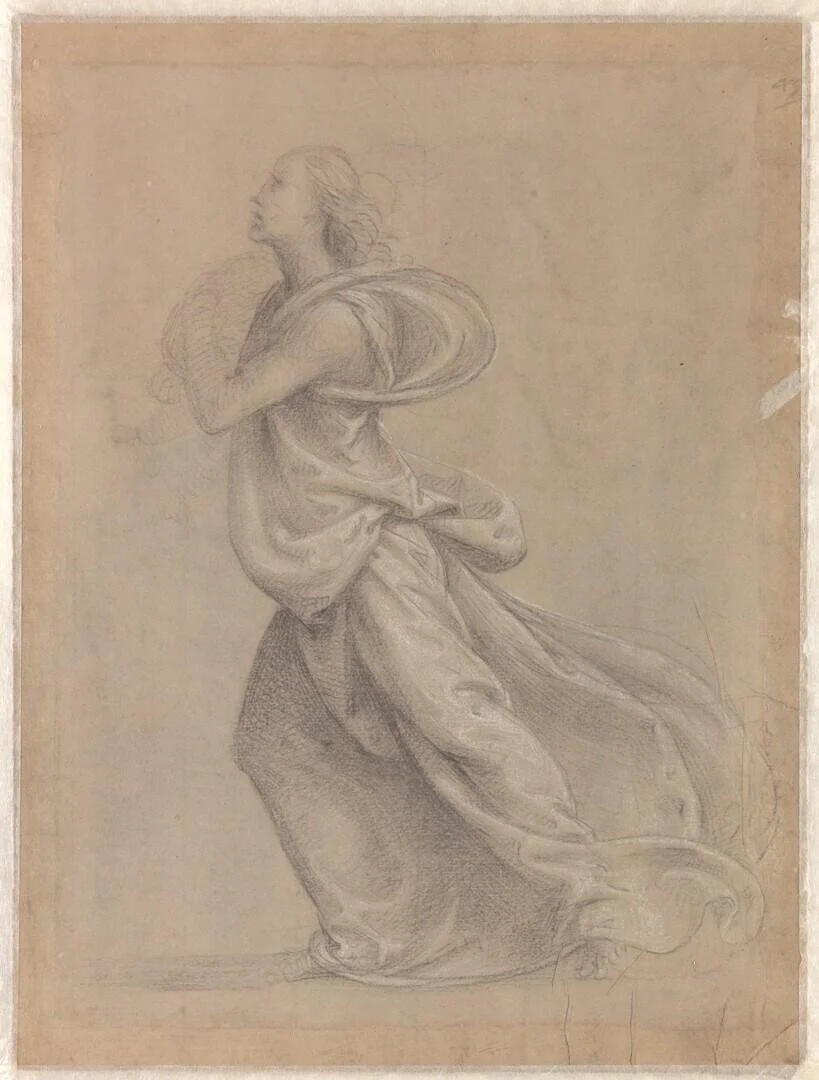
Fig. 2. Fra Bartolomeo, Two Studies for Angels, Museum Boijmans Van Beuningen, Rotterdam.
Both Sogliani and Plautilla took Fra Bartolomeo as their artistic point of reference. Two drawings for adoring angels by the frate are among the group of drawings once owned by Plautilla in the collection of the Museum Boijmans Van Beuningen (Fig. 2), but it is possible that Sogliani’s paintings served as an additional source of inspiration.[2] Plautilla’s angels and Sogliani’s Alana-Yale angels are similarly posed, each astride with their arms crossed reverently over their chests and their heads in profile. They are also similarly dressed, wearing billowing robes including a changeant mantle of salmon and yellow over deep green. While the wings of Plautilla’s angels lack the brilliant rainbow tones of Sogliani’s, they are nevertheless multicolored and are painstakingly painted, retaining a rich impasto. This impasto also appears on the clouds, while the robes and faces evince Plautilla’s more typical enamel-like finish.
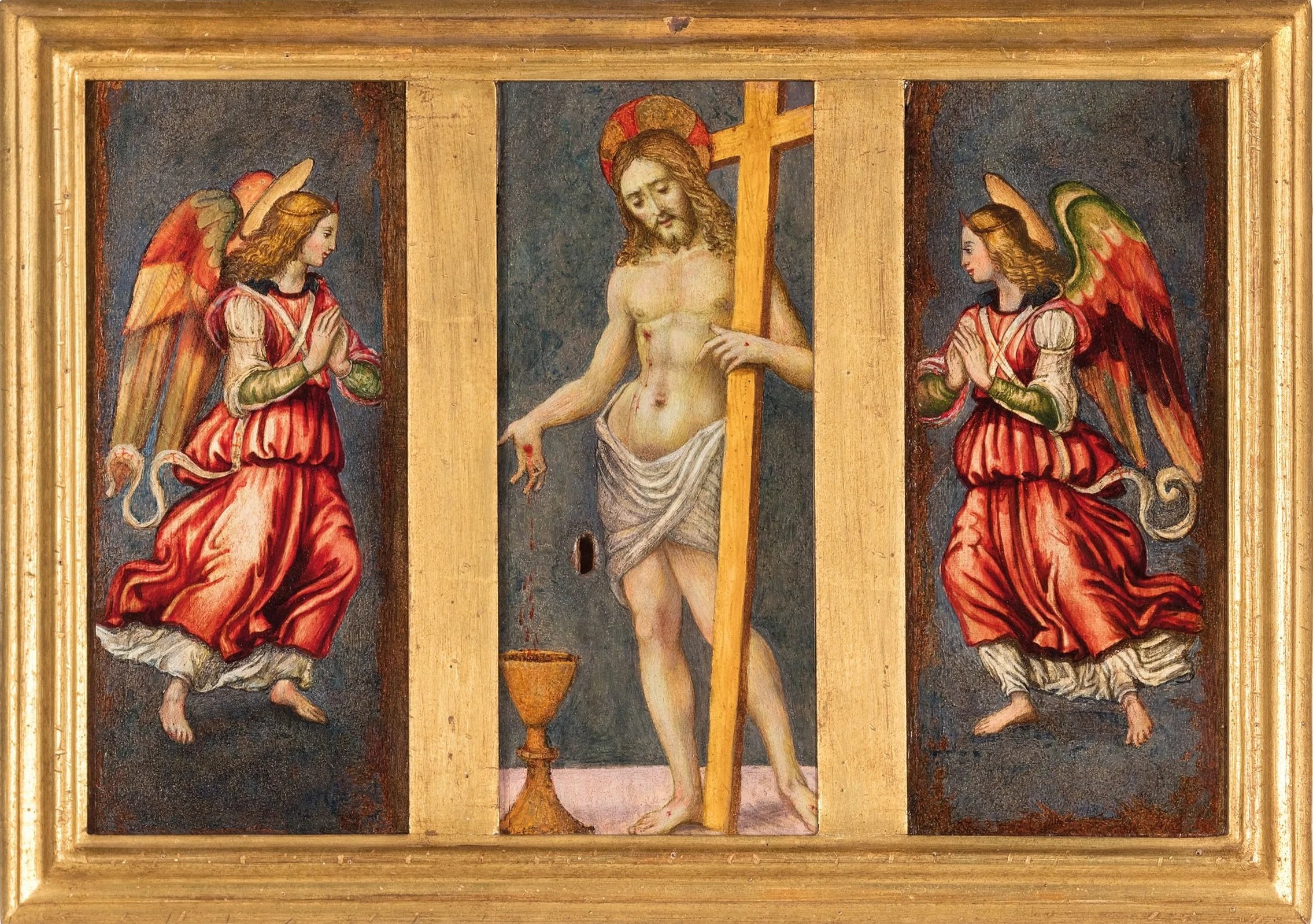
Fig. 3. Florentine School, 16th Century, Effusio Sanguinis with Adoring Angels, formerly art market, Italy.
The fact that the right panel is slightly wider than the left suggests that they were originally a matched pair from either the inside or outside of a set of wings.[3] The existence of other small-scale painted ensembles with the Effusio sanguinis flanked by adoring angels from this period raises the possibility that Plautilla’s angels may have belonged to such a work (Fig. 3),[4] perhaps a tabernacle or another object (such as a box or a ciborium) used within a eucharistic context.[5]
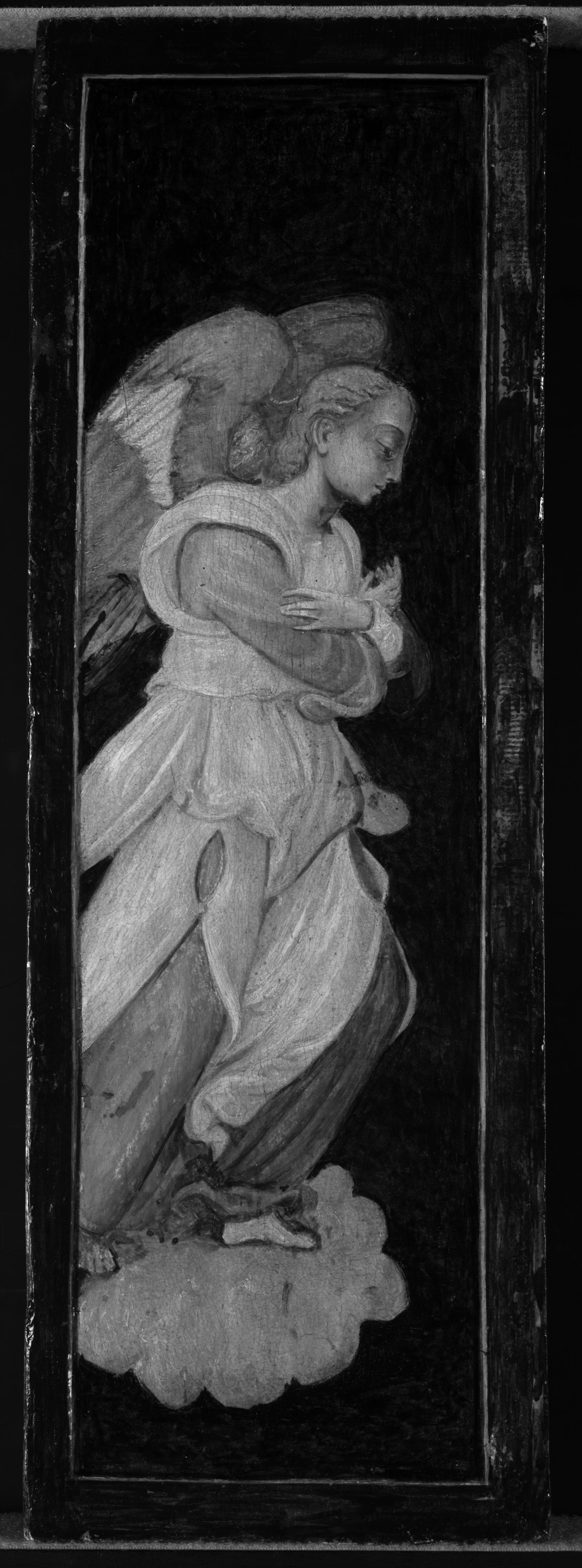
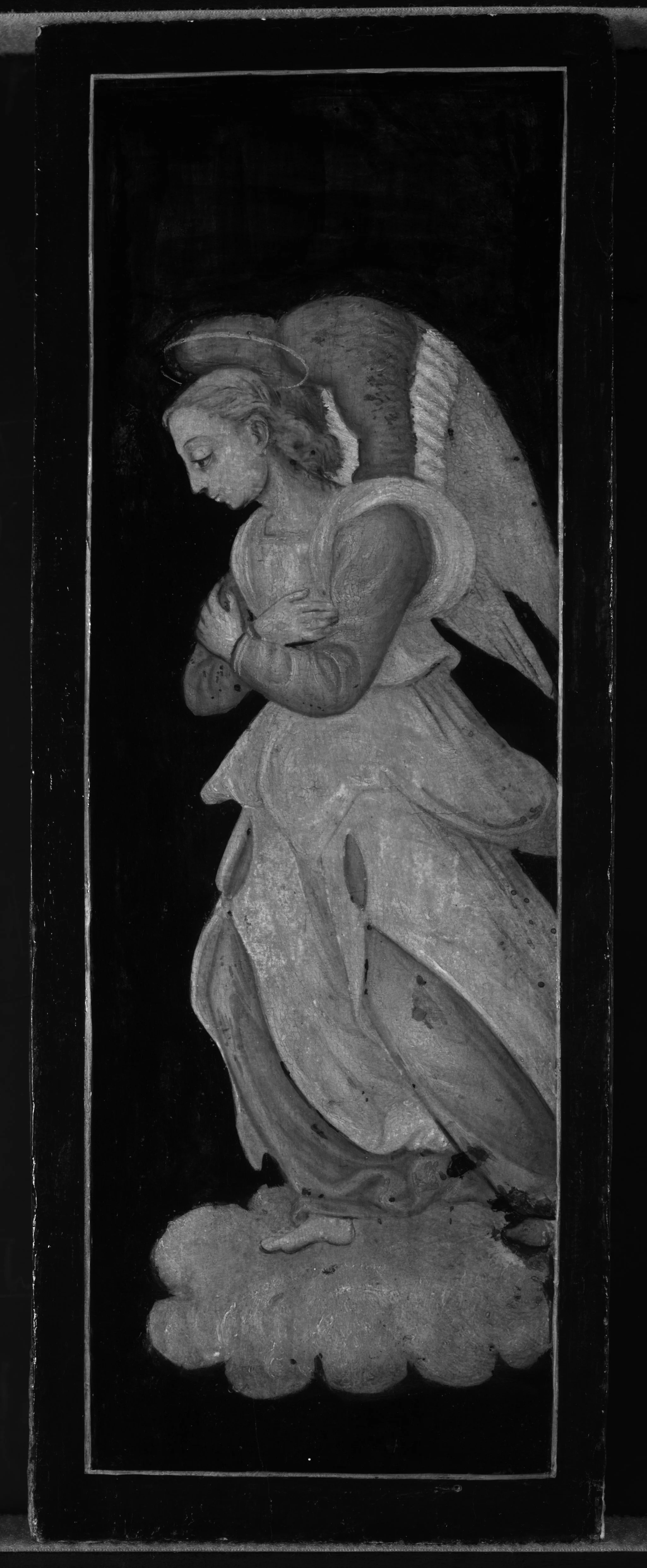
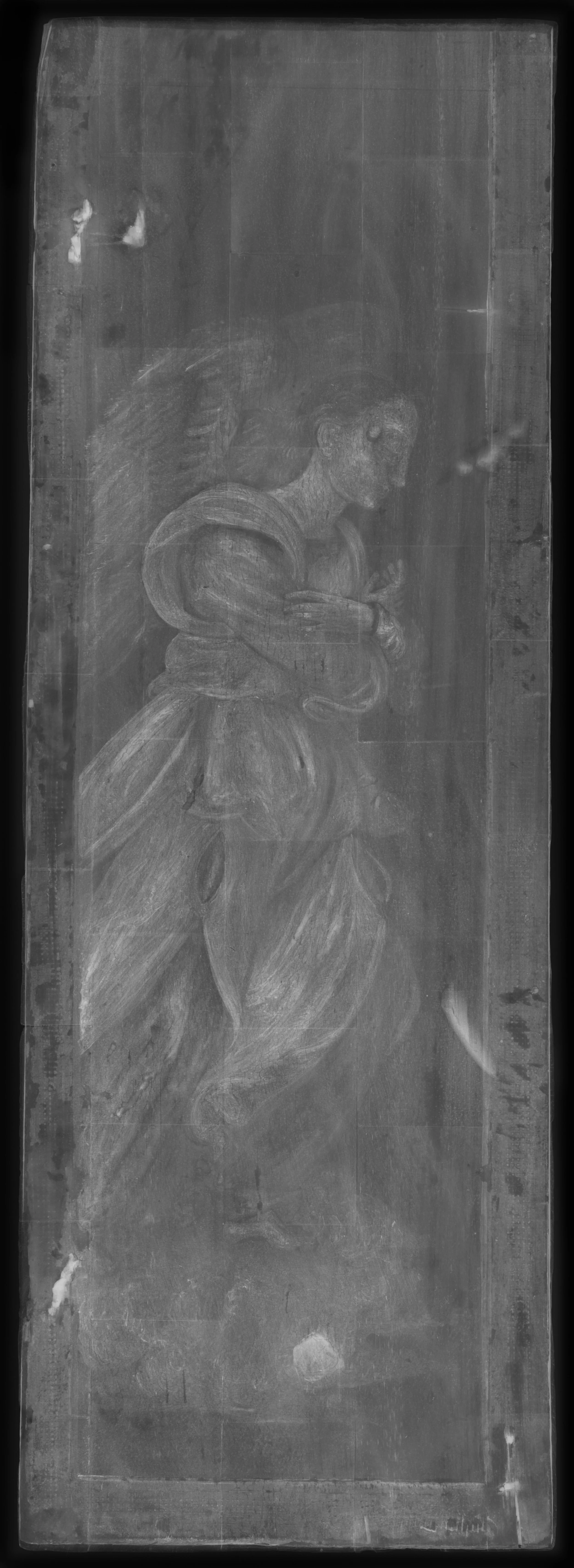
Technical Images
[1] Alessandro Nesi, Spigolature di Giovanni Antonio Sogliani, Florence, 2020, pp. 4-5.
[2] For these drawings (inv. nos. I 563 M 75 recto and I 563 M 153 verso), see: https://www.boijmans.nl/en/collection/artworks/59048 and https://www.boijmans.nl/en/collection/artworks/59147.
[3] Both panels have been thinned and mounted onto a composite wood support, and no traces of old hinges have survived.
[4] Sold at Wannenes, Genoa, 1 June 2016, lot 525, as “Arcangelo di Jacopo Salimbeni” (evidently an error for Arcangelo di Jacopo del Sellaio, as there is no painter named Arcangelo di Jacopo Salimbeni). For another example of this type, see: Nesi, Spigolature, p. 11, fig. 11.
[5] Compare the painted ciborium by Giovanni Larciani: Lucia Aquino, in Francesco Granacci e Giovanni Larciani all’Oratorio di Santa Caterina all’Antella, ed. Lucia Aquino and Simone Giordani, Florence, 2013, pp. 116-117.