
SUOR PLAUTILLA NELLI
(Florence, 1524 – 1588)
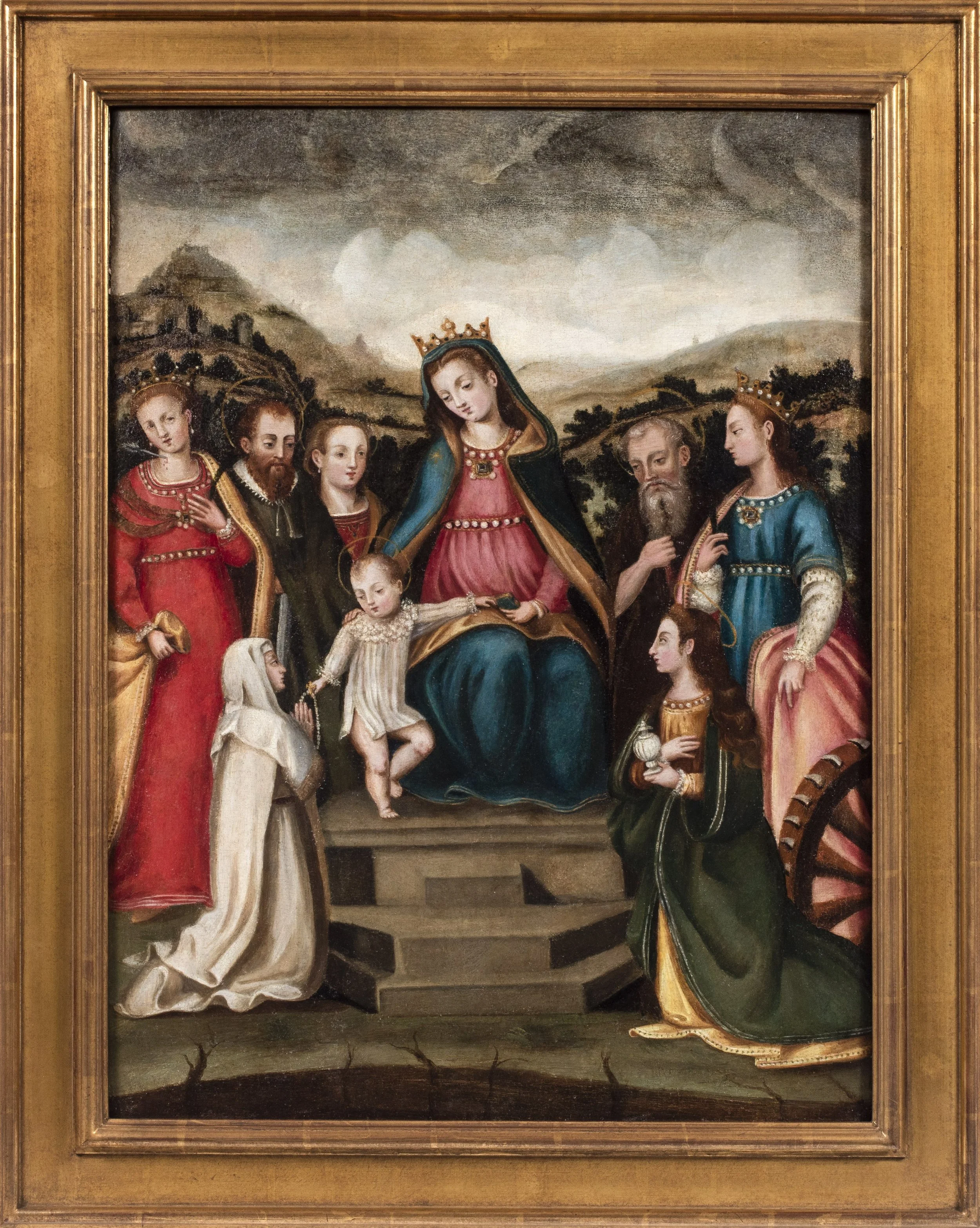
Dominican Nun Receiving a Rosary from the Christ Child with the Madonna and Saints Ursula, Anthony Abbot, Catherine of Alexandria, Mary Magdalene, an Unidentified Male Saint, and An Unidentified Female Saint
Oil on panel
24 ½ x 18 ¼ inches (62.2 x 46.4 cm)
Provenance:
Art Market, Malaga, Spain, as 17th-century Colonial Mexican.
Private Collection, Madrid, as Portuguese School, late 15th - early 16th century, until 2023.
Fra Paolino’s Madonna and Child Enthroned with Saints (Fig. 1)—painted for the altar of the nuns’ church in Plautilla’s resident convent and itself a derivation of Fra Bartolomeo’s 1511 Mystic Marriage of Saint Catherine of Siena in the Louvre—provided the inspiration for this work. Nelli has recast the scene outdoors and with changes to the disposition and choices of the saints. The figure kneeling in the left foreground may be Saint Catherine of Siena, as in Fra Paolino’s altarpiece. However, unlike the other saintly figures—whose holy status is marked by haloes, crowns, martyrs’ palms, or mordant gilding—here the figure appears in a plain, cream-colored robe and white mantle. Notably, these garments match those of a Dominican nun, raising the question of whether this could be a donor figure who Plautilla depicted in place of Saint Catherine, possibly at the patron’s request. Rather than placing a ring on the figure’s finger (as is traditional in depictions of the Mystic Marriage of Saint Catherine of Siena) or pointing at a heart held by the figure (as in Fra Paolino’s altarpiece), here the young Christ offers her a rosary with a diminutive gilt cross, which she receives with her hands upright in prayer. This sort of equation with Saint Catherine would have appealed greatly to the Dominican nuns, as they could identify directly with the convent’s saintly matriarch and her communing with Christ. Other changes made in adapting Fra Paolino’s altarpiece to the scale and purpose of a devotional painting include the clarification of the saints’ identities with elements like the prominent spiked wheel and regal attire of Saint Catherine of Alexandria. Interesting too is the choice to present the Christ child dressed in a modest white robe, which prefigures the seamless tunic he will wear at the Crucifixion.
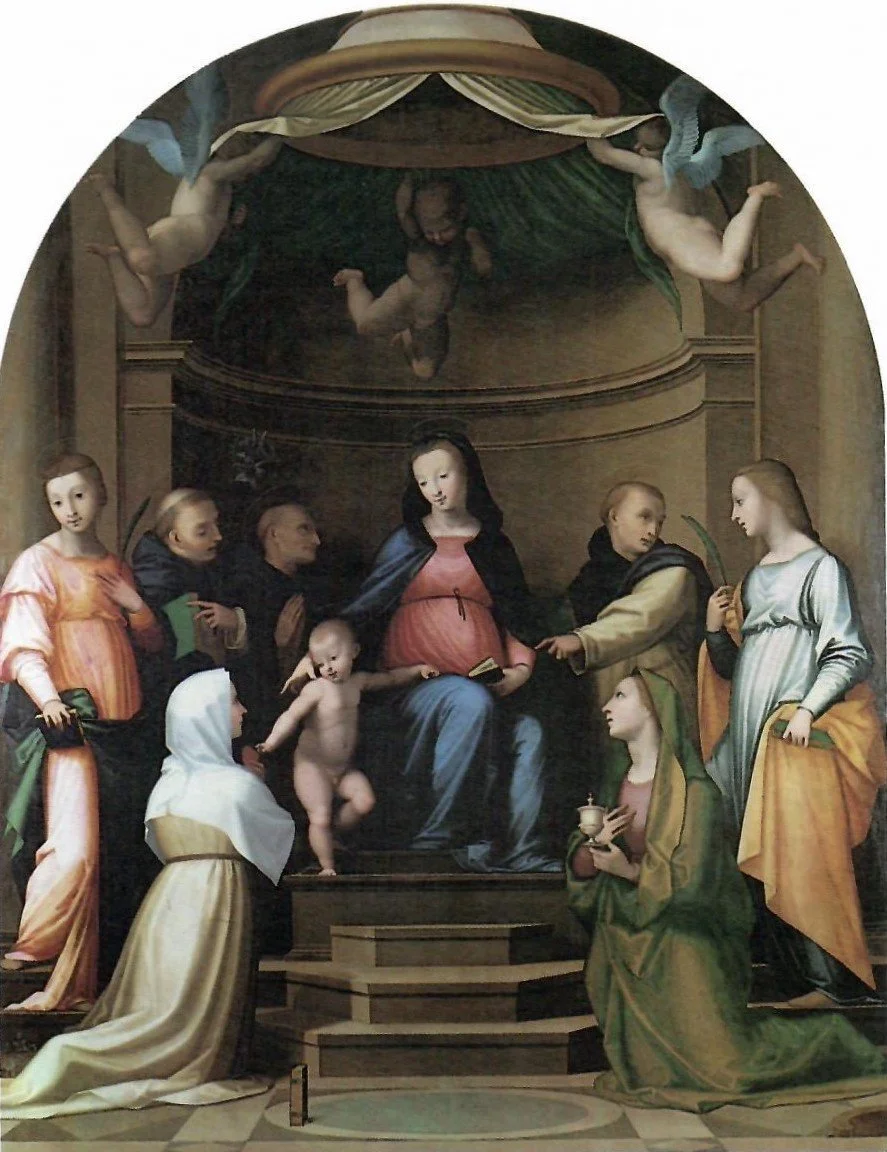
Fig. 1. Fra Paolino, Madonna and Child Enthroned with Saints, Museo di San Marco, Florence.
Remarkably, the composition that is visible today was painted by Nelli over an earlier work (as has been discussed by Matthew Hayes). Technical examination has revealed this first subject—a meditation on mortality—likely painted by Nelli herself (Plates 1-2). A skeleton appears in the center accompanied by two diminutive angels holding a banner that passes in front of him (Fig. 2). The skeleton holds an additional banner in his outstretched proper left hand, while his right arm is raised in a speaking gesture. The panel was rotated for the final composition, and the infrared reflectography reveals a series of inscriptions that invite the viewer to ready their souls for death. The central cartouche at the upper center of the original composition reads “Rules of Good Death” (“REGOLE DELLA BUONA MORTE”), and the lateral inscriptions entreat the viewer to “Think about death every day” (“PENSARE ALLA MORTE ONGNI GIORNI”) and “Examine your conscience” (“FARE LESAME DELLA CONSCIENTIA…”). Rather than a simple memento mori or allegory of death, the painting relates directly to the popular tradition of the Ars Moriendi, or the art of dying. In the 15th and early 16th centuries, texts offering instructions and roadmaps for how to “die well” circulated in religious pamphlets across Europe.
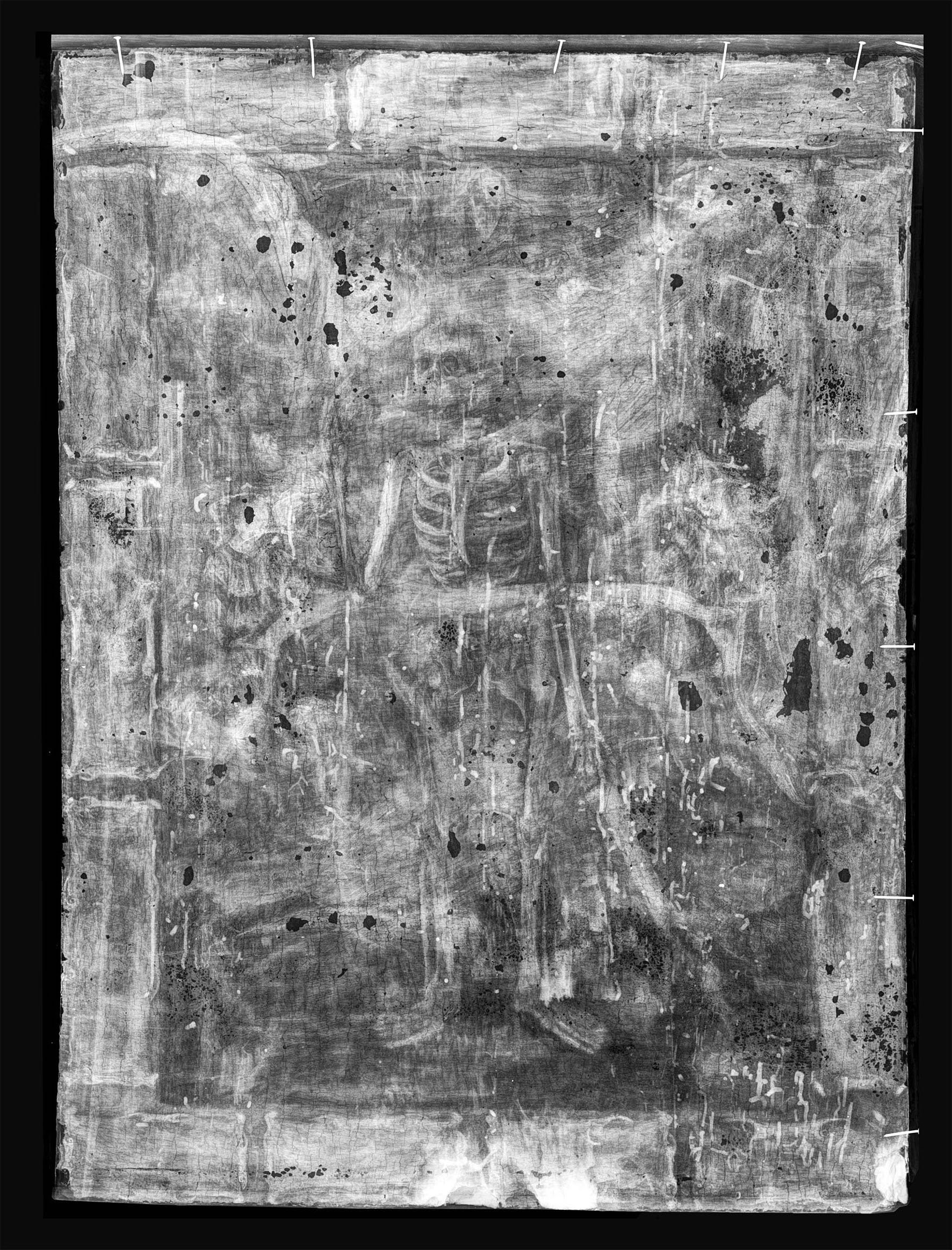
Fig. 2. X-radiograph of the present work.
While Nelli’s textual source has not yet been identified, it was almost certainly a vernacular Italian text relating to this tradition. Ars Moriendi books often included woodcut images of a man on his deathbed encountering various temptations. Nelli’s depiction of the skeleton appears to be unique and may have been inspired by memento mori engravings or possibly even by the skeletons illustrated in Andreas Vesalius’s famous anatomical treatise De humani corporis fabrica (Fig. 3), which was published during her lifetime.
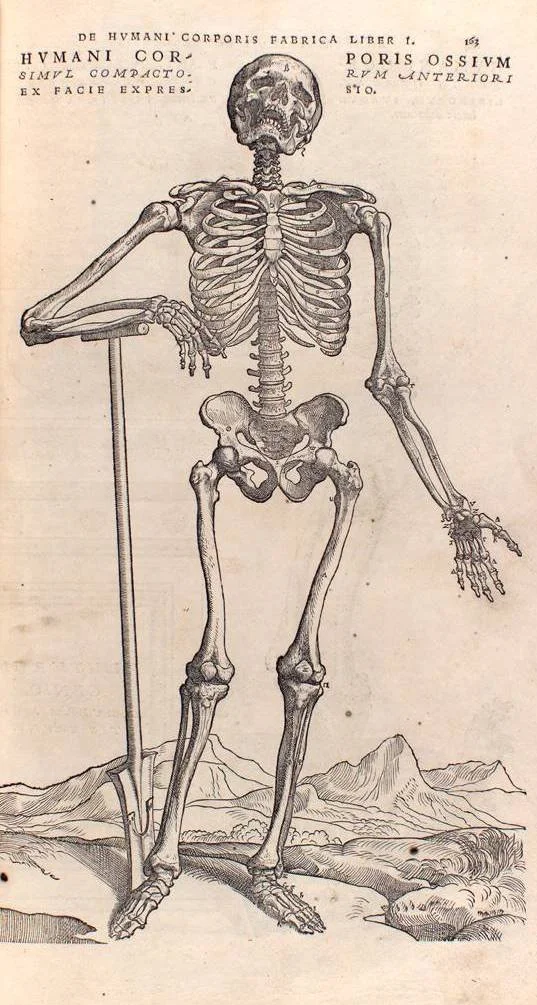
Fig. 3. Andreas Vesalius, Plate from De humani corporis fabrica (1543).
Technical Images

Plate 1. Infrared Reflectogram of the present work.
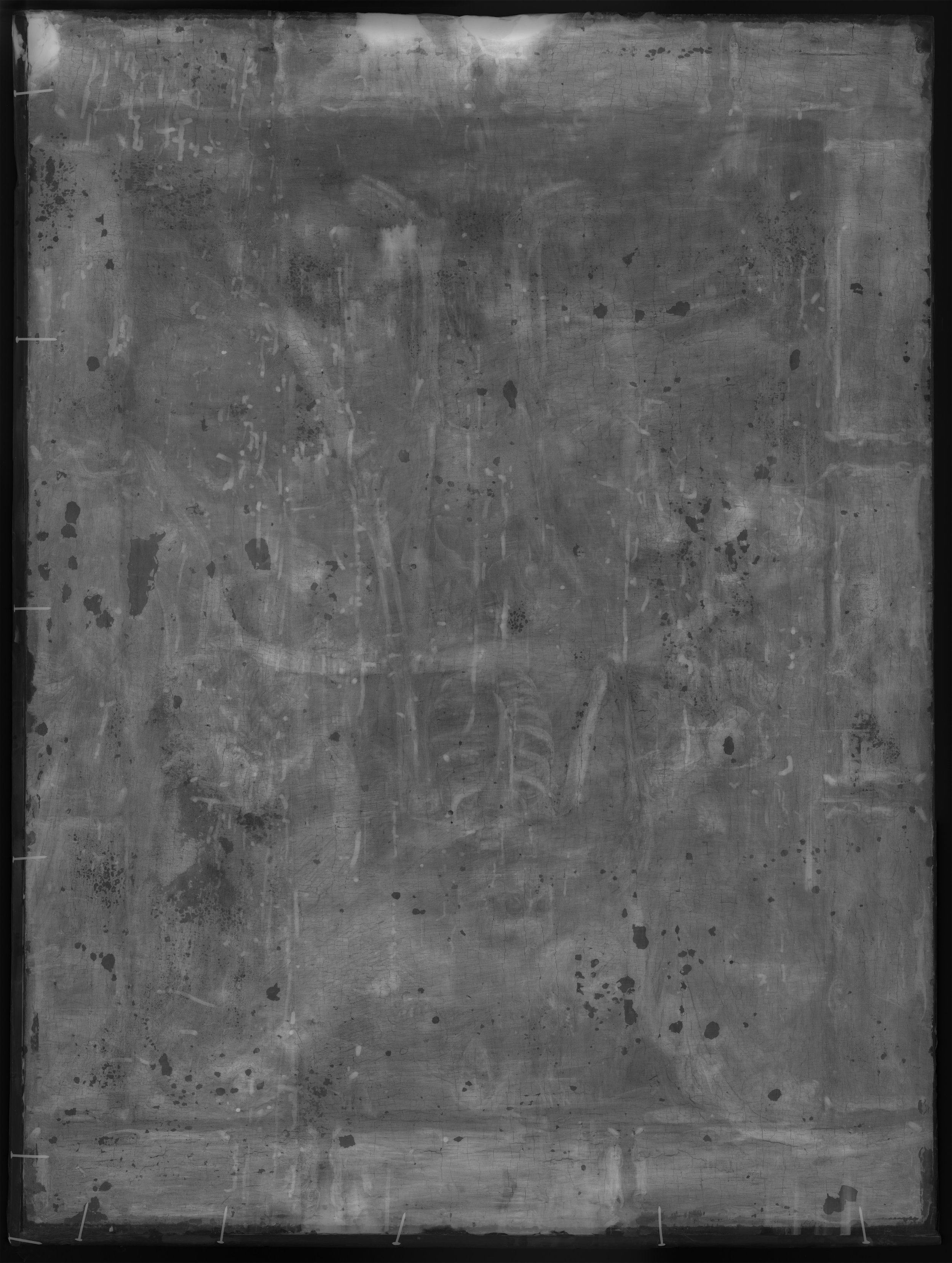
Plate 2. X-radiograph of the present work.