
Follower of
PLAUTILLA NELLI (Florentine, 17th Century)
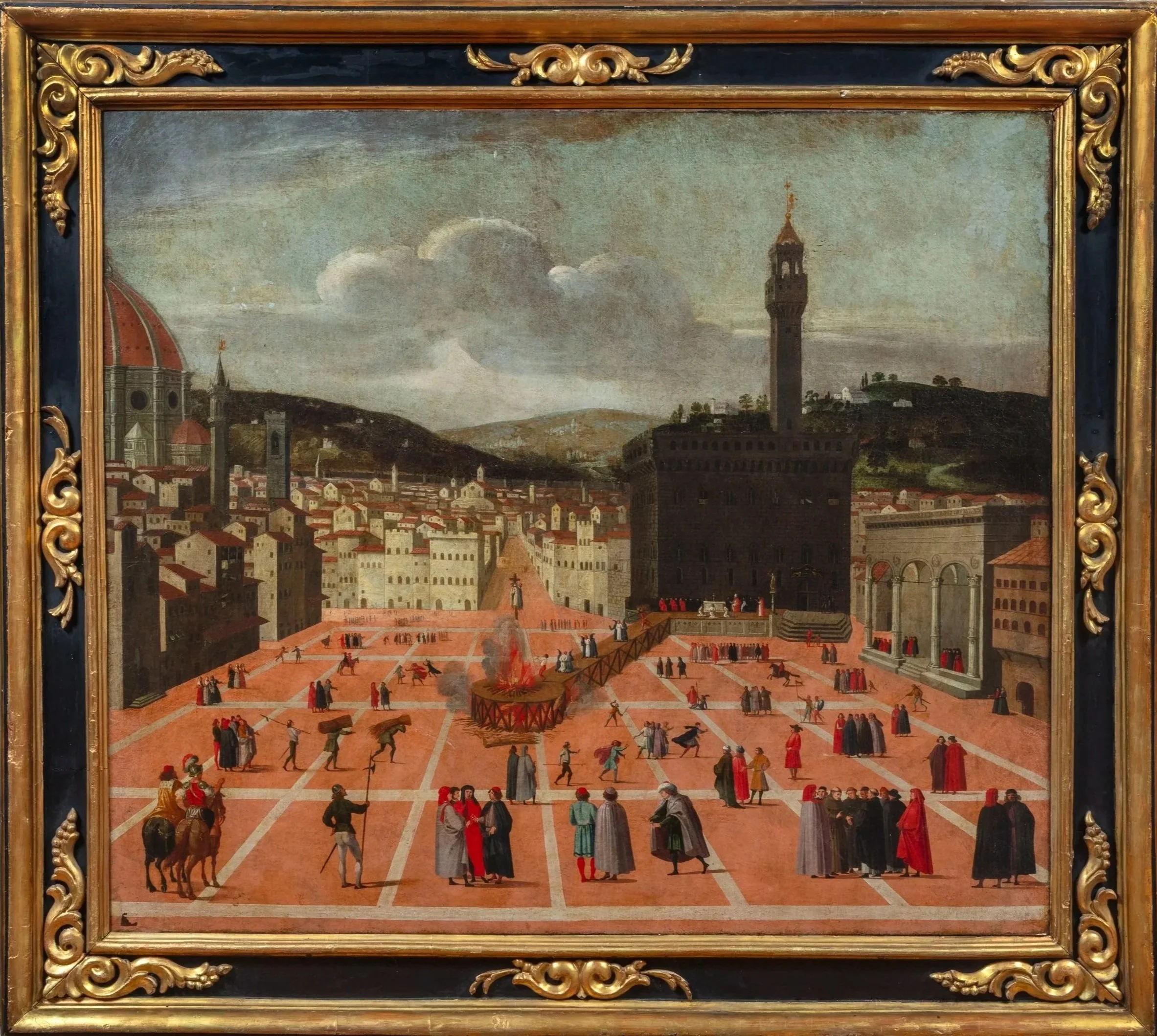
The Execution of Girolamo Savonarola and His Two Companions in the Piazza della Signoria, Florence, 1498
Oil on canvas
40 ⅜ x 46 ¾ inches (102.6 x 118.7 cm)
Provenance:
General Theological Seminary, New York.
Private Collection, New York.
Girolamo Savonarola’s influence was pervasive in Florentine culture, but his uncompromising vision of personal behavior, leading to the notorious “bonfire of the vanities,” could not be sustained. His claim to the gift of prophesy and his vehement criticism of the worldly Pope Alexander VI led to a charge of heresy in 1495. His disregard of papal authority brought him excommunication two years later. Ultimately, he was brought to trial under various ecclesiastical and political charges. He was found guilty, then publicly hanged and burned in 1498 in front of the Palazzo della Signoria (now called Palazzo Vecchio) in Florence.
The present painting records the scene of Savonarola’s execution along with his companions Fra Domenico Buonvicini and Fra Silvestro Maruffi on 23 May 1498. A raised platform extends from the Palazzo Vecchio into the Piazza della Signoria, which is filled with onlookers and passersby, some seemingly unaware of the scene playing out nearby. The condemned, dressed in white, are first shown kneeling at an altar, then being led to their demise along the walkway, and finally hanging on the scaffold as a fire rages beneath them.
This composition had particular currency in Florence—not only because of the importance of the historical event, but also for its depiction of major Florentine landmarks, including the Duomo, the Loggia dei Lanzi, and the towers of the Badia and the Bargello. Other recognizable sites include the churches of San Romolo on the left of the piazza, San Pier Scheraggio on the right, Santa Croce (lacking its current façade) in the middle distance, as well as San Salvatore and San Miniato al Monte atop the hill in the right background. The earliest treatment of the subject, painted in the year of Savonarola’s death, survives in a small, anonymous panel in the Museo di San Marco in Florence (Fig. 1).[1] That work focuses on the execution scene in the piazza and lacks the broader vista of the city but includes a vignette at the lower left showing the capture of Savonarola. It seems to have served as the inspiration for a full-scale rendition of the scene in the same museum (Fig. 2), which is generally considered the largest and highest-quality treatment of the subject.
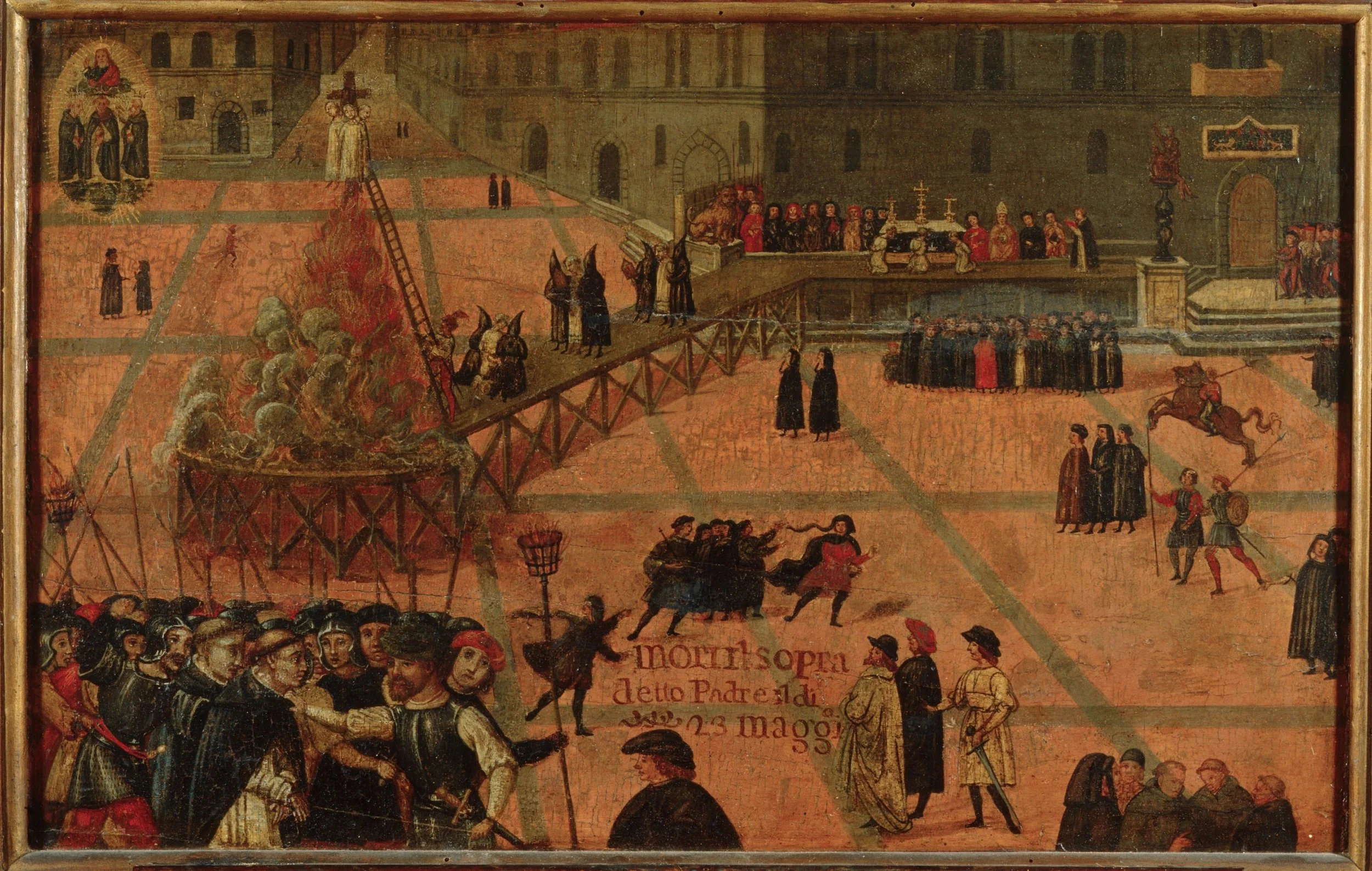
Fig. 1. Anonymous Florentine Painter (Filippo Dolciati?), The Execution of Girolamo Savonarola and His Two Companions, dated 1498, Museo di San Marco, Florence.
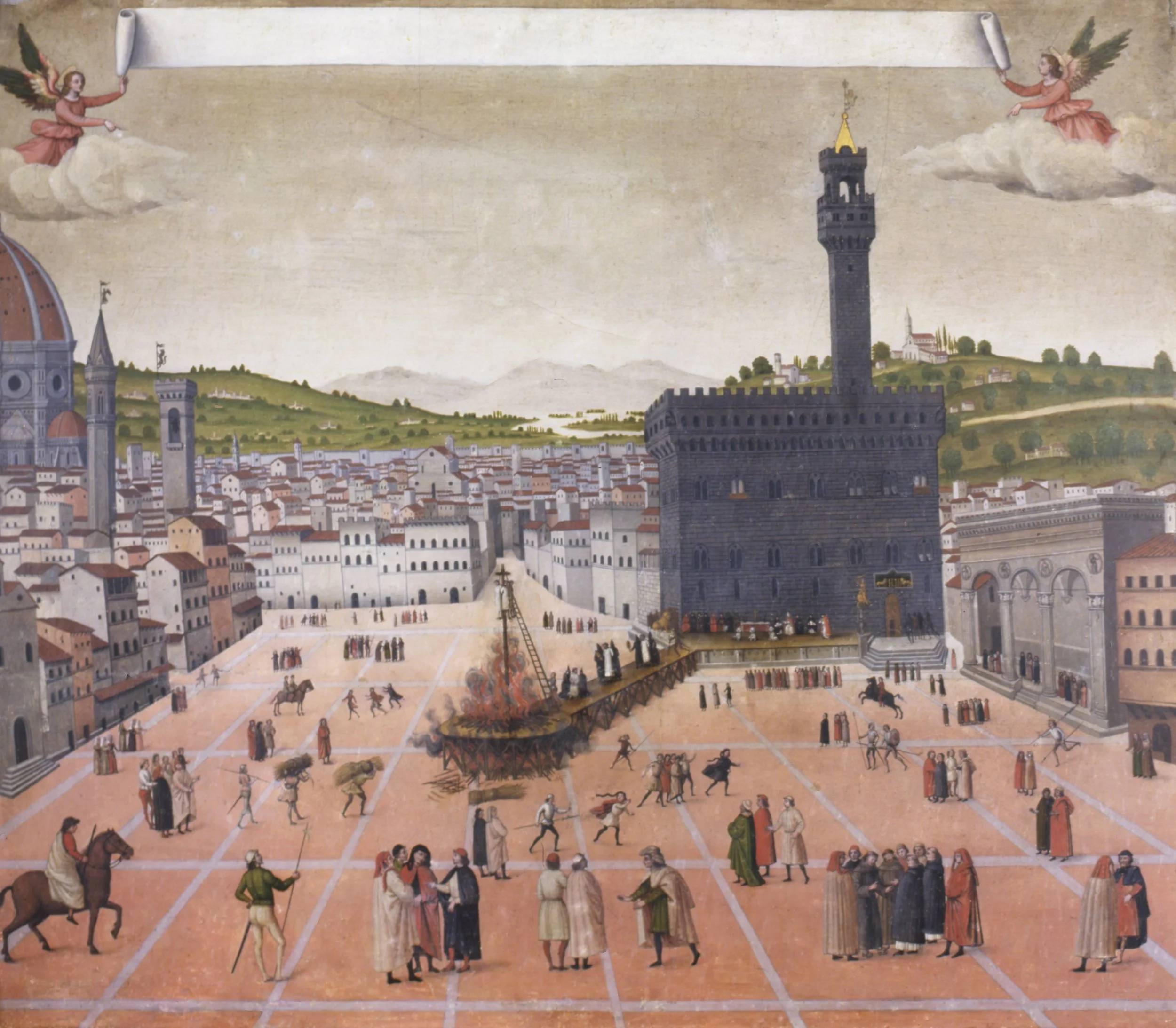
Fig. 2. Plautilla Nelli, The Execution of Girolamo Savonarola and His Two Companions, Museo di San Marco, Florence.
That painting has been thought to date from around 1500 and tentatively attributed to Francesco Rosselli (1448–ca. 1513), a miniaturist and mapmaker who was the brother of the painter Cosimo Rosselli (1439–1507). However, the similarities between the angels holding a banderole in the upper part of the panel (Fig. 3) with other angels and female figures found in Plautilla Nelli’s small-scale works suggests that the panel in the Museo di San Marco was in fact painted by Nelli herself, based at least in part on an earlier model. The faces of the pedestrians in the foreground also correspond to her typical physiognomies.
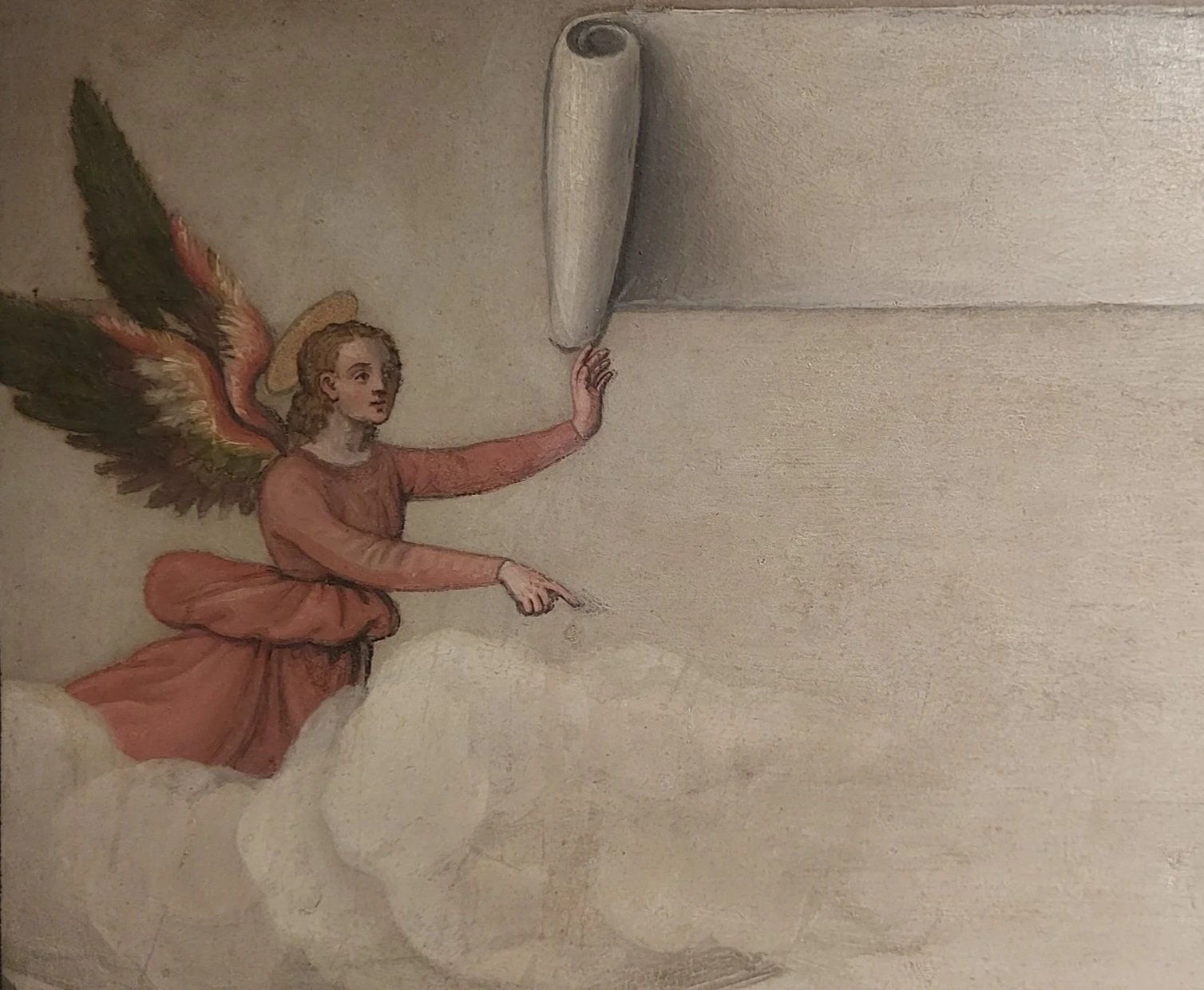
Fig. 3. Details of the angels in Plautilla Nelli, The Execution of Girolamo Savonarola and His Two Companions, Museo di San Marco, Florence.
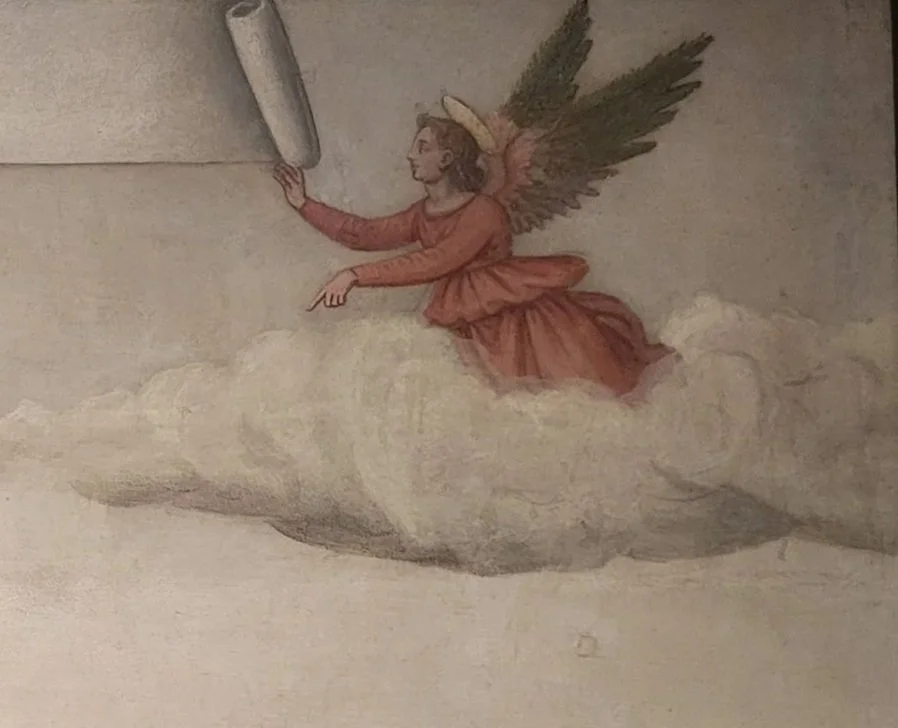
The present painting, which is unpublished, broadly follows the composition of the San Marco painting but with some distinct variations. The banderole is lacking and the two clouds supporting the angels are replaced by a central one, while the three distant hills at center now form a single mound. The staffage in the piazza is mostly the same, but with curious revisions reflecting the individuality of this artist. Whereas one man on horseback entered the scene at lower left in the San Marco painting, two horsemen now stand and watch the event. Figures are disparately attired, some added (one in red in profile, central right), while the rearing horse in front of the Palazzo Vecchio now has a dog nipping behind it. This painting, of almost identical size to the San Marco panel, but on canvas, likely dates from the beginning of the 17th century. Other treatments of this scene are known but similarly are on canvas and likely later in date.[2]
Plautilla’s convent was closely connected to San Marco, both geographically and spiritually, and she and her fellow nuns remained devotees of Savonarola. In fact, Plautilla’s sister, Suor Petronilla Nelli, who was also a nun at Santa Caterina da Siena, transcribed a noted biography of Savonarola. The empty banderole in the panel at the Museo di San Marco must have once included the inscription recorded in a copy of the painting formerly in the convent of San Domenico in Perugia and now in the Galleria Nazionale dell’Umbria:
“ECCE QUOMODO MORITUR IUSTUS / ET VIRI SANCTI DE TERRA TOLLUNTUR” (“Behold how the righteous die and how saints are taken from the earth”). The text of the inscription was derived from a passage in Savonarola’s own writings (which in turn was based on Isaiah 57:1).[3] Furthermore, the precise correspondence in the details of the composition with the early written accounts of Savonarola’s execution has been noted by scholars.[4] Of particular note is the presence of a priest wearing vestments reading out the judgment at the right of the platform near the entrance to the Palazzo Vecchio (as described in the account of the Pseudo-Burlamacchi), as compared to the depiction of a Dominican monk in the same position in the earlier depiction of the same scene (Fig. 71). It is intriguing to consider the possibility that Plautilla’s sister, Petronilla, may have advised her in the adaptation of Savonarola’s passage for the inscription, as well as in the configuration of the scene. This would suggest a date for the painting predating Suor Petronilla’s death on 26 April 1560.
Rather than a simple record of a historical event, the painting in the Museo di San Marco presents Savonarola’s execution as the martyrdom of a saint—a viewpoint that was heavily suppressed in Florence. However, Plautilla’s production of this work and other Savonarola-related images demonstrates the preacher’s staying power not only within the convent walls, but also among Santa Caterina da Siena’s circle of Florentine benefactors and patrons. In later centuries, Savonarola’s celebrity led to the repetition of the scene of his execution on the Piazza della Signoria in copies like this one.
[1] This panel has been tentatively attributed to Filippo Dolciati (1443–1519). See: Laura Pellegrini, “Le Icastiche Immagini di Girolamo Savonarola nel Museo di San Marco,” in Fra Girolamo Savonarola nel Museo di San Marco, ed. Angelo Tartuferi, Florence, 2022, pp. 88-89, cat. no. 7.
[2] The other known versions of this composition are all painted on canvas, including those in the Galleria Corsini in Florence, the Collezione Rucellai Piqué in Prato, the Galleria Nazionale dell’Umbria in Perugia, and in the Museo di San Marco in Florence. See: Ludovica Sebregondi, Iconografia di Girolamo Savonarola 1495–1998, Florence, 2004, pp. 385-387, figs. 9, 10, 12, and 13; and Pellegrini, “Le Icastiche Immagini di Girolamo Savonarola,” esp. pp. 87-95.
[3] “Ecce quomodo moritur Justus, et nemo percipit corde: et viri justi tolluntur de terra et nemo considerat. A facie iniquitatis sublatus est Justus et erit in pace memoria ejus.” / “Behold how the just man dies, and nobody takes it to heart; and just men are taken away, and nobody considers it.” See: Sebregondi, Iconografia, p. 16.
[4] For a discussion of the correlations between the painting and the texts of the chroniclers and biographers, see: Sebregondi, Iconografia, pp. 17-21.