GIORGIO VASARI
(Arezzo 1511 – 1574 Florence)
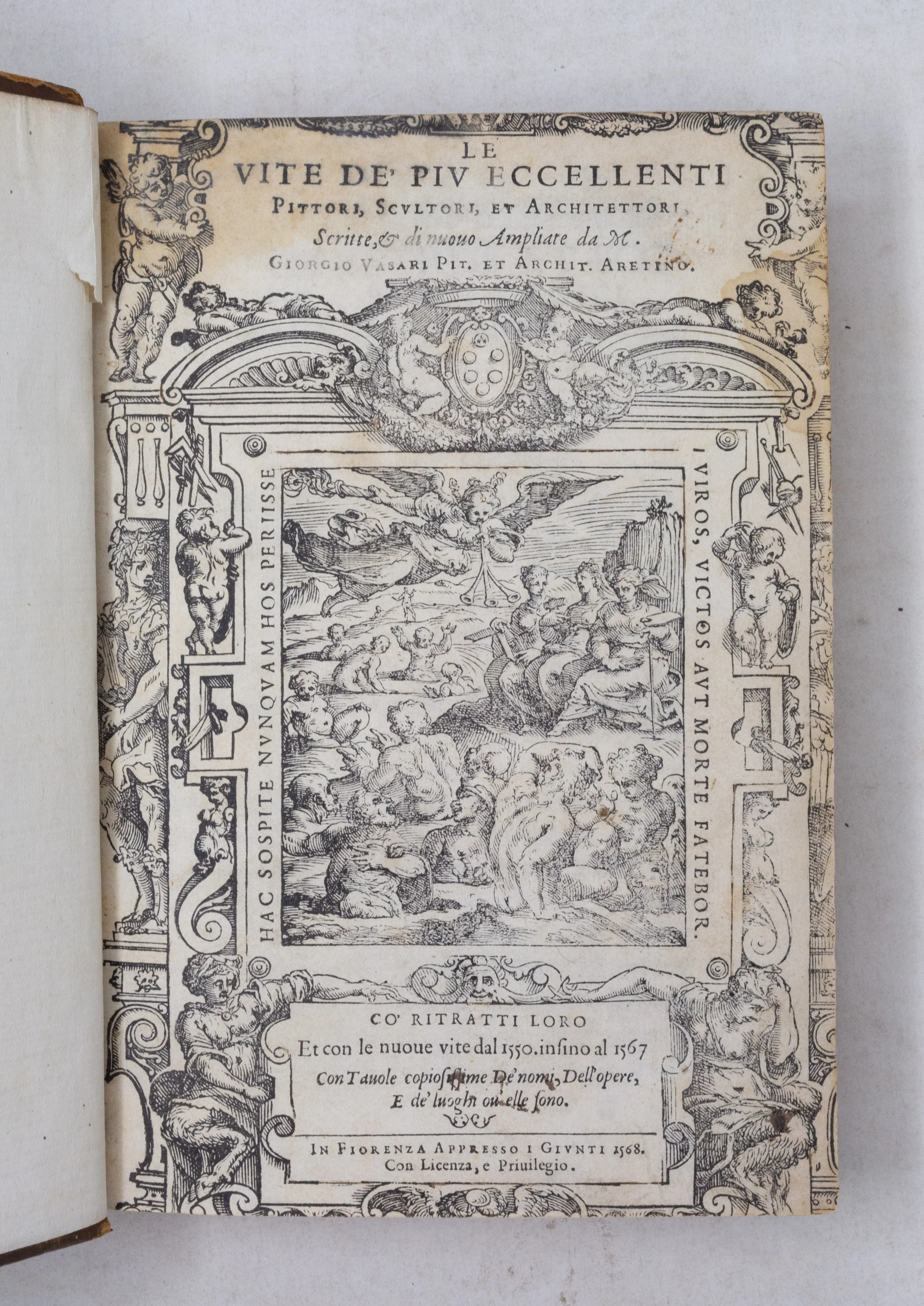
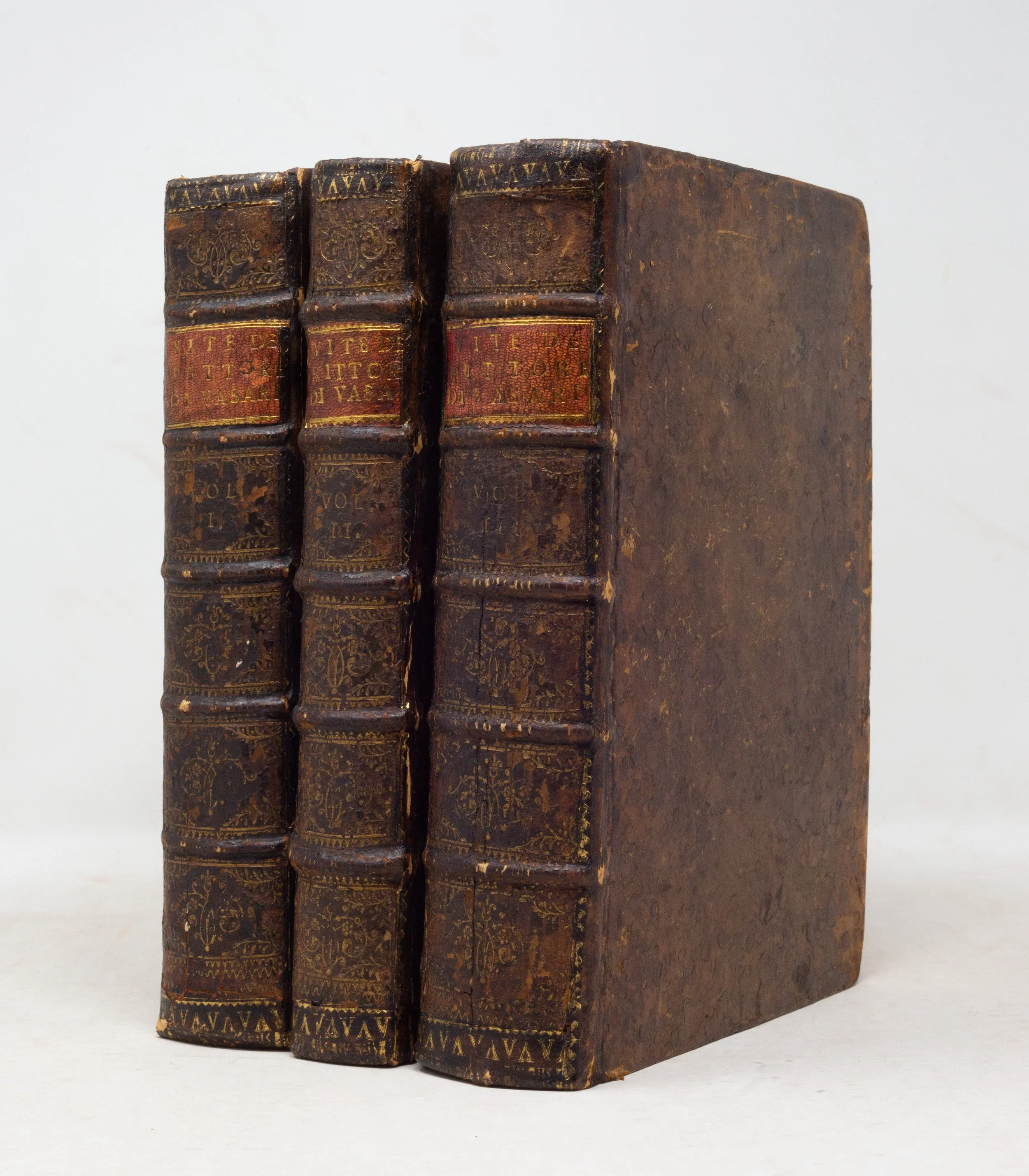
Le Vite de’ Piu Eccellenti Pittori, Scultori, et Architettori
Second Edition (1568)
Three Volumes
Quarto, 8 5/8 x 5 13/16 inches (220 x 147 mm)
Giorgio Vasari was both a foundational figure in art history and one of the most significant Mannerist artists of the Cinquecento. His exuberant Mannerist style was embraced by Duke Cosimo I de’ Medici, who bestowed upon the artist commissions for altarpieces in the major churches of Florence and for paintings and frescoes to fill the walls and ceilings of the Palazzo Vecchio. Vasari is best known for his hugely important Lives of the Artists, which he published in two editions. In this foundational text, he not only documented the lives and work of Italian Renaissance artists, but also invented the discipline of art history.
In the expanded, second edition of the Lives, Vasari prefaces his biography of the Bolognese sculptor Properzia de’ Rossi (1490–1530) with a catalogue of female writers, poets, philosophers, grammarians, and astrologers of the classical past. At the conclusion of this Vita, Vasari pays tribute to three female painters—all alive when he wrote—who were as successful “in design and as clever in painting as she was in sculpture.” The first, “la prima,” from which the title of our exhibition derives, was Suor Plautilla Nelli (1524–1588), who, Vasari says, “has done some things so well as to excite the wonder of artists.”
It is easy to find Vasari’s brief tribute to Plautilla tempered, to see his praise as couched by a slightly patronizing recognition of her putative disadvantages—her gender, religious avocation, and limited artistic training. He writes: “But she borrowed her best things from others, thus showing that she would have become excellent had she, like men, studied design and drawn from Nature.” These constraints were in fact quite real and so we can only marvel at the extent of her success as an artist, given her lack of a master, limited exposure to art outside of the convent, and the religious responsibilities she held within it as prioress of Santa Caterina da Siena. Vasari’s assessment of Plautilla’s achievements was also somewhat premature, as her career as a painter would continue for another two decades after her appearance in the second edition of the Lives in 1568.
The first edition of Lives was published in 1550, but it was significantly smaller in scope. In this second edition, Vasari included more Venetian artists, as well as active artists, and added an autobiography at the very end of the text. The present edition is also the first to be illustrated with allegorical woodcuts and portraits of the artists designed by Vasari himself. The present copy is the scarcer issue with the woodcut depicting the apotheosis of the souls of the artists on the recto of the title-page of the first volume rather than on its verso.