

ANTONIO MARIA VASSALLO
(Genoa ca. 1620 – 1672 Milan)
Portrait of a Lady
Oil on canvas
48 x 35 ⅜ inches (122 x 90 cm)
Provenance:
(Possibly) Hollingsworth Magniac, Colworth House, Bedfordshire, UK[1]
(Possibly) M. de Villeroy, Paris
Parke-Bernet Galleries, New York, 21 October 1959, lot 18a (as by Bartolomé Gonzalez y Serrano, Portrait of Maria of Hungary); where acquired by:
Lewis J. Ruskin, Scottsdale, Arizona, 1959–1981; by descent to:
Lenore Ginsburg Ruskin Heavenrich, Scottsdale, Arizona, until 1993; by descent to:
Dr. Frederic L. Ruskin, Paradise Valley, Arizona, 1993–2006
With Robert Simon Fine Art, New York, as Antonio Maria Vassallo; where acquired by:
Private Collection, New York, 2006–2025.
Exhibited:
Phoenix Art Museum, 1961 (no. L15.61), as by Bartolomé Gonzalez y Serrano, Portrait of Maria of Hungary, lent by Mrs. Lenore Ruskin Heavenrich.
Literature:
Anna Orlando in Dipinti Genovesi dal Cinquecento al Settecento; Collezione Koelliker, Milan 2006, p. 116, fig. 2 (image reversed), as by Antonio Maria Vassallo.
Anna Orlando with the collaboration of Agnese Marengo, Pittura Fiammingo-Genovese: Nature Morte, Ritratti e Paesaggi del Seicento e Primo Settecento: Ritrovamenti dal Collezionismo Privato, Turin, 2012, pp. 160-161, ill., as by Antonio Maria Vassallo.
This elegant portrait of a woman by Antonio Maria Vassallo is a testament to the lasting influence of Peter Paul Rubens and Anthony Van Dyck on Genoese painting of the 17th century. The city was not only the home of wealthy aristocrats and merchants, but also a thriving community of painters from Flanders who greatly impacted the city’s artistic landscape. Vassallo received his initial training as a painter under the Flemish artist Vincent Malò, who was himself a student of Rubens. Although Vassallo is perhaps best known for his still lifes and animal paintings, portraiture was a significant part of his output and the genre that best reflects his artistic inheritance from Flemish painting.
While the identity of the sitter in this portrait is unknown, her high status is evident not only from the stately format of the painting, but also from her impressive jewelry and pearl-studded garments—clear signifiers of her wealth and taste. She is presented three-quarter length and posed in front of a flowing swag of brown-gold drapery that is typical of Vassallo’s portraiture. The artist also often portrayed his sitters with views onto distant pastoral landscapes punctuated by vibrantly colored sunsets. He presents the figure in a formal but relaxed pose, with her hand resting over the back of a chair while she grasps a fan. Unlike his Flemish predecessors, who tended to idealize their sitters, Vassallo has faithfully rendered the young lady’s features, lending her a warm presence.
In his contemporary biography of the artist, Raffaello Soprani wrote: “Many and numerous are the portraits from life made by our Vassallo, in all of which he painted perfectly, having expressed and depicted his sitters vividly and to universal satisfaction. In these endeavors he had great success and was highly esteemed.”[2] Vassallo’s portraits have only recently become the subject of scholarly attention, beginning with Dr. Anna Orlando’s formation of a core corpus in her 1999 monograph on the artist.[3] Antonio Maria Vassallo’s authorship of the present portrait was confirmed by Dr. Orlando in 2006 on firsthand inspection.[4] She subsequently published the work on two occasions, first placing it in relation with the Portrait of a Lady with a Dog of ca. 1655 in the Koelliker Collection in Milan (Fig. 1). She has written of our painting:
“Vassallo received his artistic formation from the Italianized Flemish artist Vincenzo Malò and through him drew upon the most vibrant Rubensian source: painting with a sincere naturalism where color—pure and full-bodied color applied boldly and abundantly—plays a fundamental role. […] While the scenic setting of the figure in the space of this canvas was also adopted by other Genoese painters in the wake of Rubens and Van Dyck, it is also true that in Vassallo’s oeuvre some compositional elements recur, which allow, together with stylistic considerations, to confidently associate this painting with Vassallo’s brush.”[5]
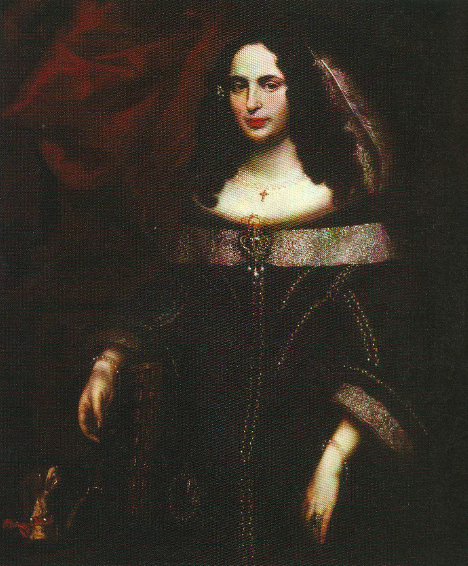
Fig. 1. Antonio Maria Vassallo, Portrait of a Lady with a Dog, Koelliker Collection, Milan.
[1] Said to have come from the collection of Hollingsworth Magniac in London in 1894; then from that of M. de Villeroy in Paris according to a 1960 appraisal of the painting by William H. Weinress. However, the painting appears neither in the Magniac sale of 2–4 July 1892 at Christie’s, London, nor the M. de Villeroy sale of 27–29 April 1922 at Galerie Georges Petit, Paris. Magniac had died in 1867.
[2] Raffaello Soprani, Le Vite de Pittori Scoltori et Architetti Genovesi, Genoa, 1674, p. 228. “Molti e numerosi sono li ritratti al naturale fatti dal nostro Vassallo, ne quali tutti, si portò perfettamente, havendoli espresso, e effigiate al vivo con soddisfazione universal nella qual faccenda hebbe felicità grande, e fù molto accreditato.”
[3] Anna Orlando, Anton Maria Vassallo, Genoa, 1999, see especially pp. 48-51.
[4] A catalogue entry on this painting by Dr. Orlando is available upon request.
[5] “Vassallo si era formato con il fiammingo italianizzato Vincenzo Malò e da questi aveva attinto alla più viva fonte rubensiana: dipingere con un naturalismo sincero, ove il colore—un colore puro e corpose, steso con abbondanza e fierezza di materia—gioca un ruolo fondamentale. Se è indubbio che l’impostazione scenica della figura nello spazio della tela è quella tipica adottata anche dal Bernardo Carbone, sulla scia della formula messa a punto da Rubens e da Van Dyck nei loro anni genovesi nel primo quarto del secolo, è pur vero che in Vassallo ricorrono alcuni elementi tipici, che consentono, unitamente ai fatti stilisitici, di ricondurre anche questo Ritratto di Dama al suo pennello.”