ELIZABETH WILLIAMS
(Pittsburgh, PA 1844 – 1889 San Francisco, CA)
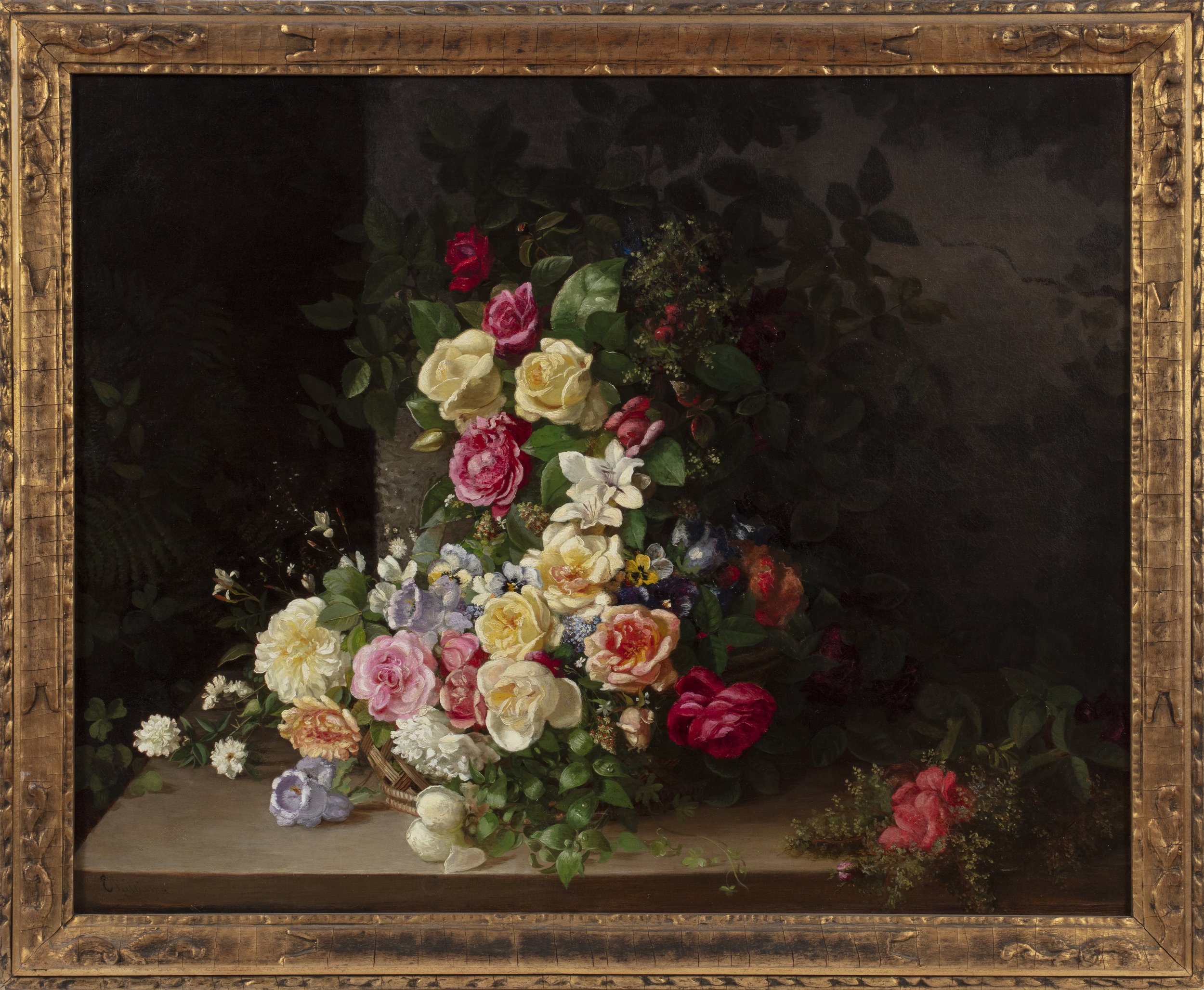
Still Life with Flowers in a Basket
Signed, lower left: E Williams
Oil on canvas
27 ½ x 34 ¼ inches (69.9 x 86.9 cm)
Provenance:
Edwin Bryant Crocker (1818–1875) and Margaret Ellen Rhodes Crocker (1822–1901), Sacramento, California; and by descent in the family.
This engaging flower still life is among the finest paintings that has come to light by the 19th-century painter Elizabeth Williams (Fig. 1). Born in Pittsburgh in 1844, Williams began her artistic career as a portraitist and still-life painter. While the details of her early training are not recorded, she is known to have been active regionally in Pittsburgh and nearby Indiana, Pennsylvania, as well as in Xenia, Ohio. In 1873 she moved to San Francisco, newly prosperous in the years following the gold rush. She established a studio on Sutter Street and joined the recently founded San Francisco Art Association. The city was growing as a cultural hub, and there were abundant opportunities to supply paintings for the mansions of the newly established elite.[1]
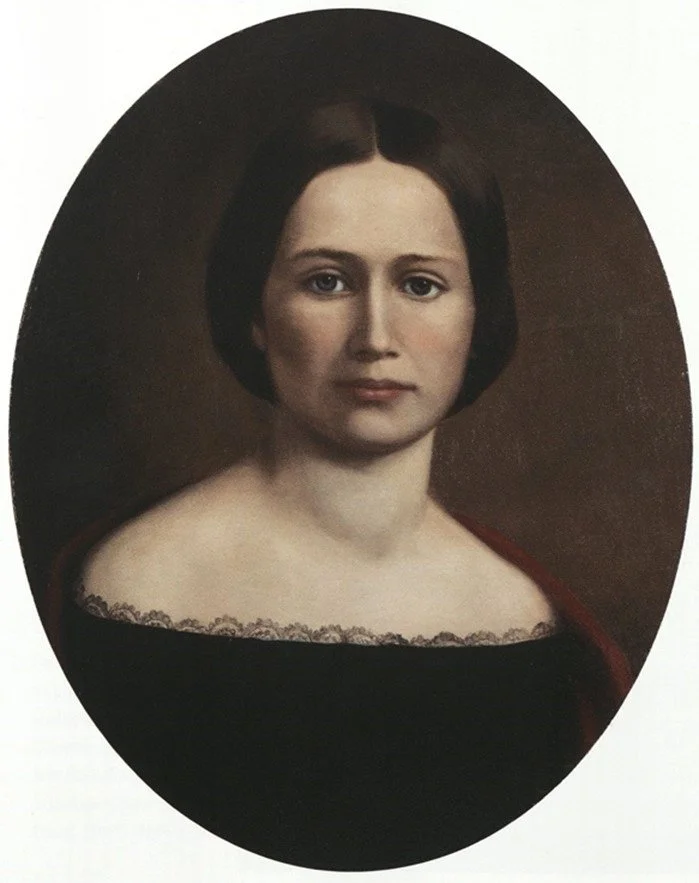
Fig. 1. Elizabeth Williams, Self-Portrait, oil on canvas laid on board, 20 x 16 inches, DeMell Jacobsen Collection.
Williams established herself as a prominent painter in San Francisco and her work was often featured in SFAA exhibitions.[2] Her success was thoroughly documented in her time, and she was considered “one of the best painters on the Pacific coast.”[3] Williams is less well-known today, undoubtedly the result of the loss of most of her works in the San Francisco earthquake and fire of 1906.[4] Our still life is a rare survivor of the artist’s oeuvre, which had been acquired in California by Edwin and Margaret Crocker—founders of the Crocker Museum in Sacramento, California—and remained with their descendants until recently.
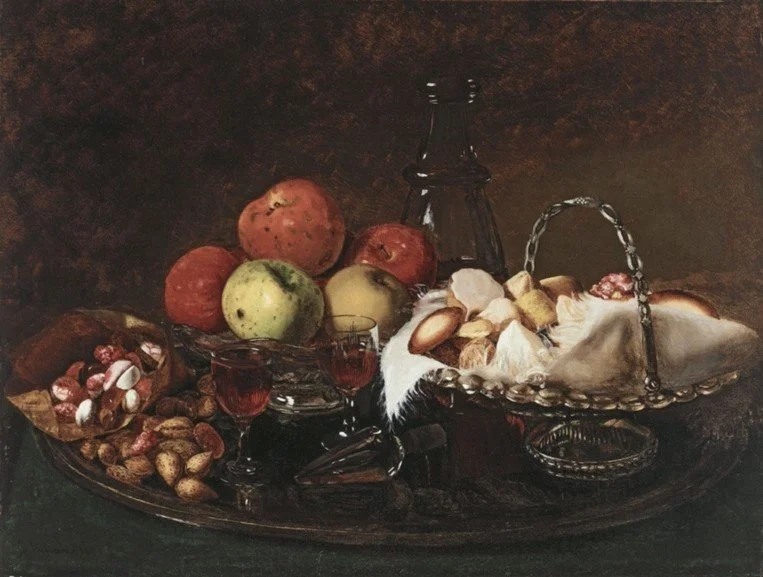
Fig. 2. Elizabeth Williams, Still Life with Fruits, Sweets, Nuts, and Wine, 1861, oil on canvas, 20 x 26 inches, DeMell Jacobsen Collection.
Elizabeth Williams was clearly interested in still life painting from the start of her career. Her earliest extant painting is a table still life with fruits, sweets, nuts and wine dating from 1861, which recently featured in the 2022–2024 exhibition American Made: Paintings and Sculpture from the DeMell Jacobsen Collection (Fig. 2).[5] Our painting presents a more mature and refined example of the artist’s exploration of the genre. Williams closely observes the flowers, skillfully capturing individual petals and creating a delicate balance of soft colors across the arrangement. The central basket of flowers immediately draws the viewer in with its light and creamy tones standing in stark contrast to the dark background that surrounds it.
The titles of Williams’ paintings exhibited in California tend toward the generic, with multiple works titled “Flower Piece” “Flowers” and “Roses” having been exhibited at the San Francisco Art Association and the Mechanics Institute in San Francisco. These may well refer to the present work.[6]
Ten years after her arrival in San Francisco, Williams departed for Paris to further her artistic education. She studied for four years at the Académie Julian with the French painter Aimé Nicolas Morot, and towards the end of her stay in France, she exhibited in the Paris Salon of 1887.[7] Williams concluded her time in Europe with a sketching trip across the Netherlands. She returned to San Francisco in poor health and she died in July 1889.[8]
The date of our still life is unknown. It was almost certainly painted in California, but whether from her first period in San Francisco (1880–1882) or her second after her return from Europe (1887–1889) remains to be studied. At present only one dated work by the artist (Fig. 2) is recorded, nor can we definitively associate other extant work with the artist’s various periods. While much scholarly work remains to be done on Williams, a first attempt to develop a catalogue of the artist’s painting was undertaken by a descendant, Sarah Herron Shaw (whose mother was a cousin of the artist). In her 1950 MA dissertation at the University of Pittsburgh Shaw recorded numerous paintings by the artist with an attempt at organization by period. Many but not all works by Williams listed in the dissertation were still with her extended family or with collectors known to them. It is likely that Sarah Herron Shaw was unaware this work, which remained in California with the Crocker family, as it was not listed in the dissertation.
The painting has survived in exceptional condition, and it is presented in its original frame.
[1] Elizabeth Heuer, American Made: Paintings and Sculpture from the Demell Jacobsen Collection, exh. cat., Lewes, 2022, p. 86. Edan Milton Hughes, Artists in California, 1786–1940, Sacramento, CA, 2002, vol. 2, pp. 1196.
[2] “Art and Artists: Death of Miss Elizabeth Williams,” San Francisco Chronicle, 28 July 1889.
[3] “Death of Miss Williams: The Career of a Well-Known Artist Closed,” San Francisco Chronicle, 27 July 1889, p. 3.
[4] Heuer, American Made, p. 86.
[5] Heuer, American Made, pp. 86-87, cat. no. 24b. The exhibition was on view at the Mint Museum, Charlotte, NC, 10 September – 24 December 2022; Dixon Gallery & Gardens, Memphis, TN, 29 January – 16 April 2023; Cummer Museum of Art & Gardens, Jacksonville, FL, 9 June – 24 September 2023; San Antonio Art Museum, San Antonio, TX, 14 October 2023 – 7 January 2024; Huntsville Museum of Art, AL, 24 March – 16 June 2024.
[6] Ellen Halteman, Exhibition record of the San Francisco Art Association, 1872-1915, Mechanics' Institute, 1857-1899, California State Agricultural Society, 1856-1902 (Los Angeles 2000), pp. I-SFAA-307, II-MI-195.
[7] Heuer, American Made, p. 86.
[8] Following Elizabeth Williams’ death in California shortly after her return from Europe, the San Francisco Chronicle recorded that Williams’ mother, Mary Williams, returned to Alleghany, Pennsylvania. See: San Francisco Chronicle, 14 October 1889, p. 8, col. 3-4. The article mentions that the paintings then on view at the San Francisco Art Association were being sold for the benefit of the mother. See: Ellen Halteman, Publications in California Art no. 7: Exhibition record of the San Francisco Art Association, 1872–1915 ; Mechanics’ Institute, 1857–1899 ; California State Agricultural Society, 1856–1902, Los Angeles, 2000, p. 307, “17. Still life and flowers” and “64. Portrait /. Rev. A. W. Loomis.” Mary seems to have returned to Pennsylvania with Elizabeth’s paintings and drawings, which remained with members of the family.